THE ADVENTURE COLLECTIVE® · Independent discovery and booking for outdoor travel

Three days from Marrakech to Fes via Merzouga condense Morocco’s High Atlas passes, kasbahs, Todra Gorge and a night in a Berber desert camp into a compact, photo-ready adventure. Expect long drives, a sunset camel trek and a sunrise over towering dunes.
Three days from Marrakech to Fes via Merzouga condense Morocco’s High Atlas passes, kasbahs, Todra Gorge and a night in a Berber desert camp into a compact, photo-ready adventure. Expect long drives, a sunset camel trek and a sunrise over towering dunes.
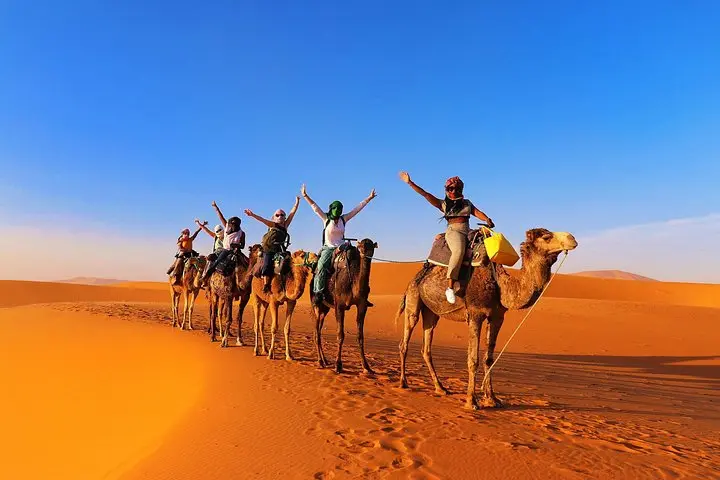
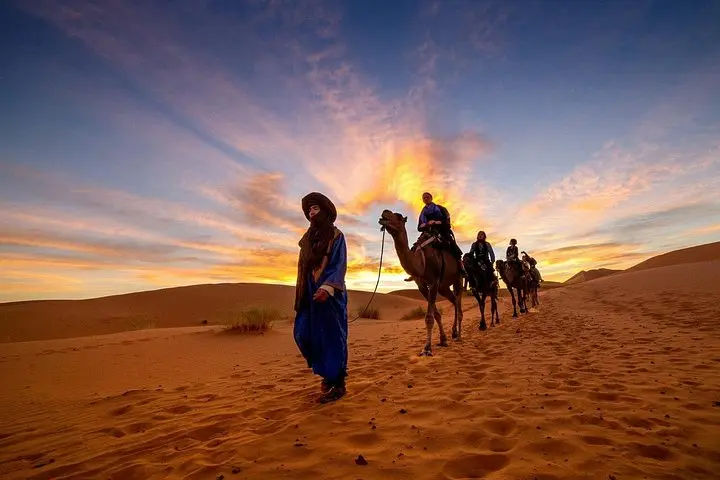
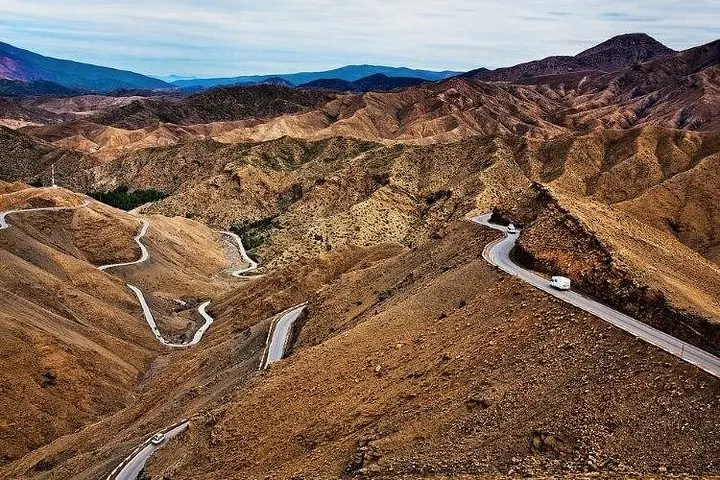
You crest the Tizi n’Tichka pass at dawn and the High Atlas opens like a folded map; later that same day the desert horizon swells into orange waves as camels pick their slow, rhythmic way across Erg Chebbi.
Verified experiences and guided adventures in the surrounding area.
Operated by Morocco Global Adventures · Merzouga, Drâa-Tafilalet
You crest the Tizi n’Tichka pass at dawn and the High Atlas opens like a folded map; later that same day the desert horizon swells into orange waves as camels pick their slow, rhythmic way across Erg Chebbi.
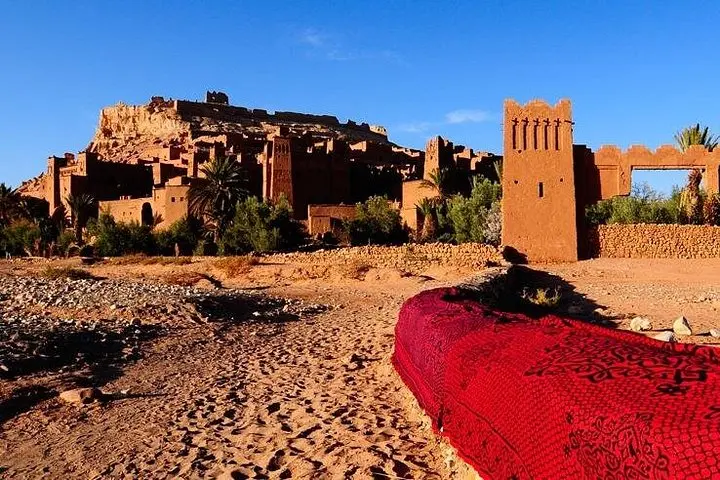
This three-day route threads Morocco’s contrasts — the fortified clay kasbah of Ait Ben Haddou (UNESCO), the palm oases and vertical walls of Todra Gorge, the small towns of the Tafilalet, and nights under a Berber tent in the sand. Geologically the trip moves from folded metamorphic massifs of the Atlas (passes near 2,260 m) down to the Saharan erg where dunes rise 100–150 m from hard desert basins. Culturally you’ll meet Berber hospitality: tea rituals, drumming at the camp, and caravan routes that shaped local trade for centuries.
Expect long driving legs (several stretches of 4–8 hours on day one and three), short guided walks at gorges and kasbahs, and a 1–2 hour camel transfer to and from the camp timed for sunset and sunrise photography. The desert night is cold; temperatures swing rapidly.
Practical edge: carry layered clothing, sun protection, and at least 2–3 liters of water per day; bring a small overnight bag for the camp transfers. Footwear should handle sand and rock; balance camera gear protection with minimal weight. The tour suits travelers who can tolerate long drives, early wake-ups, and basic camp facilities. For photographers and first-time desert travelers this compact itinerary delivers a concentrated cross-section of Morocco’s landscapes and living history.
Camel transfers to the camp are typically 1–2 hours timed for sunset or sunrise; routes are gentle and paced for photos and comfort.
This tour uses standard Berber-style camps with sleeping pads or mattresses and shared wash facilities; expect simple but clean accommodations and communal dining.
Yes—small purchases, tips, and entry fees in villages are best paid in cash (Moroccan dirham); card acceptance is limited outside larger towns.
The tour is advertised as suitable for all fitness levels, but it involves long drives, camel mounts and uneven ground at gorges and camps; assess mobility for camel mounting and dune walking.
Morocco Global Adventures operates guided outdoor trips and adventures with an emphasis on safety, stewardship, and memorable experiences.
You crest the Tizi n’Tichka pass at dawn and the High Atlas opens like a folded map; later that same day the desert horizon swells into orange waves as camels pick their slow, rhythmic way across Erg Chebbi.
You crest the Tizi n’Tichka pass at dawn and the High Atlas opens like a folded map; later that same day the desert horizon swells into orange waves as camels pick their slow, rhythmic way across Erg Chebbi.
This three-day route threads Morocco’s contrasts — the fortified clay kasbah of Ait Ben Haddou (UNESCO), the palm oases and vertical walls of Todra Gorge, the small towns of the Tafilalet, and nights under a Berber tent in the sand. Geologically the trip moves from folded metamorphic massifs of the Atlas (passes near 2,260 m) down to the Saharan erg where dunes rise 100–150 m from hard desert basins. Culturally you’ll meet Berber hospitality: tea rituals, drumming at the camp, and caravan routes that shaped local trade for centuries.
Expect long driving legs (several stretches of 4–8 hours on day one and three), short guided walks at gorges and kasbahs, and a 1–2 hour camel transfer to and from the camp timed for sunset and sunrise photography. The desert night is cold; temperatures swing rapidly.
Practical edge: carry layered clothing, sun protection, and at least 2–3 liters of water per day; bring a small overnight bag for the camp transfers. Footwear should handle sand and rock; balance camera gear protection with minimal weight. The tour suits travelers who can tolerate long drives, early wake-ups, and basic camp facilities. For photographers and first-time desert travelers this compact itinerary delivers a concentrated cross-section of Morocco’s landscapes and living history.