THE ADVENTURE COLLECTIVE® · Independent discovery and booking for outdoor travel

Cross the High Atlas, explore mudbrick kasbahs and spend a night under the stars at Erg Chebbi. This three-day route compresses Morocco’s mountains, gorges, palm oases and Sahara sunrise into a compact, well-paced adventure.
Cross the High Atlas, explore mudbrick kasbahs and spend a night under the stars at Erg Chebbi. This three-day route compresses Morocco’s mountains, gorges, palm oases and Sahara sunrise into a compact, well-paced adventure.
You leave Marrakech before dawn, the city’s noise peeling away as the road climbs into the Atlas. The Tizi n’Tichka pass opens like a throat through the mountains—rock faces lean in, wind scours the slopes, and the 4x4 hums on switchbacks toward Ait Benhaddou.
Verified experiences and guided adventures in the surrounding area.
Operated by Agoudal Travel · Merzouga, Drâa-Tafilalet
You leave Marrakech before dawn, the city’s noise peeling away as the road climbs into the Atlas. The Tizi n’Tichka pass opens like a throat through the mountains—rock faces lean in, wind scours the slopes, and the 4x4 hums on switchbacks toward Ait Benhaddou.
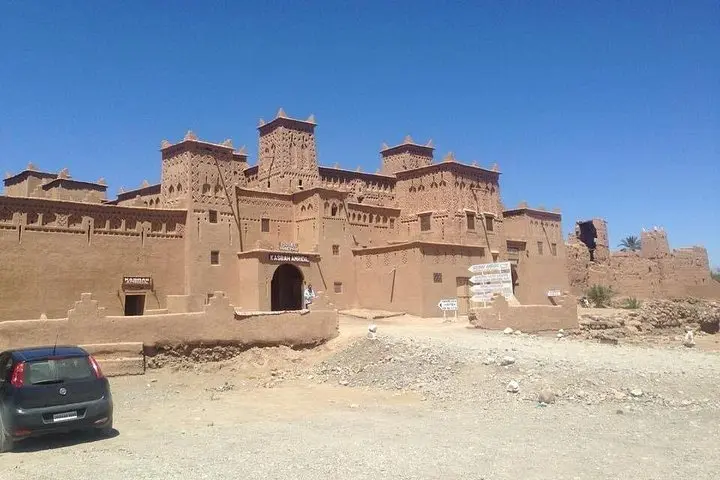
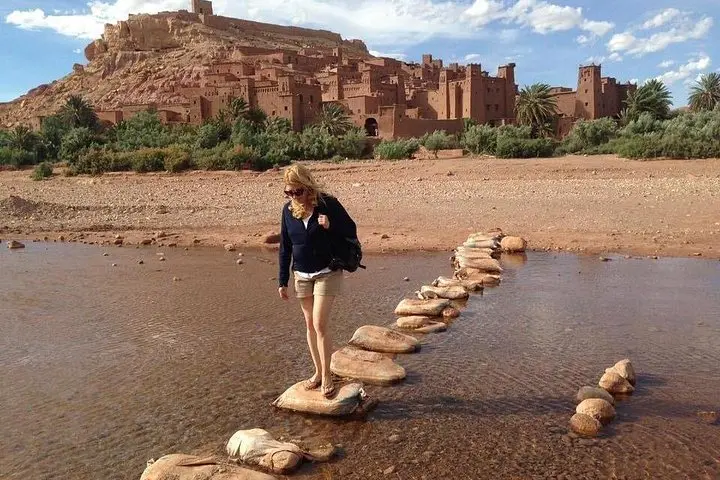
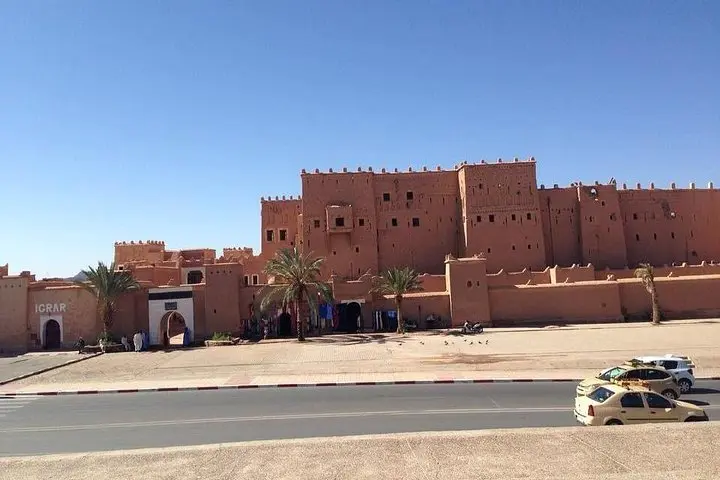
Ait Benhaddou’s earthen walls sit above the plain: a living ksar of mudbrick that once watched caravan traffic along trans-Saharan routes and now figures in film credits. Further east the terrain softens into palm groves at Skoura, then cleaves into the orange fingers of Todra Gorge—canyon walls so high they throw cool shade into the afternoon.
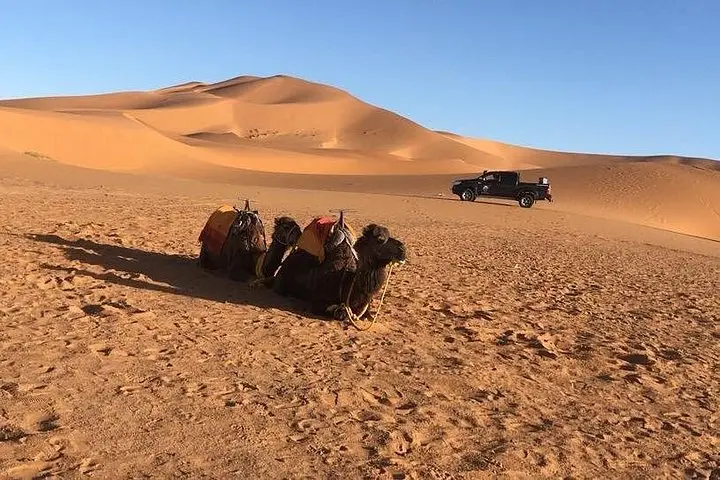
Geologically the route traces collisions: uplifted strata in the High Atlas give way to alluvial fans and, finally, dune fields. Erg Chebbi’s sands are active, scooped and reformed by winds that seem to push the desert along at their whim. Culturally the corridor is Berber country—families, guesthouses, and a musical cadence of tea, drum, and story. In May the Kelaat Mgouna rose festival fills markets with petals and distilled eau de rose.
Practically: expect long driving days with short hikes and a two-hour camel transfer into a desert camp where temperatures swing dramatically between blazing day and cold night. Bring layered clothing, sun protection, and cash for small purchases; wear sturdy shoes for kasbah paths and the Todra Gorge. Plan early starts to catch desert sunrise and avoid midday heat in summer. The tour suits travelers comfortable with multi-day logistics who want concentrated exposure to Morocco’s landscapes without technical demands.
Two nights’ accommodation (hotel and desert camp), two breakfasts and two dinners, a 2-hour camel ride, and transportation in a 4x4 as per the itinerary are included—confirm specifics with the operator.
The tour typically starts with hotel pickup in Marrakech and finishes with drop-off in Fes; confirm your pickup point when booking.
The tour is described as physically easy and accommodates infants with stroller access and infant seats, but desert sand and kasbah alleys can be uneven—check with the operator about individual needs.
Bring cash (Moroccan dirhams) for tips, small purchases, and markets—card acceptance is limited in remote towns and camps.
Agoudal Travel operates guided outdoor trips and adventures with an emphasis on safety, stewardship, and memorable experiences.
You leave Marrakech before dawn, the city’s noise peeling away as the road climbs into the Atlas. The Tizi n’Tichka pass opens like a throat through the mountains—rock faces lean in, wind scours the slopes, and the 4x4 hums on switchbacks toward Ait Benhaddou.
You leave Marrakech before dawn, the city’s noise peeling away as the road climbs into the Atlas. The Tizi n’Tichka pass opens like a throat through the mountains—rock faces lean in, wind scours the slopes, and the 4x4 hums on switchbacks toward Ait Benhaddou.
Ait Benhaddou’s earthen walls sit above the plain: a living ksar of mudbrick that once watched caravan traffic along trans-Saharan routes and now figures in film credits. Further east the terrain softens into palm groves at Skoura, then cleaves into the orange fingers of Todra Gorge—canyon walls so high they throw cool shade into the afternoon.
Geologically the route traces collisions: uplifted strata in the High Atlas give way to alluvial fans and, finally, dune fields. Erg Chebbi’s sands are active, scooped and reformed by winds that seem to push the desert along at their whim. Culturally the corridor is Berber country—families, guesthouses, and a musical cadence of tea, drum, and story. In May the Kelaat Mgouna rose festival fills markets with petals and distilled eau de rose.
Practically: expect long driving days with short hikes and a two-hour camel transfer into a desert camp where temperatures swing dramatically between blazing day and cold night. Bring layered clothing, sun protection, and cash for small purchases; wear sturdy shoes for kasbah paths and the Todra Gorge. Plan early starts to catch desert sunrise and avoid midday heat in summer. The tour suits travelers comfortable with multi-day logistics who want concentrated exposure to Morocco’s landscapes without technical demands.