
Marrakech to Fes via Merzouga: 3-Day Sahara Dunes & Berber Camp Adventure
Cross Morocco’s Atlas and sleep under the stars on a three-day group trip from Marrakech to Fes via the Merzouga dunes. Expect long drives, sunrise camel treks, sandboarding and an overnight Berber camp experience.
An Adventure In Merzouga.
Cross Morocco’s Atlas and sleep under the stars on a three-day group trip from Marrakech to Fes via the Merzouga dunes. Expect long drives, sunrise camel treks, sandboarding and an overnight Berber camp experience.
Read the full experience
You step out of the minibus at the crest of the Tizi n’Tichka and the Atlas exhales beneath a high sky — valleys open, villages cling to slopes and the road unspools toward Ait Benhaddou. Over three days the landscape simplifies from terraced mountains to the long ochre sweep of Erg Chebbi near Merzouga. The dunes dare you to climb; the wind keeps rewriting the ridgelines.
You step out of the minibus at the crest of the Tizi n’Tichka and the Atlas exhales beneath a high sky — valleys open, villages cling to slopes and the road unspools toward Ait Benhaddou. Over three days the landscape simplifies from terraced mountains to the long ochre sweep of Erg Chebbi near Merzouga. The dunes dare you to climb; the wind keeps rewriting the ridgelines.
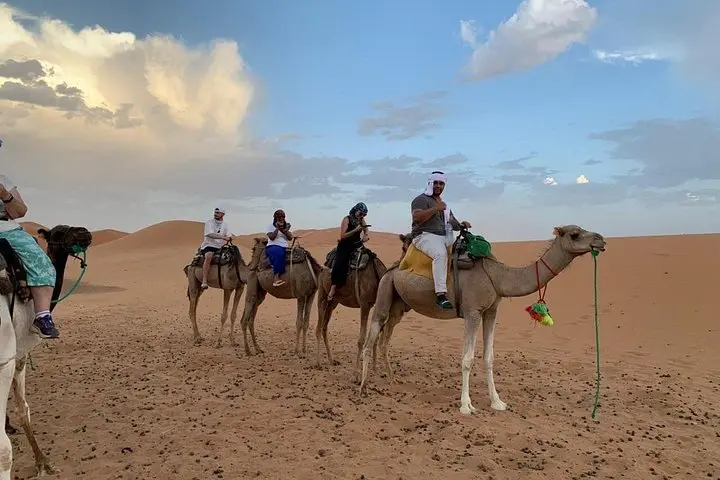
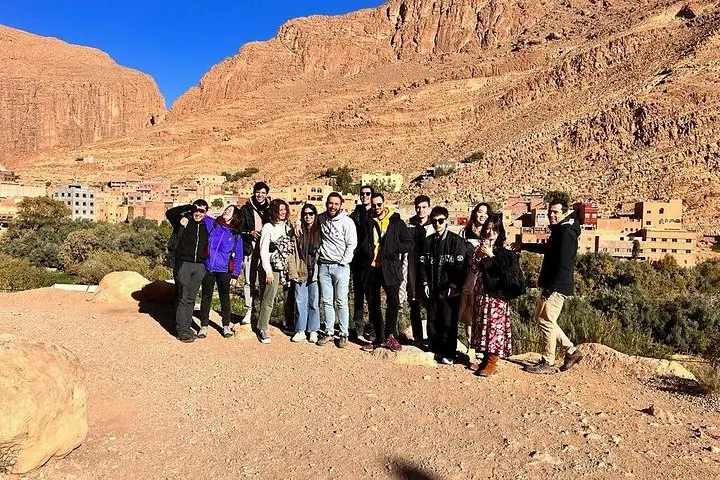
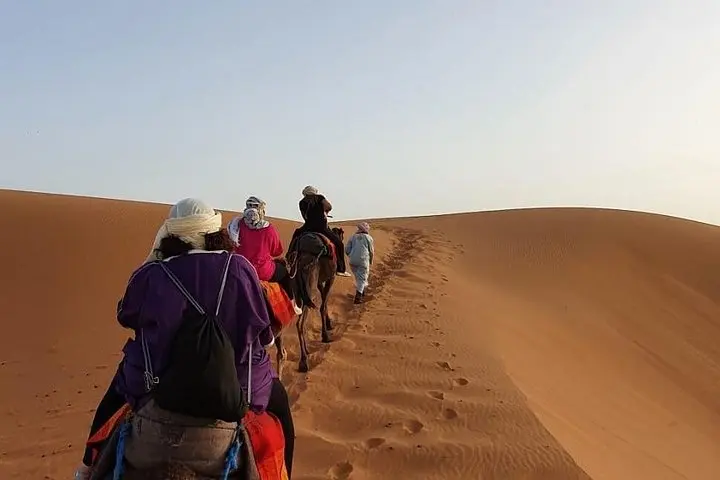
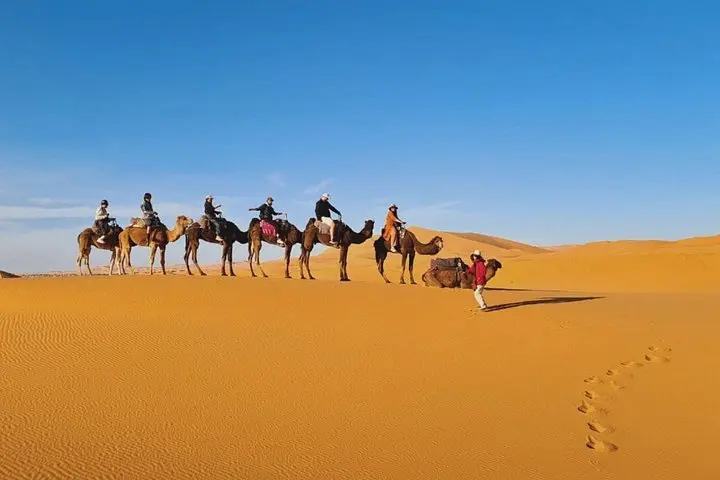
This route follows historic caravan and trade corridors: kasbahs of rammed earth, the fortified ksar at Ait Benhaddou (UNESCO-listed), and the palm-lined oases of the Tafilalet that supported trans-Saharan routes. Geologically the Atlas was thrust up by plate collision; eastward the Sahara’s sandstone and wind-built dunes dominate. On day two the Todra Gorge cuts a cool slot canyon before the erg’s vast sandfields, where dunes can top 100–150m and sandboarding and camel rides are standard ways to read the terrain.
Practical guidance: plan for long driving stretches (itinerary segments run roughly 5–7 hours), early starts, and temperature swings — hot days and chilly desert nights. Pack layers, a sun hat, sturdy footwear for walking on mixed rocky and sandy ground, and a headlamp for camp life. Bring small cash for local vendors and tip guides. Expect two nights’ accommodation (one hotel, one desert camp), sunrise and sunset camel treks, and simple communal meals in camp with Berber music. Respect local customs: dress modestly in towns, carry water, and avoid disturbing fragile dune surfaces. This is an accessible, immersive way to cross Morocco’s spine and sleep beneath a clear desert sky.
Frequently asked questions
Camel rides are short (sunset and sunrise rides are typical) and appropriate for most fitness levels; walking on dunes requires more effort but is optional.
Yes — the tour includes two nights’ accommodation (hotel + desert camp), two breakfasts and two dinners as listed in the itinerary.
Modest, layered clothing that covers shoulders and knees in towns; loose, breathable fabrics for daytime in the desert and a warm layer for night.
The operator notes infant seats are available and the tour is marked easy for fitness; children travel well but expect long vehicle transfers and desert conditions.
About This Experience
Imperial Trail Tours operates guided outdoor trips and adventures with an emphasis on safety, stewardship, and memorable experiences.
Adventure tips
Recommended gear
- Sturdy walking shoes: Grippy shoes handle rocky approaches and the compact edges of dunes better than sandals.
- Sun hat and sunscreen: Intense sun on open dunes makes full sun protection essential.
- Warm midlayer and light jacket: Nights in the desert can be cold even when days are hot — pack insulating layers.
- Headlamp or flashlight: Essential for moving around camp after dark and early-morning preparations.
Photos of the experience
Related adventures & guides
Read the full experience
You step out of the minibus at the crest of the Tizi n’Tichka and the Atlas exhales beneath a high sky — valleys open, villages cling to slopes and the road unspools toward Ait Benhaddou. Over three days the landscape simplifies from terraced mountains to the long ochre sweep of Erg Chebbi near Merzouga. The dunes dare you to climb; the wind keeps rewriting the ridgelines.
You step out of the minibus at the crest of the Tizi n’Tichka and the Atlas exhales beneath a high sky — valleys open, villages cling to slopes and the road unspools toward Ait Benhaddou. Over three days the landscape simplifies from terraced mountains to the long ochre sweep of Erg Chebbi near Merzouga. The dunes dare you to climb; the wind keeps rewriting the ridgelines.
This route follows historic caravan and trade corridors: kasbahs of rammed earth, the fortified ksar at Ait Benhaddou (UNESCO-listed), and the palm-lined oases of the Tafilalet that supported trans-Saharan routes. Geologically the Atlas was thrust up by plate collision; eastward the Sahara’s sandstone and wind-built dunes dominate. On day two the Todra Gorge cuts a cool slot canyon before the erg’s vast sandfields, where dunes can top 100–150m and sandboarding and camel rides are standard ways to read the terrain.
Practical guidance: plan for long driving stretches (itinerary segments run roughly 5–7 hours), early starts, and temperature swings — hot days and chilly desert nights. Pack layers, a sun hat, sturdy footwear for walking on mixed rocky and sandy ground, and a headlamp for camp life. Bring small cash for local vendors and tip guides. Expect two nights’ accommodation (one hotel, one desert camp), sunrise and sunset camel treks, and simple communal meals in camp with Berber music. Respect local customs: dress modestly in towns, carry water, and avoid disturbing fragile dune surfaces. This is an accessible, immersive way to cross Morocco’s spine and sleep beneath a clear desert sky.
Make a day of it nearby.
Verified experiences and guided adventures in the surrounding area.