THE ADVENTURE COLLECTIVE® · Independent discovery and booking for outdoor travel

A three‑day loop from Marrakech to Merzouga that combines High Atlas passes, cinematic kasbahs, Todra and Dades gorges, and an overnight in Erg Chebbi dunes. Expect camel treks, sandboarding, and authentic Berber camp life under wide desert skies.
A three‑day loop from Marrakech to Merzouga that combines High Atlas passes, cinematic kasbahs, Todra and Dades gorges, and an overnight in Erg Chebbi dunes. Expect camel treks, sandboarding, and authentic Berber camp life under wide desert skies.
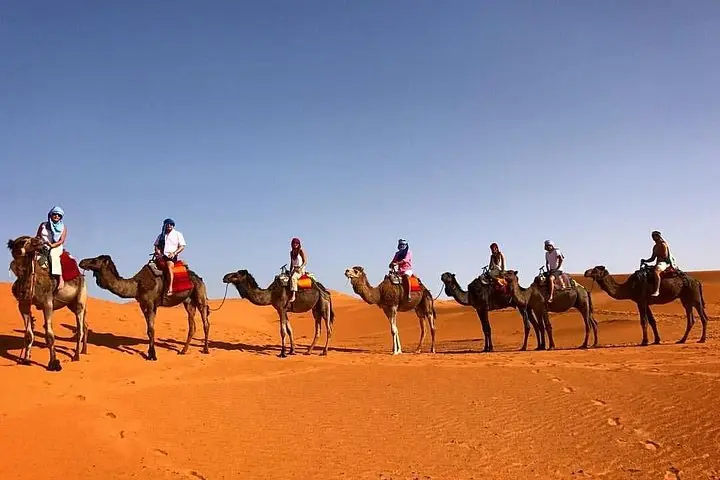
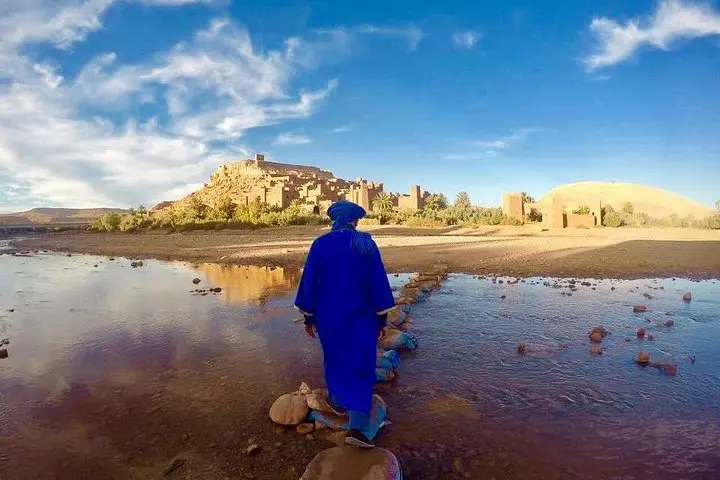
You step out of the air-conditioned van where the asphalt gives way to a horizon of rippling gold: Erg Chebbi lifts and falls like a frozen ocean. On the first day the road unspools through High Atlas passes and dry riverbeds, stopping at the clay towers of Ait Ben Haddou and the film-set façades of Ouarzazate. By day two the landscape tightens into red canyons—Dades and Todra—then opens abruptly to the Merzouga dunes where camels wait.
Verified experiences and guided adventures in the surrounding area.
Operated by Morocco Sahara 4x4 - Day Tours · Merzouga, Drâa-Tafilalet
You step out of the air-conditioned van where the asphalt gives way to a horizon of rippling gold: Erg Chebbi lifts and falls like a frozen ocean. On the first day the road unspools through High Atlas passes and dry riverbeds, stopping at the clay towers of Ait Ben Haddou and the film-set façades of Ouarzazate. By day two the landscape tightens into red canyons—Dades and Todra—then opens abruptly to the Merzouga dunes where camels wait.
This route follows old trans‑Saharan arteries and the architecture reflects those trade routes: fortified ksars, kasbahs of mud brick that absorb heat and release it at night. Geologically, the dunes of Erg Chebbi are wind-built star dunes of fine Saharan sand; the gorges are folded limestone cut by millennia of seasonal water.
Local culture centers on Berber hospitality—simple meals, tents with woven mats, and evening music around a fire. Expect to learn about rose harvesting if you pass through the Valley of the Roses in spring, and watch for irrigation channels that sustain small palm oases.
Practical guidance: the tour runs three days with long driving legs—pack layers for hot days and cold desert nights, sun protection, and at least 2–3 liters water per day. Camel treks last roughly an hour to camp; dunes are steep for sandboarding, so bring closed-toe shoes. Choose the luxury tent upgrade if you prefer an ensuite. Confirm hotel pickup in Marrakech and carry photocopies of your passport. Timing your visit outside peak summer reduces heat stress and improves night-sky viewing.
The guided camel ride to the desert camp is typically about 45–60 minutes—enough time to reach the camp before sunset.
Standard options are shared Berber tents with basic bedding and nearby toilet/shower blocks; a luxury tent upgrade offers private facilities and more comfort.
Children can join but expect long vehicle transfers and uneven surfaces; some sites and camps have limited accessibility—check specifics with the operator before booking.
Two dinners and two breakfasts are included, featuring traditional Berber dishes; confirm any dietary restrictions in advance.
Morocco Sahara 4x4 - Day Tours operates guided outdoor trips and adventures with an emphasis on safety, stewardship, and memorable experiences.
You step out of the air-conditioned van where the asphalt gives way to a horizon of rippling gold: Erg Chebbi lifts and falls like a frozen ocean. On the first day the road unspools through High Atlas passes and dry riverbeds, stopping at the clay towers of Ait Ben Haddou and the film-set façades of Ouarzazate. By day two the landscape tightens into red canyons—Dades and Todra—then opens abruptly to the Merzouga dunes where camels wait.
You step out of the air-conditioned van where the asphalt gives way to a horizon of rippling gold: Erg Chebbi lifts and falls like a frozen ocean. On the first day the road unspools through High Atlas passes and dry riverbeds, stopping at the clay towers of Ait Ben Haddou and the film-set façades of Ouarzazate. By day two the landscape tightens into red canyons—Dades and Todra—then opens abruptly to the Merzouga dunes where camels wait.
This route follows old trans‑Saharan arteries and the architecture reflects those trade routes: fortified ksars, kasbahs of mud brick that absorb heat and release it at night. Geologically, the dunes of Erg Chebbi are wind-built star dunes of fine Saharan sand; the gorges are folded limestone cut by millennia of seasonal water.
Local culture centers on Berber hospitality—simple meals, tents with woven mats, and evening music around a fire. Expect to learn about rose harvesting if you pass through the Valley of the Roses in spring, and watch for irrigation channels that sustain small palm oases.
Practical guidance: the tour runs three days with long driving legs—pack layers for hot days and cold desert nights, sun protection, and at least 2–3 liters water per day. Camel treks last roughly an hour to camp; dunes are steep for sandboarding, so bring closed-toe shoes. Choose the luxury tent upgrade if you prefer an ensuite. Confirm hotel pickup in Marrakech and carry photocopies of your passport. Timing your visit outside peak summer reduces heat stress and improves night-sky viewing.