THE ADVENTURE COLLECTIVE® · Independent discovery and booking for outdoor travel

A compact three-day loop from Marrakech to the dunes of Merzouga: cross the High Atlas, tour UNESCO’s Ait Ben Haddou, ride camels into Erg Chebbi and sleep in a desert camp. Expect long drives, stellar sunrises, and hands-on cultural stops.
A compact three-day loop from Marrakech to the dunes of Merzouga: cross the High Atlas, tour UNESCO’s Ait Ben Haddou, ride camels into Erg Chebbi and sleep in a desert camp. Expect long drives, stellar sunrises, and hands-on cultural stops.
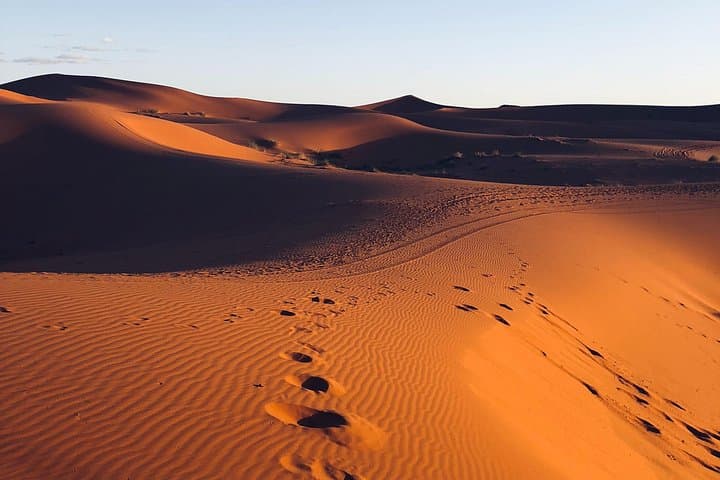
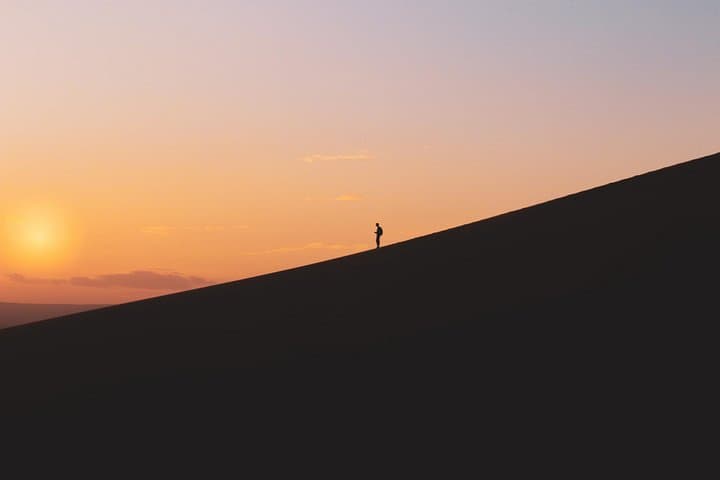
You step out of the minivan as the last blue silhouette of the High Atlas rolls away—the air is dry and the dunes ahead look like a living tide. Sunrise in Erg Chebbi arrives in wide, slow strokes; the sand shifts underfoot and the camels, patient and sure, carry you into the heart of the Sahara.
Verified experiences and guided adventures in the surrounding area.
Operated by Guided Morocco Tours · Merzouga, Drâa-Tafilalet
You step out of the minivan as the last blue silhouette of the High Atlas rolls away—the air is dry and the dunes ahead look like a living tide. Sunrise in Erg Chebbi arrives in wide, slow strokes; the sand shifts underfoot and the camels, patient and sure, carry you into the heart of the Sahara.
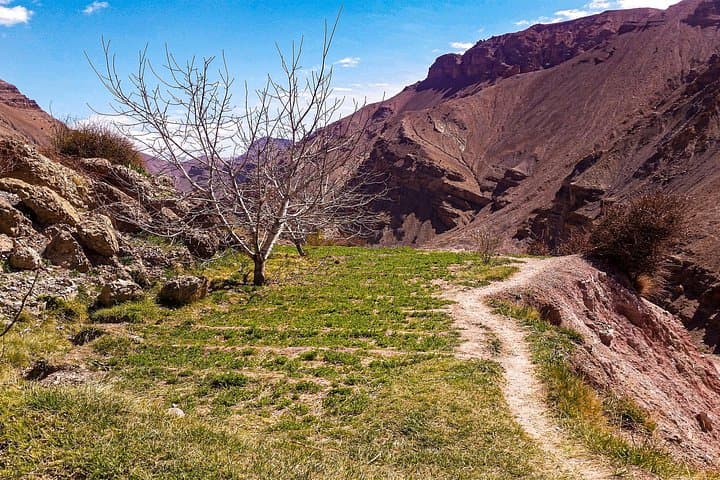
This three-day route threads Marrakech, the Tizi n’Tichka mountain pass (over 2,200 m), ancient kasbahs and the palm-filled Draa Valley before arriving at Merzouga’s orange dunes. Ait Ben Haddou, a fortified ksar on the itinerary, is a UNESCO World Heritage site with roots in trans-Saharan trade and a recent filmography history used in major productions.
Geologically, the Erg Chebbi dunes are wind-sculpted sand seas reaching heights of roughly 100–150 m; the drive covers paved highways, mountain passes, and packed desert tracks. Local culture is present at every stop: Berber villages, mint tea rituals, a nomadic family visit, and campfire music under star-slick skies.
Practically, expect long drives—Marrakech to Merzouga is roughly 8–10 hours by road each way (≈530–560 km depending on route)—with short active moments: a 2-hour camel trek across dunes, optional quad biking, and a morning walk for sunrise. Elevation gain is felt in the Atlas crossings rather than the desert.
Pack sun protection and layers for cold desert nights, plan for limited cell service, and allow recovery time after long travel legs. The trip is ideal for travelers comfortable with extended vehicle time who want a concentrated taste of mountain roads, kasbah history, and true desert night skies.
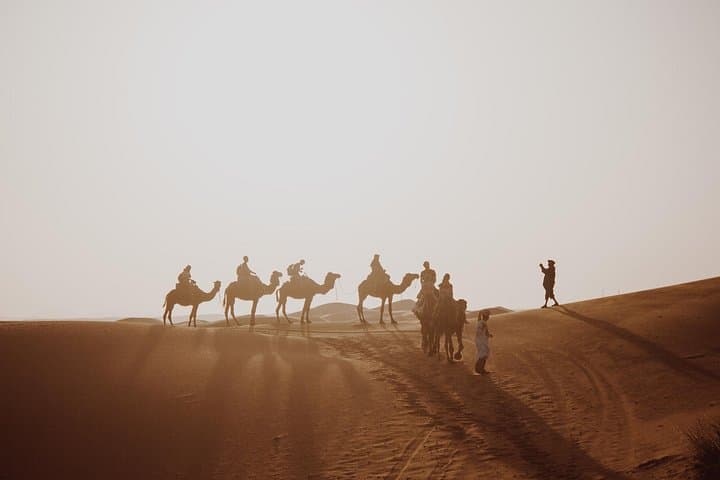
The typical camel ride is about two hours across Erg Chebbi dunes, timed to reach the camp before sunset.
Children can participate—some operators provide infant seats—but expect long drives and limited facilities during transfers.
Soft bags are recommended; large hard-shell suitcases are harder to stow on rural vehicle transfers and may be restricted.
Cell service is intermittent outside towns; Merzouga and larger villages have coverage, but camps and high dunes may be offline.
Guided Morocco Tours operates guided outdoor trips and adventures with an emphasis on safety, stewardship, and memorable experiences.
You step out of the minivan as the last blue silhouette of the High Atlas rolls away—the air is dry and the dunes ahead look like a living tide. Sunrise in Erg Chebbi arrives in wide, slow strokes; the sand shifts underfoot and the camels, patient and sure, carry you into the heart of the Sahara.
You step out of the minivan as the last blue silhouette of the High Atlas rolls away—the air is dry and the dunes ahead look like a living tide. Sunrise in Erg Chebbi arrives in wide, slow strokes; the sand shifts underfoot and the camels, patient and sure, carry you into the heart of the Sahara.
This three-day route threads Marrakech, the Tizi n’Tichka mountain pass (over 2,200 m), ancient kasbahs and the palm-filled Draa Valley before arriving at Merzouga’s orange dunes. Ait Ben Haddou, a fortified ksar on the itinerary, is a UNESCO World Heritage site with roots in trans-Saharan trade and a recent filmography history used in major productions.
Geologically, the Erg Chebbi dunes are wind-sculpted sand seas reaching heights of roughly 100–150 m; the drive covers paved highways, mountain passes, and packed desert tracks. Local culture is present at every stop: Berber villages, mint tea rituals, a nomadic family visit, and campfire music under star-slick skies.
Practically, expect long drives—Marrakech to Merzouga is roughly 8–10 hours by road each way (≈530–560 km depending on route)—with short active moments: a 2-hour camel trek across dunes, optional quad biking, and a morning walk for sunrise. Elevation gain is felt in the Atlas crossings rather than the desert.
Pack sun protection and layers for cold desert nights, plan for limited cell service, and allow recovery time after long travel legs. The trip is ideal for travelers comfortable with extended vehicle time who want a concentrated taste of mountain roads, kasbah history, and true desert night skies.