THE ADVENTURE COLLECTIVE® · Independent discovery and booking for outdoor travel

Drive the High Atlas and sleep beneath Merzouga’s dunes on a 3-day loop from Marrakech. Expect UNESCO ksars, river-cut gorges, camel treks at sunset, and a night in a luxury desert camp.
Drive the High Atlas and sleep beneath Merzouga’s dunes on a 3-day loop from Marrakech. Expect UNESCO ksars, river-cut gorges, camel treks at sunset, and a night in a luxury desert camp.
You step out of the minivan where the asphalt gives up to orange sand and the wind reshapes the dunes behind you. The caravan of camels pauses at the crest; the late light carves long shadows across ripples that feel almost like living skin. This is the edge of Erg Chebbi, where the Sahara’s waves rise and fall with the wind.
Verified experiences and guided adventures in the surrounding area.
Operated by Starry Morocco Tours · Merzouga, Drâa-Tafilalet
You step out of the minivan where the asphalt gives up to orange sand and the wind reshapes the dunes behind you. The caravan of camels pauses at the crest; the late light carves long shadows across ripples that feel almost like living skin. This is the edge of Erg Chebbi, where the Sahara’s waves rise and fall with the wind.
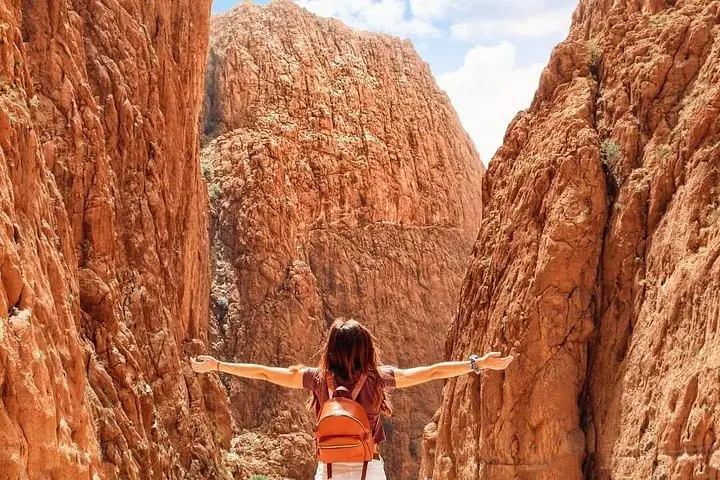
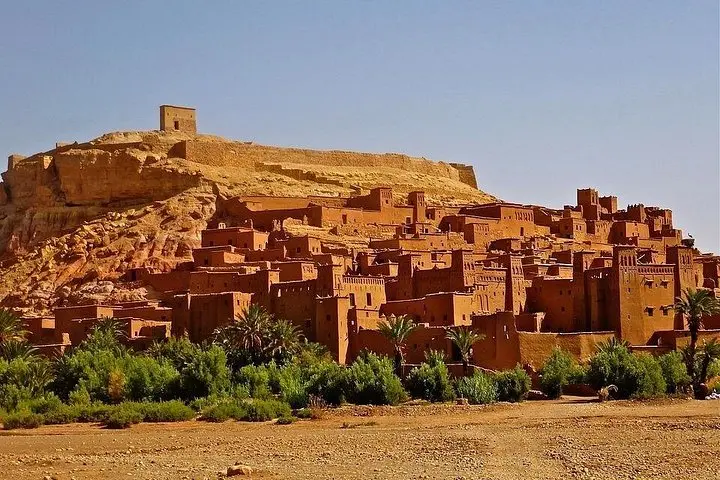
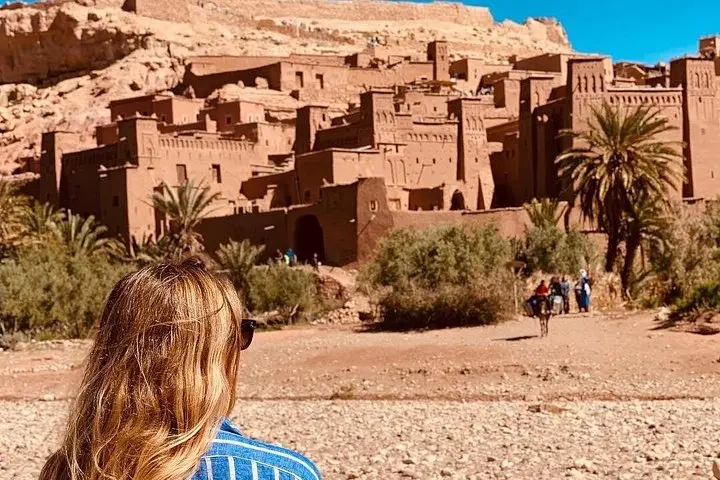
The route from Marrakech crosses the High Atlas — a geological spine of folded rock and cedar forests — then drops into the Ounila Valley and the ancient ksar of Ait Ben Haddou, a UNESCO site that reveals centuries of southern Moroccan architecture and trade-route history. Further east, the Dades Valley and the Todgha Gorge show dramatic fluted canyons cut into limestone by seasonal rivers; these narrow walls were carved over millennia and now frame terraced oases and small Berber settlements.
Cultural notes: local guides often share Berber tea rituals and explain irrigation systems that sustain palm groves. Geologically, the dunes of Merzouga are wind-sculpted quiet giants; sandboarding and short dune scrambles offer tactile ways to engage them.
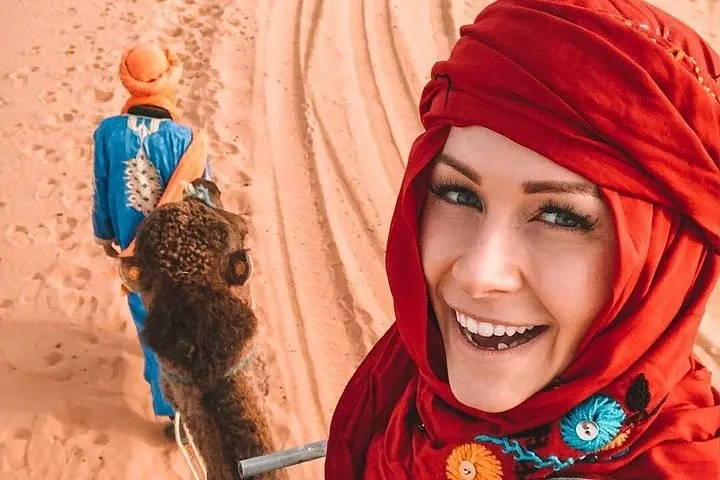
Practical guidance: the days are mostly driving with short walks, a sunset camel trek to a luxury desert camp, and an optional sunrise ride back. Pace yourself around heat — mornings and evenings are best for activity. Bring layered clothing for cool nights, sturdy closed shoes for scrambling on coarse sand, and at least 2 liters of water per day. Expect basic-to-comfortable lodging along the route and a single camp night under stars — an accessible, sensory-first desert experience that balances sightseeing with well-paced adventure.
Camel treks to the camp are typically 30–60 minutes each way; guides pace the journey for comfort and photo stops.
The road reaches roughly 2,260 m at Tizi n’Tichka — brief altitude effects are possible but uncommon on this itinerary.
Luxury desert camps offer private tents with beds, shared or private washrooms depending on the operator, and dinner by lantern light.
This shared 3-day tour usually includes transport, two dinners and two breakfasts, and camel rides to the camp as stated in the inclusions.
Starry Morocco Tours operates guided outdoor trips and adventures with an emphasis on safety, stewardship, and memorable experiences.
You step out of the minivan where the asphalt gives up to orange sand and the wind reshapes the dunes behind you. The caravan of camels pauses at the crest; the late light carves long shadows across ripples that feel almost like living skin. This is the edge of Erg Chebbi, where the Sahara’s waves rise and fall with the wind.
You step out of the minivan where the asphalt gives up to orange sand and the wind reshapes the dunes behind you. The caravan of camels pauses at the crest; the late light carves long shadows across ripples that feel almost like living skin. This is the edge of Erg Chebbi, where the Sahara’s waves rise and fall with the wind.
The route from Marrakech crosses the High Atlas — a geological spine of folded rock and cedar forests — then drops into the Ounila Valley and the ancient ksar of Ait Ben Haddou, a UNESCO site that reveals centuries of southern Moroccan architecture and trade-route history. Further east, the Dades Valley and the Todgha Gorge show dramatic fluted canyons cut into limestone by seasonal rivers; these narrow walls were carved over millennia and now frame terraced oases and small Berber settlements.
Cultural notes: local guides often share Berber tea rituals and explain irrigation systems that sustain palm groves. Geologically, the dunes of Merzouga are wind-sculpted quiet giants; sandboarding and short dune scrambles offer tactile ways to engage them.
Practical guidance: the days are mostly driving with short walks, a sunset camel trek to a luxury desert camp, and an optional sunrise ride back. Pace yourself around heat — mornings and evenings are best for activity. Bring layered clothing for cool nights, sturdy closed shoes for scrambling on coarse sand, and at least 2 liters of water per day. Expect basic-to-comfortable lodging along the route and a single camp night under stars — an accessible, sensory-first desert experience that balances sightseeing with well-paced adventure.