THE ADVENTURE COLLECTIVE® · Independent discovery and booking for outdoor travel

Cross the High Atlas, explore Ait Ben Haddou and Todra Gorge, then ride camels into the orange seas of Erg Chebbi. This 3-day loop from Marrakech packs geology, Berber culture, and night skies into a compact desert adventure.
Cross the High Atlas, explore Ait Ben Haddou and Todra Gorge, then ride camels into the orange seas of Erg Chebbi. This 3-day loop from Marrakech packs geology, Berber culture, and night skies into a compact desert adventure.
The sun drops like a copper coin behind the dunes as camels trace a slow, deliberate line across Erg Chebbi. Sand brushes your ankles, the sky cools, and the hush of the Sahara presses close — this is the point where a three-day road and desert loop transforms into something elemental.
Verified experiences and guided adventures in the surrounding area.
Operated by Zwin Travel - Excursion Quad, Buggy & Camp Agafay Marrakech · Merzouga, Drâa-Tafilalet
The sun drops like a copper coin behind the dunes as camels trace a slow, deliberate line across Erg Chebbi. Sand brushes your ankles, the sky cools, and the hush of the Sahara presses close — this is the point where a three-day road and desert loop transforms into something elemental.
The route threads over the High Atlas via the Tizi n’Tichka Pass (≈2,260 m), passes the earthen walls of Ait Ben Haddou — a UNESCO kasbah and old caravan stop — and cuts through the sculpted cliffs of Todra Gorge where river action carved vertical walls up to 300 m high. Geologically, you move from tectonic-folded Atlas ranges into wind-sculpted Ergs; cultural notes include traditional Berber villages, the Valley of Roses trade in cosmetics, and fossil workshops around Erfoud.
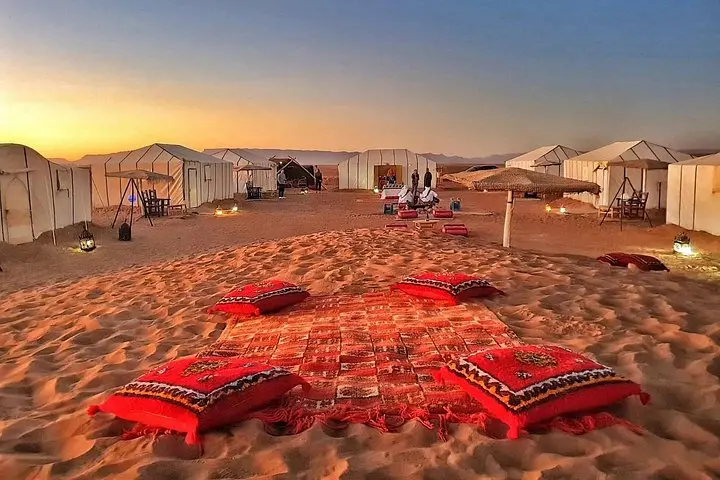
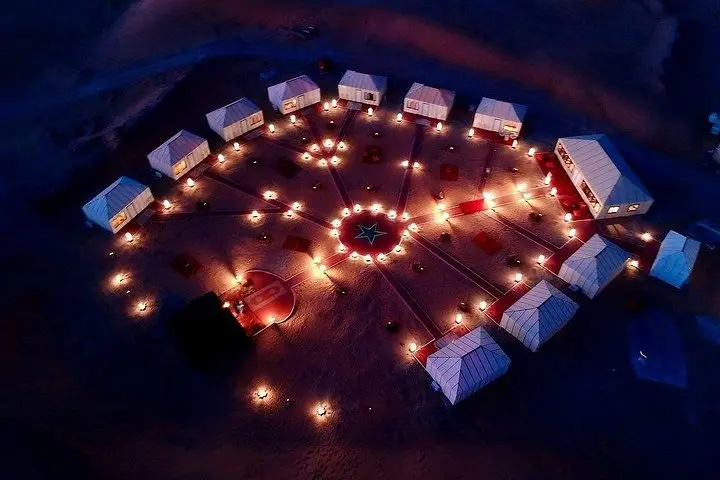
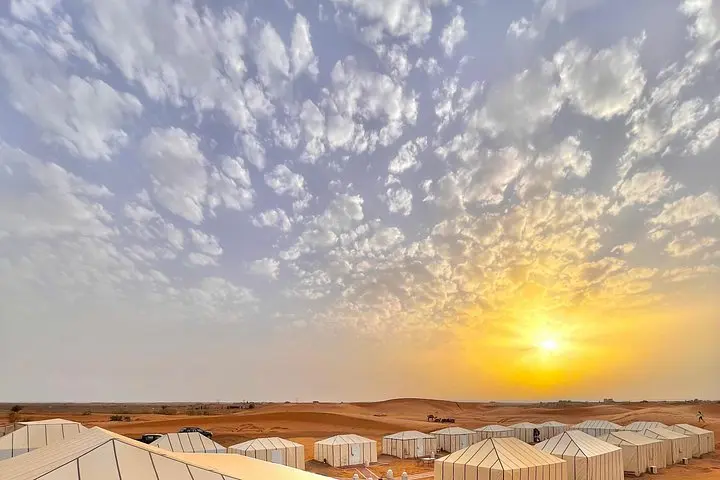
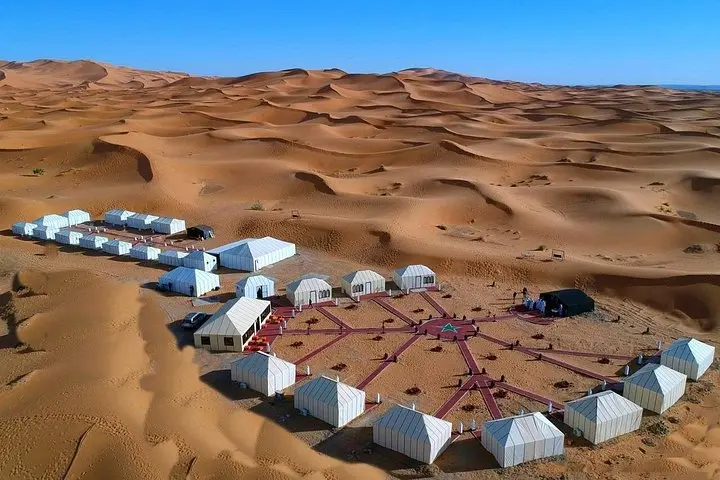
Practically, expect long driving blocks split across three days (Marrakech to Merzouga is roughly 560 km one-way, with stops), hotel nights in Dades and a nomad-style camp in Merzouga. Camel rides at sunset and sunrise are standard; tents sleep on mattresses with shared facilities. Optional sandboarding adds replay value for active visitors.
Pack layered clothing, sun protection, and a sturdy pair of closed-toe shoes for dune walks. Hydrate early each day — desert air and long drives will dehydrate you. Bring small cash for village purchases and tips, and reserve larger luggage in the tour vehicle when staying in the camp. Respect local customs: modest dress in villages and ask before photographing people. Finally, leave no trace on the dunes and choose regulated camps that support local guides so this landscape stays wild for the next caravan.
Expect several hours of driving each day broken by stops; Marrakech to Merzouga is roughly 9–10 hours with sightseeing stops split across the itinerary.
Large bags stay on the vehicle; bring a small overnight bag for the camp containing essentials and a warm layer.
Yes—local handlers guide the camels and give briefings; mounting may require basic mobility but no special skill.
Tipping is customary: small amounts for guides, drivers, and camp hosts are appreciated and typically handled in cash.
Zwin Travel - Excursion Quad, Buggy & Camp Agafay Marrakech operates guided outdoor trips and adventures with an emphasis on safety, stewardship, and memorable experiences.
The sun drops like a copper coin behind the dunes as camels trace a slow, deliberate line across Erg Chebbi. Sand brushes your ankles, the sky cools, and the hush of the Sahara presses close — this is the point where a three-day road and desert loop transforms into something elemental.
The sun drops like a copper coin behind the dunes as camels trace a slow, deliberate line across Erg Chebbi. Sand brushes your ankles, the sky cools, and the hush of the Sahara presses close — this is the point where a three-day road and desert loop transforms into something elemental.
The route threads over the High Atlas via the Tizi n’Tichka Pass (≈2,260 m), passes the earthen walls of Ait Ben Haddou — a UNESCO kasbah and old caravan stop — and cuts through the sculpted cliffs of Todra Gorge where river action carved vertical walls up to 300 m high. Geologically, you move from tectonic-folded Atlas ranges into wind-sculpted Ergs; cultural notes include traditional Berber villages, the Valley of Roses trade in cosmetics, and fossil workshops around Erfoud.
Practically, expect long driving blocks split across three days (Marrakech to Merzouga is roughly 560 km one-way, with stops), hotel nights in Dades and a nomad-style camp in Merzouga. Camel rides at sunset and sunrise are standard; tents sleep on mattresses with shared facilities. Optional sandboarding adds replay value for active visitors.
Pack layered clothing, sun protection, and a sturdy pair of closed-toe shoes for dune walks. Hydrate early each day — desert air and long drives will dehydrate you. Bring small cash for village purchases and tips, and reserve larger luggage in the tour vehicle when staying in the camp. Respect local customs: modest dress in villages and ask before photographing people. Finally, leave no trace on the dunes and choose regulated camps that support local guides so this landscape stays wild for the next caravan.