THE ADVENTURE COLLECTIVE® · Independent discovery and booking for outdoor travel

Traverse the High Atlas, explore Ait Ben Haddou and Todra Gorge, then ride camels into Erg Chebbi for sunrise and a luxury camp night. This three-day loop mixes cinematic sites, palm oases, and hands-on desert experiences.
Traverse the High Atlas, explore Ait Ben Haddou and Todra Gorge, then ride camels into Erg Chebbi for sunrise and a luxury camp night. This three-day loop mixes cinematic sites, palm oases, and hands-on desert experiences.
Dust lifts off the road as the minivan threads the High Atlas, the air changing from city dust to pine-scented wind and then to dry, sun-baked plains.
Verified experiences and guided adventures in the surrounding area.
Operated by Marrakech Desert Trips · Merzouga, Drâa-Tafilalet
Dust lifts off the road as the minivan threads the High Atlas, the air changing from city dust to pine-scented wind and then to dry, sun-baked plains.
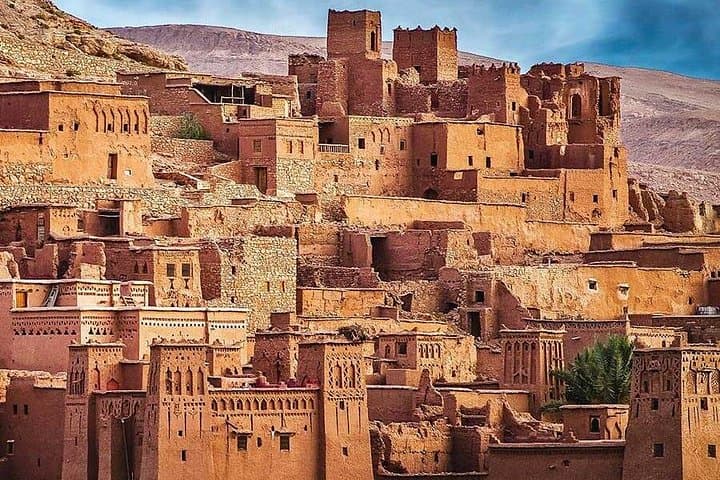
On day one the route climbs the Tizi n’Tichka pass (above 2,200 m), then descends into the ochre-streaked valley where Ait Ben Haddou’s mud-brick ramparts loom—a living set-piece from film and caravan history. Over the next day the tour cuts through the Dades and Todra gorges—vertical walls worn by the Todgha River—and into Tinghir’s palm-fringed oasis, whose ancient irrigation channels still sustain date palms and small farms.
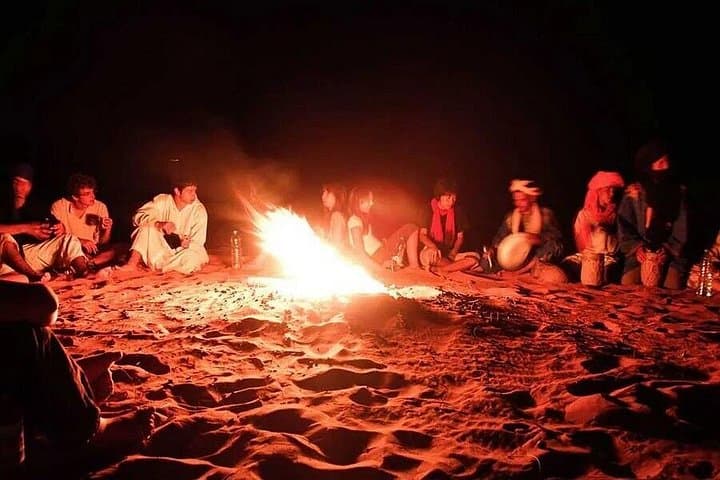
Geology here reads like layers of time: folded Atlas ranges, alluvial fans feeding the Sahara fringe, and Erg Chebbi’s living dunes—soft, drifting ridges of sand that can rise 150 m locally. Culturally, the route follows old trans-Saharan arteries: Berber oases, kasbah architecture, and nomadic camel lore. Expect guided walks in the oasis, stops at kasbah viewpoints, and evenings at a luxury desert camp where local musicians and tagine dinners accompany star-rich skies.
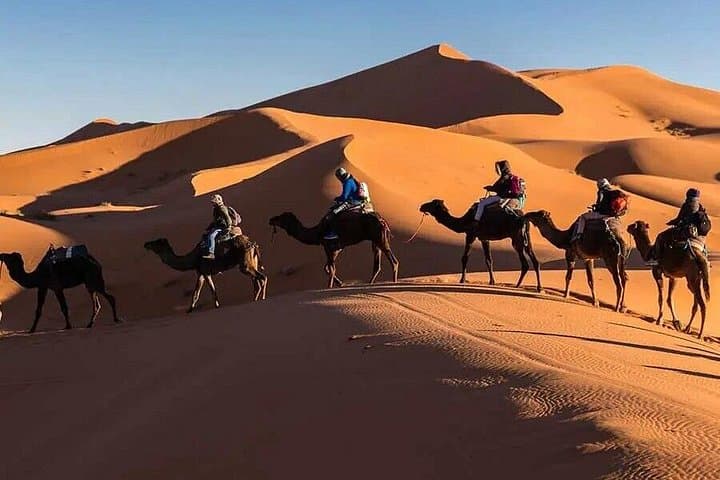
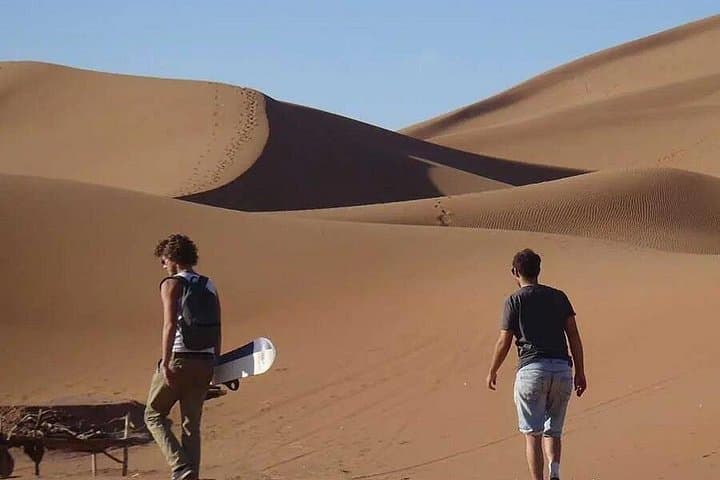
Practical guidance: the itinerary covers roughly 500–600 km of driving over three days, with long stretches on paved mountain and desert roads—plan for early starts and rest stops. Camel rides (sunset and sunrise, ~1 hour each) and introductory sandboarding are included; they require basic balance but no prior skill. Nights in the desert drop cold—bring warm layers. Hydrate, protect skin from sun and sand, and wear closed-toe shoes for dune activity. With sensible pacing, this trip delivers cinematic landscapes, hands-on cultural encounters, and the rare quiet of the Sahara under a clear sky.
Sunset and sunrise camel rides are about one hour each and are led by local handlers; they’re introductory and paced for most travelers.
Sandboarding is beginner-friendly—no special skill required; instructors will show technique and you’ll practice on smaller slopes first.
Overnight stays include a hotel in the Dades valley and a luxury desert camp near Merzouga with private or semi-private tents, dinner, and breakfast provided.
The tour involves long drives, uneven ground in gorges, and camel mounting; it’s not recommended for travelers with serious spinal, heart problems, or pregnancy as per the provider’s guidance.
Marrakech Desert Trips operates guided outdoor trips and adventures with an emphasis on safety, stewardship, and memorable experiences.
Dust lifts off the road as the minivan threads the High Atlas, the air changing from city dust to pine-scented wind and then to dry, sun-baked plains.
Dust lifts off the road as the minivan threads the High Atlas, the air changing from city dust to pine-scented wind and then to dry, sun-baked plains.
On day one the route climbs the Tizi n’Tichka pass (above 2,200 m), then descends into the ochre-streaked valley where Ait Ben Haddou’s mud-brick ramparts loom—a living set-piece from film and caravan history. Over the next day the tour cuts through the Dades and Todra gorges—vertical walls worn by the Todgha River—and into Tinghir’s palm-fringed oasis, whose ancient irrigation channels still sustain date palms and small farms.
Geology here reads like layers of time: folded Atlas ranges, alluvial fans feeding the Sahara fringe, and Erg Chebbi’s living dunes—soft, drifting ridges of sand that can rise 150 m locally. Culturally, the route follows old trans-Saharan arteries: Berber oases, kasbah architecture, and nomadic camel lore. Expect guided walks in the oasis, stops at kasbah viewpoints, and evenings at a luxury desert camp where local musicians and tagine dinners accompany star-rich skies.
Practical guidance: the itinerary covers roughly 500–600 km of driving over three days, with long stretches on paved mountain and desert roads—plan for early starts and rest stops. Camel rides (sunset and sunrise, ~1 hour each) and introductory sandboarding are included; they require basic balance but no prior skill. Nights in the desert drop cold—bring warm layers. Hydrate, protect skin from sun and sand, and wear closed-toe shoes for dune activity. With sensible pacing, this trip delivers cinematic landscapes, hands-on cultural encounters, and the rare quiet of the Sahara under a clear sky.