THE ADVENTURE COLLECTIVE® · Independent discovery and booking for outdoor travel

A day-long escape from Marrakech leads to Ouzoud, where 110 meters of cascading water carve rainbows into olive-sheltered cliffs. This practical guide walks you through what to expect, local culture, and how to make the most of the 8–10 hour round-trip.
A day-long escape from Marrakech leads to Ouzoud, where 110 meters of cascading water carve rainbows into olive-sheltered cliffs. This practical guide walks you through what to expect, local culture, and how to make the most of the 8–10 hour round-trip.
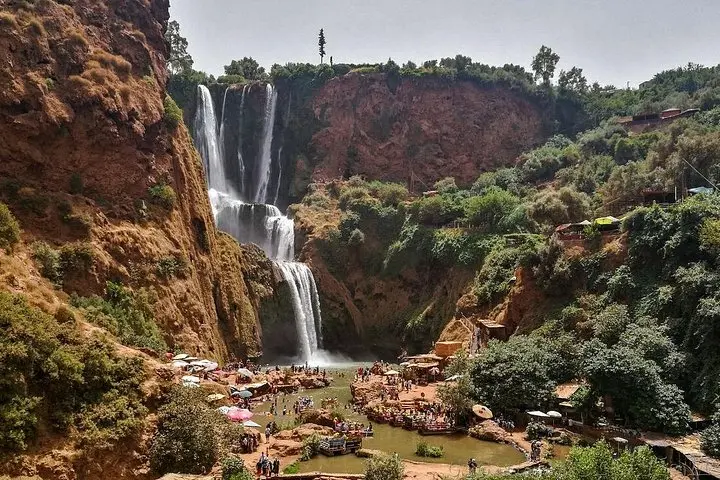
The afternoon light slices through olive branches as the minivan from Marrakech climbs away from ochre riads and onto open highway. For three hours the High Atlas recedes and then returns in folded ridges; villages built of sun-baked stone appear like punctuation. When the engine stops and the path narrows, the sound arrives before the view — a distant, persistent roar that becomes a panorama: Ouzoud, where water drops roughly 110 meters in stair-stepped curtains and throws rainbows into the valley air.
Verified experiences and guided adventures in the surrounding area.
Operated by Trendy Travel · Ouzoud, Azilal Province
The afternoon light slices through olive branches as the minivan from Marrakech climbs away from ochre riads and onto open highway. For three hours the High Atlas recedes and then returns in folded ridges; villages built of sun-baked stone appear like punctuation. When the engine stops and the path narrows, the sound arrives before the view — a distant, persistent roar that becomes a panorama: Ouzoud, where water drops roughly 110 meters in stair-stepped curtains and throws rainbows into the valley air.
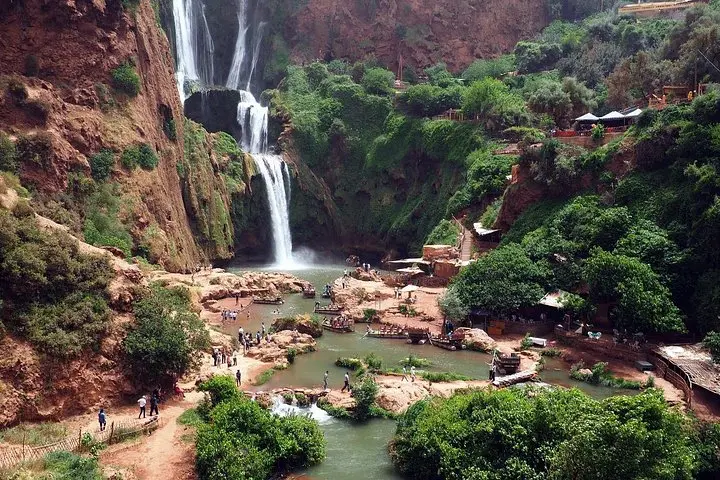
Ouzoud is as much a geological stage as it is a social one. The falls flow over layers of sedimentary rock carved by the El-Abid River; seasonal swells push the cascades wider, flooding shallow plunge pools that locals have used for centuries. The name Ouzoud comes from the Amazigh word for olive, an apt marker — terraced olive groves and orchards frame the gorge and speak to a mountain farming culture that has adapted to the altitude and the river's shifting moods.
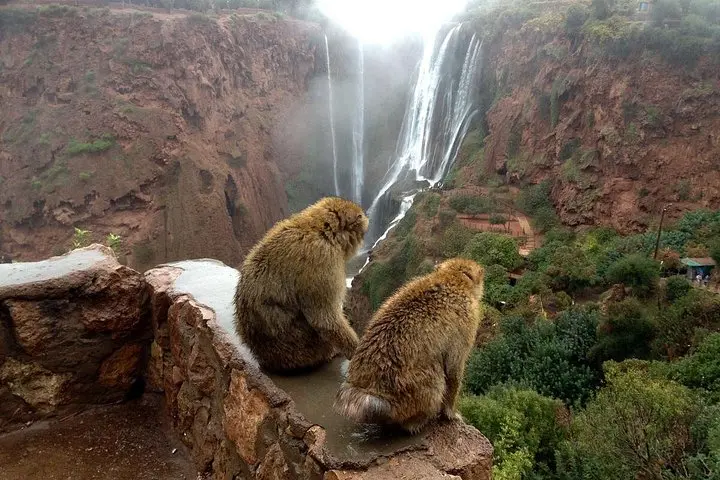
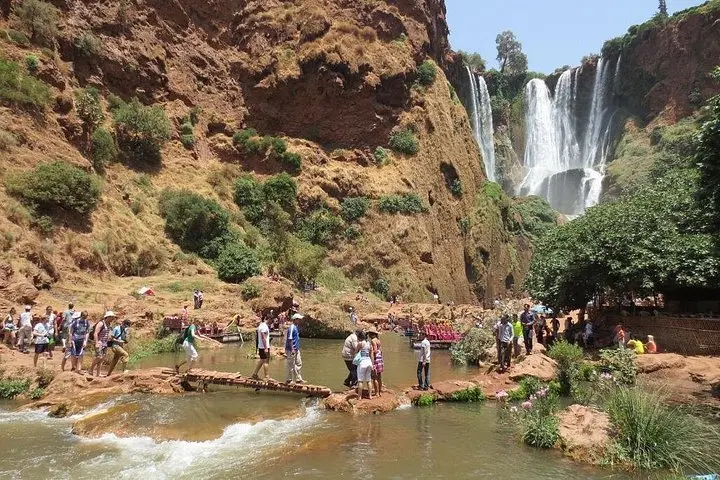
Cafes cling to cliffs, serving steaming tagines and mint tea to visitors who descend the stone steps to the fall's base. Barbary macaques patrol the shaded trees, cheeky and persistent, while local women in bright scarves sell hand-woven baskets along the path. The falls have long been a regional meeting place — historically a watering point on routes that threaded between Atlas valleys — and today they thread tourism into village life, with both economic benefits and environmental pressures.
Practically, the trip is straightforward but deserving of thought. Expect a 150 km round-trip from Marrakech and prepare for 8 to 10 hours away from the city; pick-up commonly begins at 8:00 a.m. The descent to viewpoints and the base involves uneven stone steps and wet rock; sensible footwear and steady pacing pay off. Lunch at a riverside cafe is standard — a tagine and salad, with mint tea to finish — and provides time to watch the light shift across the cascades. Respect the wildlife: do not feed macaques, keep belongings secure, and allow them space.
Plan around light and crowds. Early arrivals catch softer light and fewer tour groups; late afternoons produce long shadows and multiple rainbows in the spray. Bring sun protection, a reusable water bottle, and a small waterproof layer for spray near the base. If you have time, walk the rim trails to find quieter viewpoints and meet villagers running small shops. The trip is an uncomplicated way to trade Marrakech's market noise for a day where water insists on moving you forward — literally and, often, quietly, inward.
Expect roughly 2.5–3 hours one way (about 150 km), depending on traffic and stops along the route.
Lunch is typically provided at a riverside cafe on most tours; confirm whether it's included when booking.
Yes; most operators accommodate families, and stroller access is often possible on flatter sections — but the descent includes many steps.
Swimming is possible in shallower pools but conditions change; check with local guides and avoid strong currents near the plunge zone.
Barbary macaques are common around viewing areas; they can be bold, so observe from a distance and do not feed them.
Early morning or late afternoon yields softer light and more pronounced rainbows in the spray — aim to avoid midday glare.
Trendy Travel operates guided outdoor trips and adventures with an emphasis on safety, stewardship, and memorable experiences.
The afternoon light slices through olive branches as the minivan from Marrakech climbs away from ochre riads and onto open highway. For three hours the High Atlas recedes and then returns in folded ridges; villages built of sun-baked stone appear like punctuation. When the engine stops and the path narrows, the sound arrives before the view — a distant, persistent roar that becomes a panorama: Ouzoud, where water drops roughly 110 meters in stair-stepped curtains and throws rainbows into the valley air.
The afternoon light slices through olive branches as the minivan from Marrakech climbs away from ochre riads and onto open highway. For three hours the High Atlas recedes and then returns in folded ridges; villages built of sun-baked stone appear like punctuation. When the engine stops and the path narrows, the sound arrives before the view — a distant, persistent roar that becomes a panorama: Ouzoud, where water drops roughly 110 meters in stair-stepped curtains and throws rainbows into the valley air.
Ouzoud is as much a geological stage as it is a social one. The falls flow over layers of sedimentary rock carved by the El-Abid River; seasonal swells push the cascades wider, flooding shallow plunge pools that locals have used for centuries. The name Ouzoud comes from the Amazigh word for olive, an apt marker — terraced olive groves and orchards frame the gorge and speak to a mountain farming culture that has adapted to the altitude and the river's shifting moods.
Cafes cling to cliffs, serving steaming tagines and mint tea to visitors who descend the stone steps to the fall's base. Barbary macaques patrol the shaded trees, cheeky and persistent, while local women in bright scarves sell hand-woven baskets along the path. The falls have long been a regional meeting place — historically a watering point on routes that threaded between Atlas valleys — and today they thread tourism into village life, with both economic benefits and environmental pressures.
Practically, the trip is straightforward but deserving of thought. Expect a 150 km round-trip from Marrakech and prepare for 8 to 10 hours away from the city; pick-up commonly begins at 8:00 a.m. The descent to viewpoints and the base involves uneven stone steps and wet rock; sensible footwear and steady pacing pay off. Lunch at a riverside cafe is standard — a tagine and salad, with mint tea to finish — and provides time to watch the light shift across the cascades. Respect the wildlife: do not feed macaques, keep belongings secure, and allow them space.
Plan around light and crowds. Early arrivals catch softer light and fewer tour groups; late afternoons produce long shadows and multiple rainbows in the spray. Bring sun protection, a reusable water bottle, and a small waterproof layer for spray near the base. If you have time, walk the rim trails to find quieter viewpoints and meet villagers running small shops. The trip is an uncomplicated way to trade Marrakech's market noise for a day where water insists on moving you forward — literally and, often, quietly, inward.