THE ADVENTURE COLLECTIVE® · Independent discovery and booking for outdoor travel

This eight-day circuit from Marrakech to Merzouga blends UNESCO sites, High Atlas passes and a star-filled bivouac in Erg Chebbi. Long drives and varied terrain reward travelers with dramatic geology, living history and iconic desert dawns.
This eight-day circuit from Marrakech to Merzouga blends UNESCO sites, High Atlas passes and a star-filled bivouac in Erg Chebbi. Long drives and varied terrain reward travelers with dramatic geology, living history and iconic desert dawns.
From the bustling alleys of Marrakech you climb into the High Atlas where the road tightens, hairpin after hairpin, and Tizi n’Tichka rises to about 2,260 m. The pass opens like a theater curtain to rocky ridges and terraced valleys; the air thins and the landscape begins to speak in stone and wind.
Verified experiences and guided adventures in the surrounding area.
Operated by Excu Marrakech · Marrakech, Marrakech-Safi
From the bustling alleys of Marrakech you climb into the High Atlas where the road tightens, hairpin after hairpin, and Tizi n’Tichka rises to about 2,260 m. The pass opens like a theater curtain to rocky ridges and terraced valleys; the air thins and the landscape begins to speak in stone and wind.
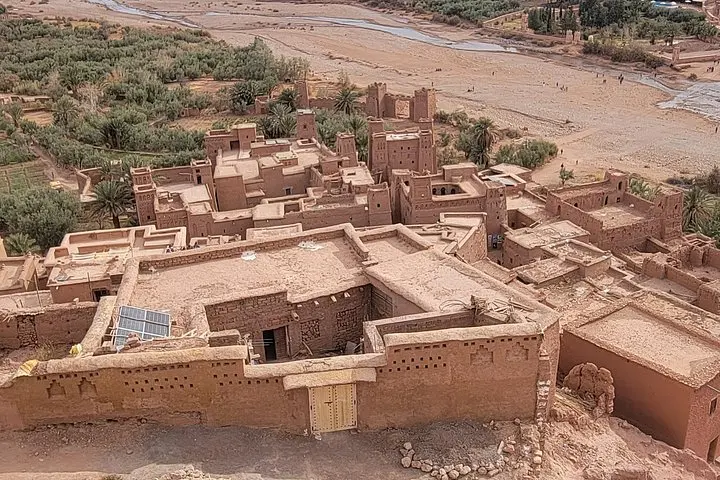
This eight-day loop threads Morocco’s layered history — Roman Volubilis’ mosaic streets, the clay-brick ksar of Aït Ben Haddou (UNESCO), and the fortified kasbahs built along old caravan routes. Geology is obvious: the High Atlas is folded rock thrust up by the African and Eurasian plates, while the Anti-Atlas and Sahara give way to wind-sculpted Erg Chebbi dunes that can reach 120–150 m high. Todra and Dades gorges carve vertical limestone walls ideal for photographers and short canyon walks.
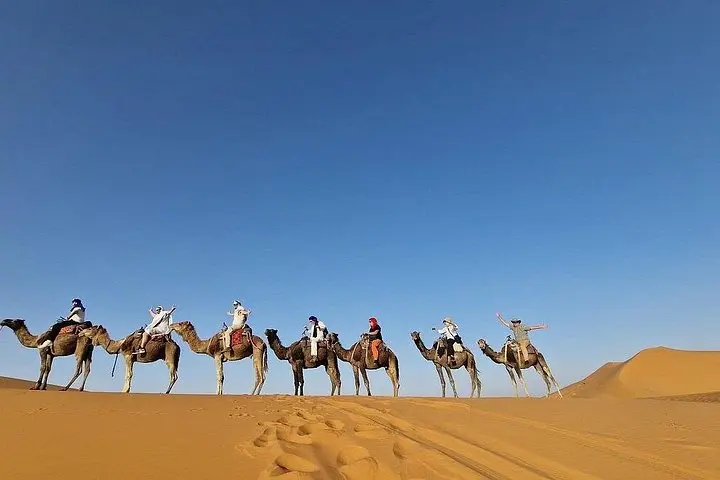
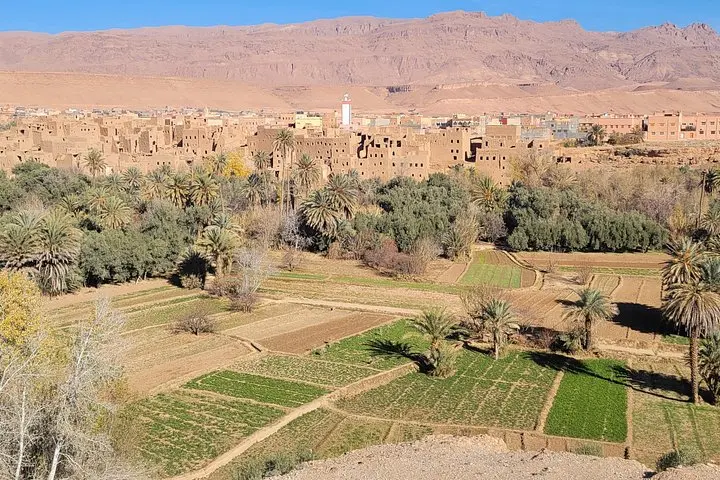
Culture shifts with elevation: Amazigh (Berber) villages in the mountains, oasis agriculture in Tafilalet, and nomadic Tuareg influences at the desert edge. Expect hospitality in riads, lively medina souks, and a camel-led approach to a desert bivouac where the dunes seem to breathe around your tent.
Practical guidance: expect long drives—several stretches of 4–6 hours—with paved roads through mountains and sandy tracks near Merzouga. Pack layered clothing for 0–20°C swings, sturdy walking shoes for cobbled medina streets and gritty desert sand, and a sunhat and sunglasses. Plan sunrise and sunset at the dunes for the best light, carry extra cash in small bills for tips and remote purchases, and allow a day to acclimatize if you’re sensitive to altitude. The trip balances cultural stops and short hikes with low technical demand, but requires good mobility for getting on and off camels and negotiating uneven terrain.
Camel transfers to the bivouac generally last 30–60 minutes depending on the camp’s location in the dunes; saddle comfort varies, so bring a scarf and wear trousers.
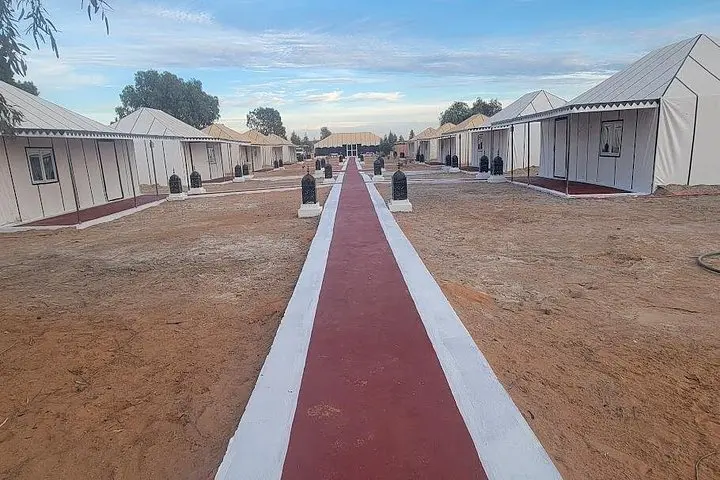
Yes; the itinerary includes stays in riads/inns and one or more nights in a traditional or luxury desert tent depending on booking options.
Children can join but long drives and camel rides may be tiring; not recommended for those with significant mobility restrictions or serious back/heart conditions.
Local guides commonly speak French, Arabic and basic English; carry euros or dirhams in small bills—ATMs exist in major towns but are limited in remote areas.
Excu Marrakech operates guided outdoor trips and adventures with an emphasis on safety, stewardship, and memorable experiences.
From the bustling alleys of Marrakech you climb into the High Atlas where the road tightens, hairpin after hairpin, and Tizi n’Tichka rises to about 2,260 m. The pass opens like a theater curtain to rocky ridges and terraced valleys; the air thins and the landscape begins to speak in stone and wind.
From the bustling alleys of Marrakech you climb into the High Atlas where the road tightens, hairpin after hairpin, and Tizi n’Tichka rises to about 2,260 m. The pass opens like a theater curtain to rocky ridges and terraced valleys; the air thins and the landscape begins to speak in stone and wind.
This eight-day loop threads Morocco’s layered history — Roman Volubilis’ mosaic streets, the clay-brick ksar of Aït Ben Haddou (UNESCO), and the fortified kasbahs built along old caravan routes. Geology is obvious: the High Atlas is folded rock thrust up by the African and Eurasian plates, while the Anti-Atlas and Sahara give way to wind-sculpted Erg Chebbi dunes that can reach 120–150 m high. Todra and Dades gorges carve vertical limestone walls ideal for photographers and short canyon walks.
Culture shifts with elevation: Amazigh (Berber) villages in the mountains, oasis agriculture in Tafilalet, and nomadic Tuareg influences at the desert edge. Expect hospitality in riads, lively medina souks, and a camel-led approach to a desert bivouac where the dunes seem to breathe around your tent.
Practical guidance: expect long drives—several stretches of 4–6 hours—with paved roads through mountains and sandy tracks near Merzouga. Pack layered clothing for 0–20°C swings, sturdy walking shoes for cobbled medina streets and gritty desert sand, and a sunhat and sunglasses. Plan sunrise and sunset at the dunes for the best light, carry extra cash in small bills for tips and remote purchases, and allow a day to acclimatize if you’re sensitive to altitude. The trip balances cultural stops and short hikes with low technical demand, but requires good mobility for getting on and off camels and negotiating uneven terrain.