THE ADVENTURE COLLECTIVE® · Independent discovery and booking for outdoor travel

Drive the High Atlas, explore Aït Ben Haddou, then cross palm-lined valleys to sleep under Berber tents near Zagora. This two-day loop balances cultural stops, a sunset camel ride, and a star-filled desert night.
Drive the High Atlas, explore Aït Ben Haddou, then cross palm-lined valleys to sleep under Berber tents near Zagora. This two-day loop balances cultural stops, a sunset camel ride, and a star-filled desert night.
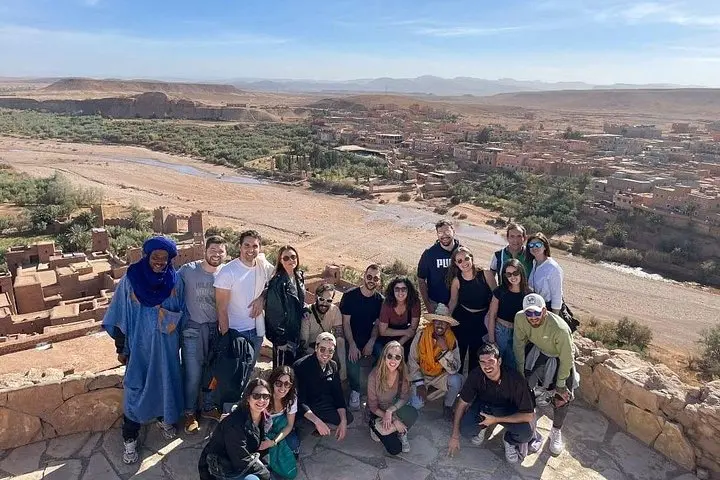
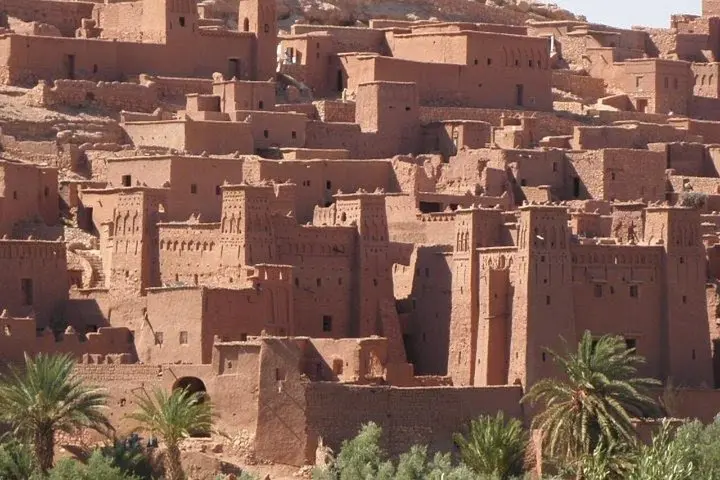
The sun slides behind the High Atlas as the van winds its way up Tizi n’Tichka, and the air cools with altitude while the promise of sand and starlight waits below. By late afternoon the earthen walls of Aït Ben Haddou appear—mud-brick forms catching last light—then you drop through oases and palm groves toward Zagora where a caravan of dromedaries stands patient at camp.
Verified experiences and guided adventures in the surrounding area.
Operated by Morocco Global Adventures · Zagora, Drâa-Tafilalet
The sun slides behind the High Atlas as the van winds its way up Tizi n’Tichka, and the air cools with altitude while the promise of sand and starlight waits below. By late afternoon the earthen walls of Aït Ben Haddou appear—mud-brick forms catching last light—then you drop through oases and palm groves toward Zagora where a caravan of dromedaries stands patient at camp.
The route stitches together layers of history and geology: a mountain pass carved through ancient fold belts, the fortified kasbahs built from rammed earth and adobe, and the Draa River valley—Morocco’s lifeline of palms and irrigation—leading to the sandy fringe of the Sahara. Ouarzazate’s film studios speak to the region’s cinematic landscapes; Aït Ben Haddou is a UNESCO site and a living example of Sud Atlas architecture and Berber settlement patterns.
Practically, expect roughly 8 hours on day one with stops (Marrakech → Aït Ben Haddou → Ouarzazate → Zagora) and about 6 hours return. Camel rides are short—about an hour at sunset and again at sunrise—and the night is spent in a Berber-style desert camp under canvas with basic but comfortable facilities.
Gear for changing temperatures and dusty tracks matters: sun protection, layered clothing for cool nights, and solid footwear for Kasbah stones and small dunes. Bring cash and a small daypack; phone service can be patchy. If you want photos of ancient kasbah silhouettes or a quiet dawn over dunes, plan for early starts and sit with patience—the desert rewards observation.
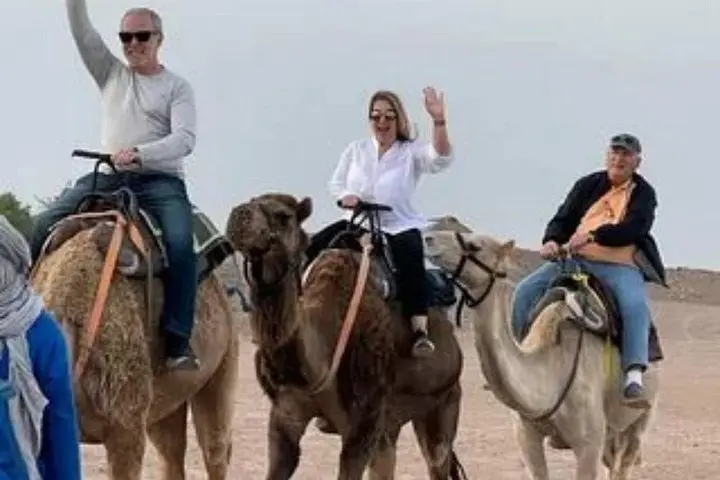
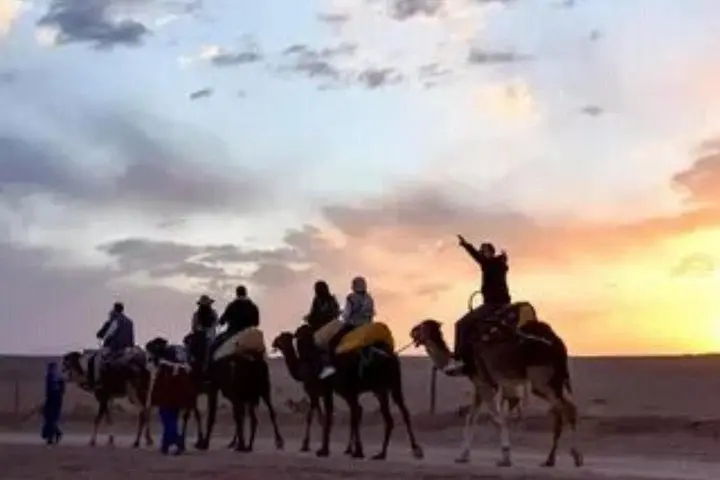
Each camel ride is about one hour—one at sunset and one at sunrise—enough to reach small dunes near the camp.
You’ll sleep in a Berber-style desert camp outside Zagora with basic but comfortable tents, bedding, and shared facilities.
Yes—infants and small children can join (stroller accessible and infant seats available), but consider nighttime temperatures and long vehicle transfers.
Yes; the tour includes guides and in-person/audio guide options in English, Spanish, French, Arabic, and Portuguese.
Morocco Global Adventures operates guided outdoor trips and adventures with an emphasis on safety, stewardship, and memorable experiences.
The sun slides behind the High Atlas as the van winds its way up Tizi n’Tichka, and the air cools with altitude while the promise of sand and starlight waits below. By late afternoon the earthen walls of Aït Ben Haddou appear—mud-brick forms catching last light—then you drop through oases and palm groves toward Zagora where a caravan of dromedaries stands patient at camp.
The sun slides behind the High Atlas as the van winds its way up Tizi n’Tichka, and the air cools with altitude while the promise of sand and starlight waits below. By late afternoon the earthen walls of Aït Ben Haddou appear—mud-brick forms catching last light—then you drop through oases and palm groves toward Zagora where a caravan of dromedaries stands patient at camp.
The route stitches together layers of history and geology: a mountain pass carved through ancient fold belts, the fortified kasbahs built from rammed earth and adobe, and the Draa River valley—Morocco’s lifeline of palms and irrigation—leading to the sandy fringe of the Sahara. Ouarzazate’s film studios speak to the region’s cinematic landscapes; Aït Ben Haddou is a UNESCO site and a living example of Sud Atlas architecture and Berber settlement patterns.
Practically, expect roughly 8 hours on day one with stops (Marrakech → Aït Ben Haddou → Ouarzazate → Zagora) and about 6 hours return. Camel rides are short—about an hour at sunset and again at sunrise—and the night is spent in a Berber-style desert camp under canvas with basic but comfortable facilities.
Gear for changing temperatures and dusty tracks matters: sun protection, layered clothing for cool nights, and solid footwear for Kasbah stones and small dunes. Bring cash and a small daypack; phone service can be patchy. If you want photos of ancient kasbah silhouettes or a quiet dawn over dunes, plan for early starts and sit with patience—the desert rewards observation.