THE ADVENTURE COLLECTIVE® · Independent discovery and booking for outdoor travel

A compact 48‑hour route from Marrakech to the Zagora dunes that covers Atlas foothills, Draa Valley palm groves, and a sunset camel ride to a desert bivouac. Expect long drives, dramatic light, and simple overnight camp comforts.
A compact 48‑hour route from Marrakech to the Zagora dunes that covers Atlas foothills, Draa Valley palm groves, and a sunset camel ride to a desert bivouac. Expect long drives, dramatic light, and simple overnight camp comforts.
You leave Marrakech before dawn, the city’s last lights shrinking behind the Atlas foothills as the road climbs and bends. Mountain slopes shift color with every turn—ochre to rust to charcoal—then open into palm-lined oases that lead you toward the wide Draa Valley. By late afternoon the dunes appear on the horizon like a moving wall; the sun leans in and the sand grows long shadows that seem to dare you forward.
Verified experiences and guided adventures in the surrounding area.
You leave Marrakech before dawn, the city’s last lights shrinking behind the Atlas foothills as the road climbs and bends. Mountain slopes shift color with every turn—ochre to rust to charcoal—then open into palm-lined oases that lead you toward the wide Draa Valley. By late afternoon the dunes appear on the horizon like a moving wall; the sun leans in and the sand grows long shadows that seem to dare you forward.
This compact two-day journey traces centuries-old trade routes that linked Marrakech to sub‑Saharan markets. Geologically, you pass Atlas ranges formed by the collision of tectonic plates and then descend into alluvial plains and wind-carved dunes. Cultural highlights include kasbah architecture—rammed earth and mud-brick towers—and the fortified ksar of Ait Benhaddou, a UNESCO-protected example of southern Moroccan construction and cinema-friendly streets.
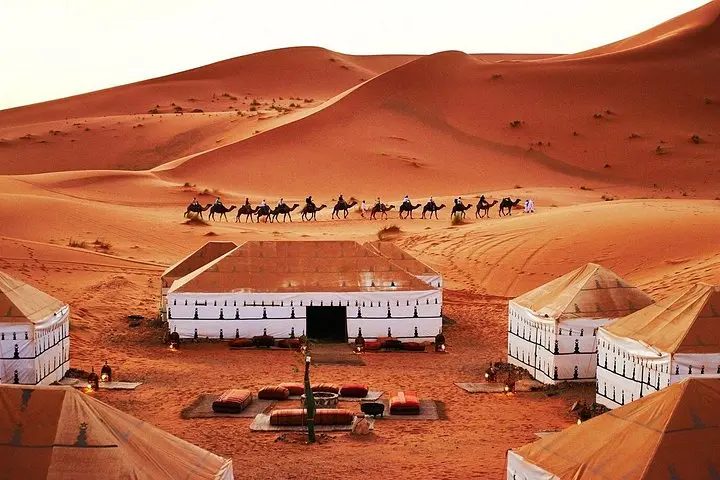
Expect a mix of paved and unpaved driving, short village stops, a 40-minute camel ride at sunset, and an overnight in a desert bivouac behind the dunes. Temperatures swing sharply after sunset; the desert both invites and tests you. Plan for basic camp accommodations—bring a small daypack for essentials during the camel ride and photography stops.
Practical tips: travel light, carry ample water and sun protection, and set expectations for long stretches of road between services. If you want softer dunes for walking or photography, request timing around golden hour. The tour delivers concentrated exposure to Morocco’s landscapes and traditional life—fast, sensory, and unmistakably desert.
The standard camel ride is about 40 minutes, timed for sunset to reach the bivouac area behind the dunes.
Overnight is in a nomad-style bivouac with basic mattress sleeping arrangements; facilities are simple and typically include shared toilets and blankets.
Yes if participants can tolerate the vehicle transfers and short camel ride; inform the operator of mobility limits so they can advise or adjust plans.
Yes—the itinerary commonly includes stops at Ait Benhaddou and cinematic sites around Ouarzazate on day two, though timing can vary by operator.
You leave Marrakech before dawn, the city’s last lights shrinking behind the Atlas foothills as the road climbs and bends. Mountain slopes shift color with every turn—ochre to rust to charcoal—then open into palm-lined oases that lead you toward the wide Draa Valley. By late afternoon the dunes appear on the horizon like a moving wall; the sun leans in and the sand grows long shadows that seem to dare you forward.
You leave Marrakech before dawn, the city’s last lights shrinking behind the Atlas foothills as the road climbs and bends. Mountain slopes shift color with every turn—ochre to rust to charcoal—then open into palm-lined oases that lead you toward the wide Draa Valley. By late afternoon the dunes appear on the horizon like a moving wall; the sun leans in and the sand grows long shadows that seem to dare you forward.
This compact two-day journey traces centuries-old trade routes that linked Marrakech to sub‑Saharan markets. Geologically, you pass Atlas ranges formed by the collision of tectonic plates and then descend into alluvial plains and wind-carved dunes. Cultural highlights include kasbah architecture—rammed earth and mud-brick towers—and the fortified ksar of Ait Benhaddou, a UNESCO-protected example of southern Moroccan construction and cinema-friendly streets.
Expect a mix of paved and unpaved driving, short village stops, a 40-minute camel ride at sunset, and an overnight in a desert bivouac behind the dunes. Temperatures swing sharply after sunset; the desert both invites and tests you. Plan for basic camp accommodations—bring a small daypack for essentials during the camel ride and photography stops.
Practical tips: travel light, carry ample water and sun protection, and set expectations for long stretches of road between services. If you want softer dunes for walking or photography, request timing around golden hour. The tour delivers concentrated exposure to Morocco’s landscapes and traditional life—fast, sensory, and unmistakably desert.