THE ADVENTURE COLLECTIVE® · Independent discovery and booking for outdoor travel

A compact 2-day journey from Marrakech into the Zagora desert that pairs High Atlas passes and UNESCO kasbahs with a sunset camel trek and overnight Berber camp. Ideal for travelers who want a concentrated desert experience with minimal planning.
A compact 2-day journey from Marrakech into the Zagora desert that pairs High Atlas passes and UNESCO kasbahs with a sunset camel trek and overnight Berber camp. Ideal for travelers who want a concentrated desert experience with minimal planning.
The first day begins on asphalt and ends under a sky that seems to move. Travelers leave Marrakech before dawn, climb the High Atlas via the Tizi n’ Tichka Pass (about 2,260 m) and watch the mountains shed morning mist as the road drops into sun-baked valleys.
Verified experiences and guided adventures in the surrounding area.
Operated by Marrakech Expert Tours · Zagora, Drâa-Tafilalet
The first day begins on asphalt and ends under a sky that seems to move. Travelers leave Marrakech before dawn, climb the High Atlas via the Tizi n’ Tichka Pass (about 2,260 m) and watch the mountains shed morning mist as the road drops into sun-baked valleys.
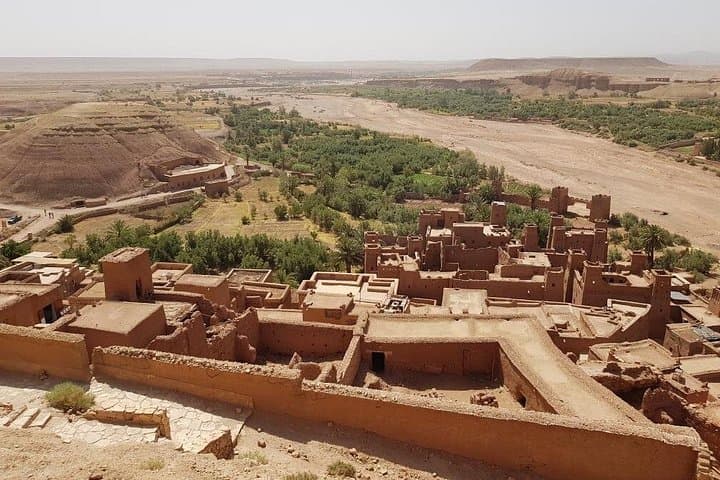
This short circuit stitches together Morocco’s layered history: Berber villages clinging to terraced hills, the fortified clay of Ait Benhaddou—listed with UNESCO—and the sinuous Draa Valley where irrigation palms push life into an otherwise dry landscape. Geology is visible in the red and ochre banding of canyon walls and in dunes that still shift with the wind, daring you to measure them by foot or camel.
Expect practical comforts and simple rhythms. Day one includes a stop at the kasbah for about two hours, then a drive to Zagora (roughly 6–8 hours total driving from Marrakech with stops). Guests ride camels into the dunes in late afternoon, sleep in shared Berber tents at a desert camp, and eat a communal dinner beneath a wide sky. Morning returns follow the Draa Valley past riverside oases and Ouarzazate’s cinema studios before the drive back to Marrakech.
For planning: pack sun protection, layered clothing for warm days and cold nights, closed-toe shoes for sand and rocky walking, and a refillable water bottle. The camel trek is gentle but can be bumpy—bring a small daypack and secure valuables. This itinerary is low on technical difficulty but high on long transfers—time management and a tolerant spirit make it rewarding.
Camel rides to the campsite are typically 45–90 minutes depending on the camp’s location and group pace.
Yes—this tour includes dinner on night one and breakfast on day two, with overnight accommodation in shared Berber tents at the desert camp.
Children can join but infants must sit on laps; the tour is not recommended for pregnant travelers or those with serious back or heart conditions.
Most traditional desert camps offer limited electricity and spotty or no Wi‑Fi; plan for minimal connectivity and bring a power bank.
Marrakech Expert Tours operates guided outdoor trips and adventures with an emphasis on safety, stewardship, and memorable experiences.


The first day begins on asphalt and ends under a sky that seems to move. Travelers leave Marrakech before dawn, climb the High Atlas via the Tizi n’ Tichka Pass (about 2,260 m) and watch the mountains shed morning mist as the road drops into sun-baked valleys.
The first day begins on asphalt and ends under a sky that seems to move. Travelers leave Marrakech before dawn, climb the High Atlas via the Tizi n’ Tichka Pass (about 2,260 m) and watch the mountains shed morning mist as the road drops into sun-baked valleys.
This short circuit stitches together Morocco’s layered history: Berber villages clinging to terraced hills, the fortified clay of Ait Benhaddou—listed with UNESCO—and the sinuous Draa Valley where irrigation palms push life into an otherwise dry landscape. Geology is visible in the red and ochre banding of canyon walls and in dunes that still shift with the wind, daring you to measure them by foot or camel.
Expect practical comforts and simple rhythms. Day one includes a stop at the kasbah for about two hours, then a drive to Zagora (roughly 6–8 hours total driving from Marrakech with stops). Guests ride camels into the dunes in late afternoon, sleep in shared Berber tents at a desert camp, and eat a communal dinner beneath a wide sky. Morning returns follow the Draa Valley past riverside oases and Ouarzazate’s cinema studios before the drive back to Marrakech.
For planning: pack sun protection, layered clothing for warm days and cold nights, closed-toe shoes for sand and rocky walking, and a refillable water bottle. The camel trek is gentle but can be bumpy—bring a small daypack and secure valuables. This itinerary is low on technical difficulty but high on long transfers—time management and a tolerant spirit make it rewarding.