THE ADVENTURE COLLECTIVE® · Independent discovery and booking for outdoor travel

Explore Marrakech’s medina on a 2½-hour guided shopping tour that visits dye workshops, a herbalist house, family cooperatives and artisan stalls. Learn weaving techniques, see hand-dyed scarves, and get practical help with purchases and shipping.
Explore Marrakech’s medina on a 2½-hour guided shopping tour that visits dye workshops, a herbalist house, family cooperatives and artisan stalls. Learn weaving techniques, see hand-dyed scarves, and get practical help with purchases and shipping.
You step from the clamour of Jemaa el-Fna into a narrower world — alleys folding back on themselves, spices scenting the air, lamps hanging like quiet moons. The guide threads you through lanes where dye vats, leather shops and silver benches sit elbow to elbow, and the cadence of the souk pulls you forward.
Verified experiences and guided adventures in the surrounding area.
Operated by guide tour marrakesh · Marrakech, Marrakech-Safi
You step from the clamour of Jemaa el-Fna into a narrower world — alleys folding back on themselves, spices scenting the air, lamps hanging like quiet moons. The guide threads you through lanes where dye vats, leather shops and silver benches sit elbow to elbow, and the cadence of the souk pulls you forward.
This tour traces living threads of Marrakech history: the Medina, a UNESCO World Heritage core since the 1980s, grew around Almoravid foundations and evolved as a commercial hub where Berber, Arab and Jewish crafts converged. Geologically, the city sits on a plain shadowed by the High Atlas; stone and clay architecture reflects local clay and centuries of craftsmen’s techniques.
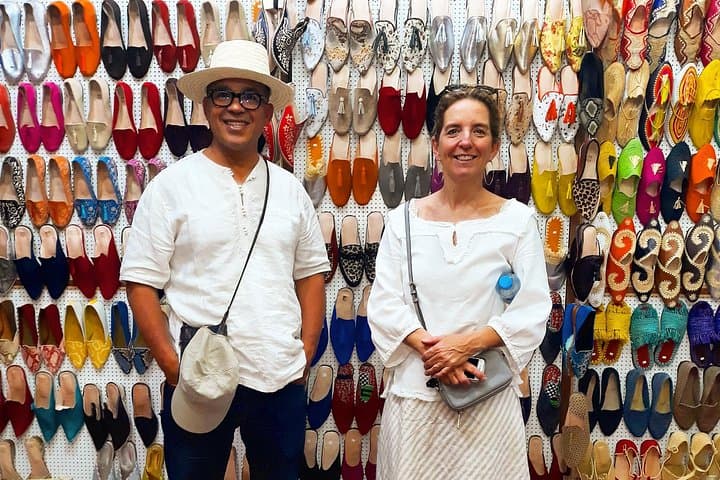
You’ll visit the Souk des Tenturiers to watch hand dyeing, a herbalist’s house that preserves medicinal plant knowledge, and family cooperatives that stitch leather babouches and weave Berber rugs. Guides explain tribal motifs, natural pigments and the practicalities of shipping purchases home — many cooperatives offer insured shipping.
Practical side: expect 2½ hours of mostly flat walking over uneven stones and narrow thresholds; bottled water is included and the route is suitable for most fitness levels. Bargain respectfully — start lower, meet in the middle — and ask before photographing workshops. Wear closed-toe shoes for dusty alleys, carry small bills for quick purchases, and plan a morning or late-afternoon slot to avoid peak heat. The tour is as much about listening as buying: artisans tell the stories behind each stitch, and the market rewards attention.
Yes — the operator lists wheelchair and stroller accessibility; however some narrow thresholds and shop interiors may still be tight, so notify the guide of needs in advance.
Many family cooperatives and shops offer insured shipping and can arrange documentation and packing for export — confirm costs and timelines before purchase.
Bargaining is expected in the souks; start lower than the asking price, be polite, and remember small purchases benefit individual artisans.
Yes — guides point out tribal motifs, materials and techniques to help distinguish authentic handwoven and silverwork items from mass-produced pieces.
guide tour marrakesh operates guided outdoor trips and adventures with an emphasis on safety, stewardship, and memorable experiences.

You step from the clamour of Jemaa el-Fna into a narrower world — alleys folding back on themselves, spices scenting the air, lamps hanging like quiet moons. The guide threads you through lanes where dye vats, leather shops and silver benches sit elbow to elbow, and the cadence of the souk pulls you forward.
You step from the clamour of Jemaa el-Fna into a narrower world — alleys folding back on themselves, spices scenting the air, lamps hanging like quiet moons. The guide threads you through lanes where dye vats, leather shops and silver benches sit elbow to elbow, and the cadence of the souk pulls you forward.
This tour traces living threads of Marrakech history: the Medina, a UNESCO World Heritage core since the 1980s, grew around Almoravid foundations and evolved as a commercial hub where Berber, Arab and Jewish crafts converged. Geologically, the city sits on a plain shadowed by the High Atlas; stone and clay architecture reflects local clay and centuries of craftsmen’s techniques.
You’ll visit the Souk des Tenturiers to watch hand dyeing, a herbalist’s house that preserves medicinal plant knowledge, and family cooperatives that stitch leather babouches and weave Berber rugs. Guides explain tribal motifs, natural pigments and the practicalities of shipping purchases home — many cooperatives offer insured shipping.
Practical side: expect 2½ hours of mostly flat walking over uneven stones and narrow thresholds; bottled water is included and the route is suitable for most fitness levels. Bargain respectfully — start lower, meet in the middle — and ask before photographing workshops. Wear closed-toe shoes for dusty alleys, carry small bills for quick purchases, and plan a morning or late-afternoon slot to avoid peak heat. The tour is as much about listening as buying: artisans tell the stories behind each stitch, and the market rewards attention.