THE ADVENTURE COLLECTIVE® · Independent discovery and booking for outdoor travel

Wander Jemaa el‑Fnaa, marvel at Koutoubia’s minaret and slip through the Medina’s alleys on a guided walking tour that combines top sights with lesser-known courtyards and rooftop views. Practical tips on timing, terrain, and market etiquette help you plan a smooth day in Marrakesh.
Wander Jemaa el‑Fnaa, marvel at Koutoubia’s minaret and slip through the Medina’s alleys on a guided walking tour that combines top sights with lesser-known courtyards and rooftop views. Practical tips on timing, terrain, and market etiquette help you plan a smooth day in Marrakesh.
You step out of the heat and into Jemaa el-Fnaa, where the square moves like a living map—singers, spice stalls and smoke from grill pits folding into the warm air. The guide threads the group into the Medina’s narrow alleys, where light slants between ochre walls and the scent of orange blossom competes with leather and saffron.
Verified experiences and guided adventures in the surrounding area.
Operated by GoMoroccoTour · Marrakesh, Marrakesh-Safi
You step out of the heat and into Jemaa el-Fnaa, where the square moves like a living map—singers, spice stalls and smoke from grill pits folding into the warm air. The guide threads the group into the Medina’s narrow alleys, where light slants between ochre walls and the scent of orange blossom competes with leather and saffron.
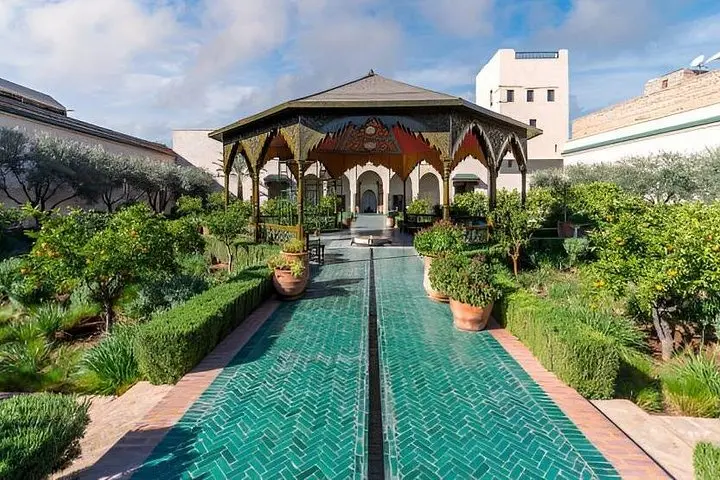
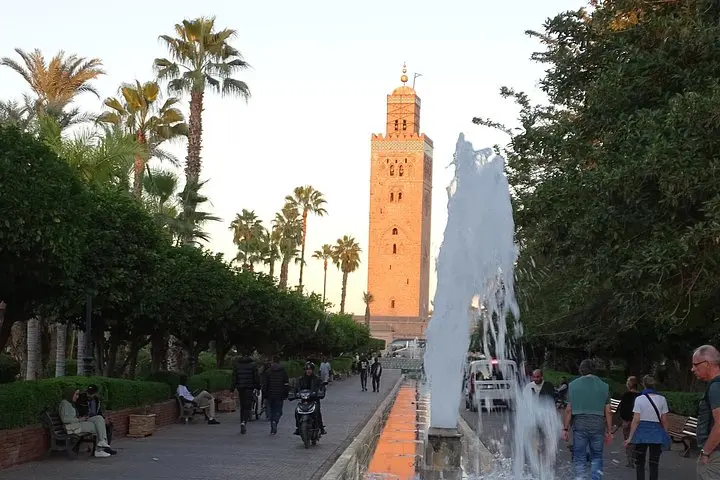
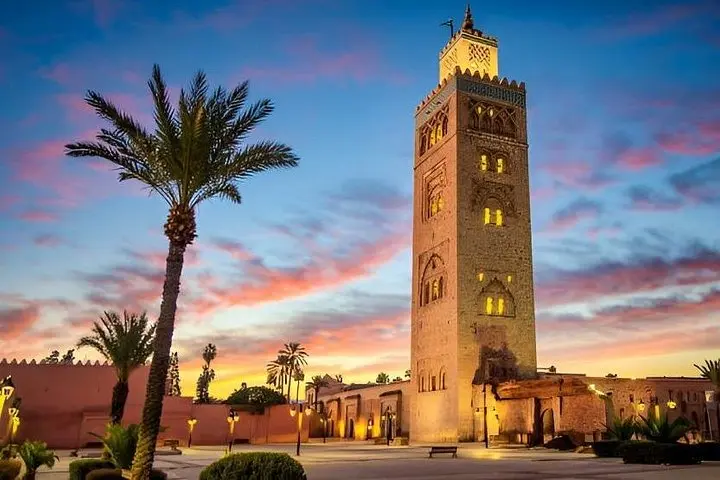
This one-day route stitches together Marrakesh’s key eras: the Almoravid and Saadian influences visible in the Koutoubia’s minaret and Saadian Tombs, the 19th‑century opulence of Palais Bahia and the stunning tilework of Ben Youssef Madrasa. Majorelle Garden offers a cooler counterpoint — a planted refuge created by Jacques Majorelle and later preserved by Yves Saint Laurent — while the souks illustrate the living craft economy, from copperware to hand-dyed textiles.
Geologically the city sits on the high plain south of the Atlas Mountains; expect flat streets with intermittent cobbles and a handful of short stair sections inside historic monuments. The walk covers roughly 3–5 km depending on side trips, with minimal elevation gain, but intense sensory and people traffic.
Practical notes: start early or late afternoon to avoid midday sun, bring 1–2 liters of water, wear supportive shoes for cobbles and quick steps, and carry small cash for market purchases. Be respectful photographing people, and allow time to climb onto a rooftop café for a panoramic cup of mint tea — the city reads differently from above.
Tours typically begin at Jemaa el‑Fnaa; the route finishes near the souks or at a central Medina exit, and guides will confirm exact meeting points when you book.
Not all entrance fees are guaranteed; some monuments may require separate tickets—confirm with the operator before arrival to know what’s covered.
Main meeting points and some transport are wheelchair accessible, but narrow alleys, cobbles and steps at monuments can be challenging—contact the operator to plan accommodations.
Tipping is customary for guiding services in Morocco; a small group tip (equivalent to several euros or dirhams per person) is appreciated if the guide provided good service.
GoMoroccoTour operates guided outdoor trips and adventures with an emphasis on safety, stewardship, and memorable experiences.
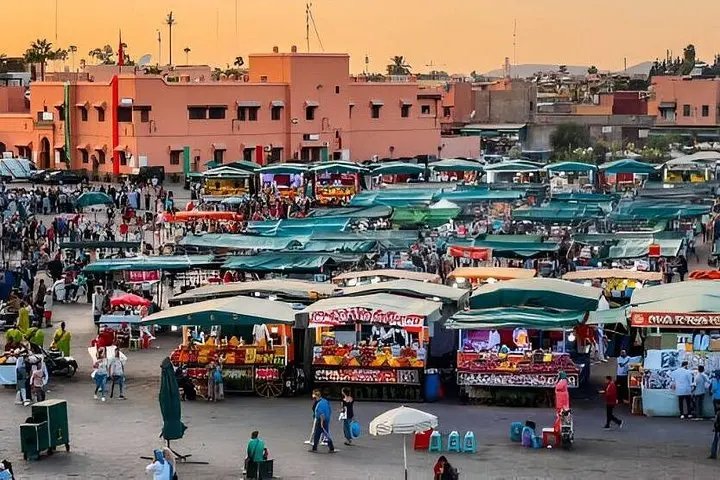
You step out of the heat and into Jemaa el-Fnaa, where the square moves like a living map—singers, spice stalls and smoke from grill pits folding into the warm air. The guide threads the group into the Medina’s narrow alleys, where light slants between ochre walls and the scent of orange blossom competes with leather and saffron.
You step out of the heat and into Jemaa el-Fnaa, where the square moves like a living map—singers, spice stalls and smoke from grill pits folding into the warm air. The guide threads the group into the Medina’s narrow alleys, where light slants between ochre walls and the scent of orange blossom competes with leather and saffron.
This one-day route stitches together Marrakesh’s key eras: the Almoravid and Saadian influences visible in the Koutoubia’s minaret and Saadian Tombs, the 19th‑century opulence of Palais Bahia and the stunning tilework of Ben Youssef Madrasa. Majorelle Garden offers a cooler counterpoint — a planted refuge created by Jacques Majorelle and later preserved by Yves Saint Laurent — while the souks illustrate the living craft economy, from copperware to hand-dyed textiles.
Geologically the city sits on the high plain south of the Atlas Mountains; expect flat streets with intermittent cobbles and a handful of short stair sections inside historic monuments. The walk covers roughly 3–5 km depending on side trips, with minimal elevation gain, but intense sensory and people traffic.
Practical notes: start early or late afternoon to avoid midday sun, bring 1–2 liters of water, wear supportive shoes for cobbles and quick steps, and carry small cash for market purchases. Be respectful photographing people, and allow time to climb onto a rooftop café for a panoramic cup of mint tea — the city reads differently from above.