THE ADVENTURE COLLECTIVE® · Independent discovery and booking for outdoor travel

Walk the heart of Marseille on a guided 10‑km urban hike from the Old Port to Notre‑Dame de la Garde. Expect steep boulvards, seaside corniches, hidden fisherman coves and historic commentary that connects the city’s past to its present.
Walk the heart of Marseille on a guided 10‑km urban hike from the Old Port to Notre‑Dame de la Garde. Expect steep boulvards, seaside corniches, hidden fisherman coves and historic commentary that connects the city’s past to its present.
A sea breeze threads through the alleys as you set off from the Old Port, gulls circling overhead and the city’s layered roofs climbing toward Notre‑Dame de la Garde. This guided 10‑kilometer urban hike moves at a sporty but steady pace—stairs, corniches and shaded park stretches—bringing you face to face with Marseille’s character: port life, working neighborhoods and sudden panoramic breaks.
Verified experiences and guided adventures in the surrounding area.
Operated by La Randonnée Urbaine de Marseille · Marseille, Provence-Alpes-Côte d'Azur
A sea breeze threads through the alleys as you set off from the Old Port, gulls circling overhead and the city’s layered roofs climbing toward Notre‑Dame de la Garde. This guided 10‑kilometer urban hike moves at a sporty but steady pace—stairs, corniches and shaded park stretches—bringing you face to face with Marseille’s character: port life, working neighborhoods and sudden panoramic breaks.
Marseille is 2,600 years old; its grid and harbors reflect Greek and Roman foundations, then dramatic 19th‑century rebuilding under the Second Empire. Geologically the coast is limestone with razor‑edged calanques nearby; within the city the land undulates—steep boulevards and small river valleys (vallons) that shaped neighborhoods like Malmousque and the Vallon des Auffes.
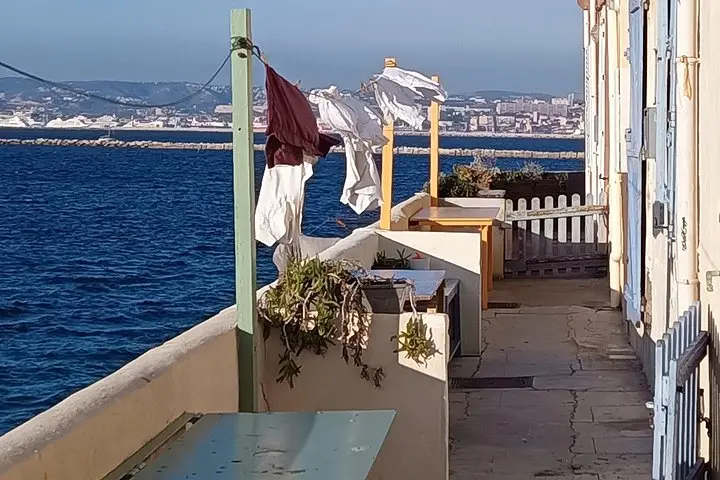
Culturally the route highlights Marseille’s Mediterranean mix: maritime trade, North African and Provençal influences, and civic architecture from Pharo Palace to the Palais de Justice. Local guides point out working fishermen’s houses and quiet courtyards that locals prize.
Practical guide: expect roughly 10 km and 300–400 m of cumulative climbing over urban terrain—paved streets, stone stairways and some cobbles. Bring a large water bottle, sun protection and shoes with good grip; breaks are frequent and the guide carries maps and binoculars for kids. Mornings and late afternoons reduce sun exposure and maximize sea breeze. Public transport is nearby at start and finish if you want to cut the loop short.
This is an accessible, interpretation‑rich way to learn Marseille on foot: athletic enough to feel earned, social enough to savor cafés and coastal views at the end.
The meeting point and finish are both at the Old Port (Vieux‑Port), at the corner of La Canebière opposite the Burger King—easy to reach by public transport.
The route is approximately 10 km with several stair climbs and urban uphill stretches; it’s rated moderate and suitable for most active people.
Yes—there are regular breaks, public restrooms near the Old Port and Pharo, and the guide plans water refill points along the route.
Children are welcome but some sections include steep stone steps and narrow alleys; strollers are not recommended for the entire route.
La Randonnée Urbaine de Marseille operates guided outdoor trips and adventures with an emphasis on safety, stewardship, and memorable experiences.
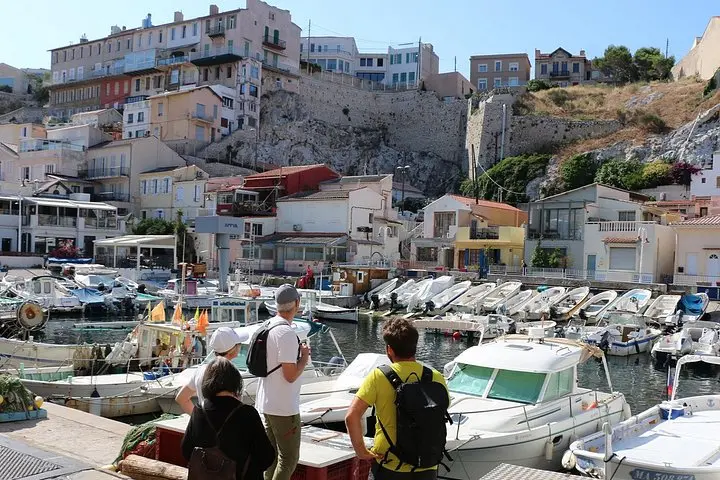
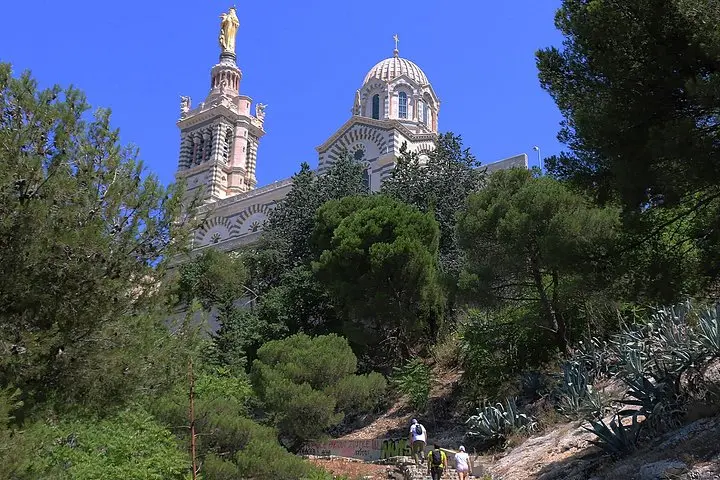
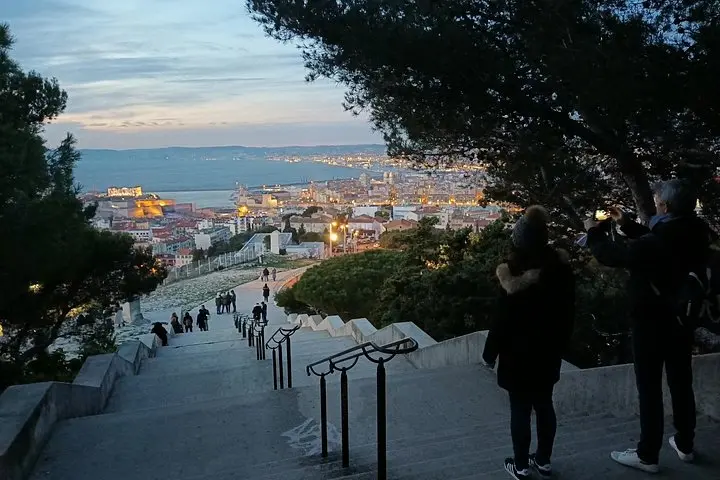
A sea breeze threads through the alleys as you set off from the Old Port, gulls circling overhead and the city’s layered roofs climbing toward Notre‑Dame de la Garde. This guided 10‑kilometer urban hike moves at a sporty but steady pace—stairs, corniches and shaded park stretches—bringing you face to face with Marseille’s character: port life, working neighborhoods and sudden panoramic breaks.
A sea breeze threads through the alleys as you set off from the Old Port, gulls circling overhead and the city’s layered roofs climbing toward Notre‑Dame de la Garde. This guided 10‑kilometer urban hike moves at a sporty but steady pace—stairs, corniches and shaded park stretches—bringing you face to face with Marseille’s character: port life, working neighborhoods and sudden panoramic breaks.
Marseille is 2,600 years old; its grid and harbors reflect Greek and Roman foundations, then dramatic 19th‑century rebuilding under the Second Empire. Geologically the coast is limestone with razor‑edged calanques nearby; within the city the land undulates—steep boulevards and small river valleys (vallons) that shaped neighborhoods like Malmousque and the Vallon des Auffes.
Culturally the route highlights Marseille’s Mediterranean mix: maritime trade, North African and Provençal influences, and civic architecture from Pharo Palace to the Palais de Justice. Local guides point out working fishermen’s houses and quiet courtyards that locals prize.
Practical guide: expect roughly 10 km and 300–400 m of cumulative climbing over urban terrain—paved streets, stone stairways and some cobbles. Bring a large water bottle, sun protection and shoes with good grip; breaks are frequent and the guide carries maps and binoculars for kids. Mornings and late afternoons reduce sun exposure and maximize sea breeze. Public transport is nearby at start and finish if you want to cut the loop short.
This is an accessible, interpretation‑rich way to learn Marseille on foot: athletic enough to feel earned, social enough to savor cafés and coastal views at the end.