THE ADVENTURE COLLECTIVE® · Independent discovery and booking for outdoor travel

Ascend Masada by cable car, trace the terraces of Herod’s fortress, then float in the hypersaline Dead Sea and try its famed mineral mud. This full‑day tour threads history, geology and simple desert rituals into a single, unforgettable outing.
Ascend Masada by cable car, trace the terraces of Herod’s fortress, then float in the hypersaline Dead Sea and try its famed mineral mud. This full‑day tour threads history, geology and simple desert rituals into a single, unforgettable outing.
You step out of the air‑conditioned van into a wind that has been shaping these cliffs for millennia. The cable car hums; a ridge of sun‑bleached rock rises like a roof above the Dead Sea, and the horizon sits impossibly low — the earth here is literally below sea level.
Verified experiences and guided adventures in the surrounding area.
Operated by Compass Travel Israel · Masada, Southern District
You step out of the air‑conditioned van into a wind that has been shaping these cliffs for millennia. The cable car hums; a ridge of sun‑bleached rock rises like a roof above the Dead Sea, and the horizon sits impossibly low — the earth here is literally below sea level.
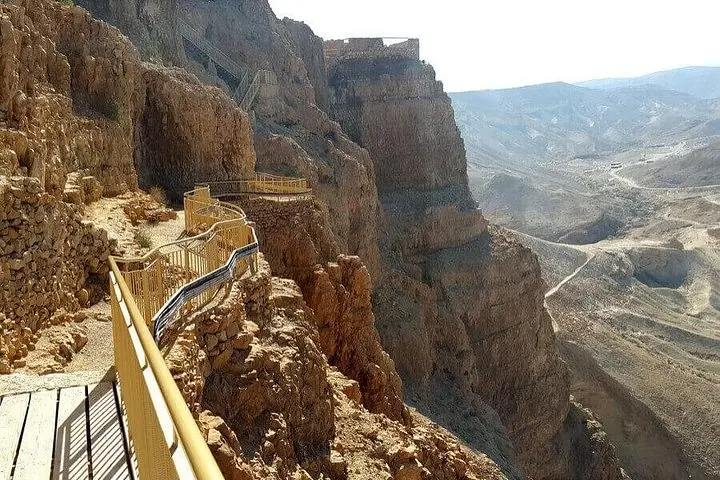
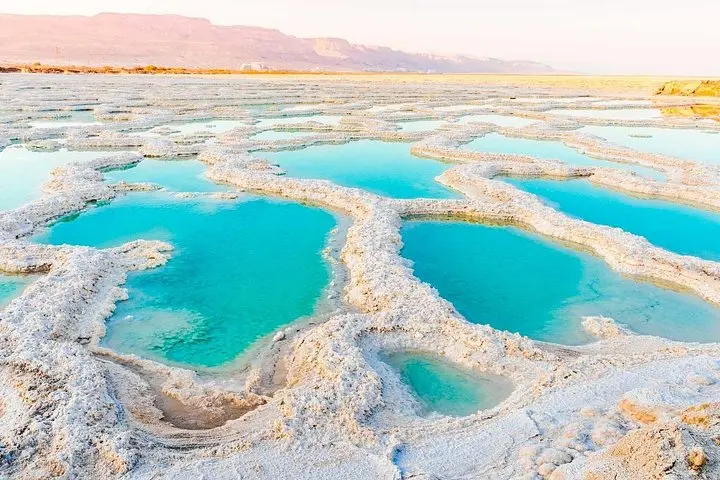
Masada’s terraces and ruined palaces are Herod’s engineering made visible: water cisterns, storerooms and a Roman siege camp etched into the basalt. Nearby, the Judean Desert holds the caves at Qumran where the Dead Sea Scrolls were discovered, a reminder of the region’s layered human story. Geologically, the Dead Sea is a closed basin collecting salts and minerals that give the water its uncanny buoyancy and therapeutic mud.
Culture here alternates between ancient solitude and modern practicalities — modest beach facilities offer changing rooms, and local vendors sell mineral products. The desert and sea don’t merely exist; they push and prod the visitor — the cliff dares you to look down, the water insists you float.
Practical guidance: this is a full‑day outing (about 10 hours) with periods of standing and short walks on uneven stone. Start early in hot months, bring at least 2 liters of water, a hat and reef‑style shoes for the salty shore. Floating is effortless but avoid getting water in your eyes and rinse immediately; use the provided showers to wash off mineral residue. The cable car spares a steep ascent, but there are exposed sections at Masada — sunscreen and sunglasses are essential. Respect fragile desert plants and leave the mineral mud where you found it.
Yes — the lake’s high salinity makes floating easy for most people; avoid swallowing water and keep it out of your eyes.
The cable car provides access to the plateau, but some surfaces on Masada are uneven; contact the operator ahead for specific accessibility needs.
Basic facilities are typically available at public beaches, but availability varies by stop — bring your own towel and check locally for lockers.
Full swimming is not practical due to buoyancy; visitors float or wade. Do not dive, and exit slowly to avoid eye or skin irritation.
Compass Travel Israel operates guided outdoor trips and adventures with an emphasis on safety, stewardship, and memorable experiences.
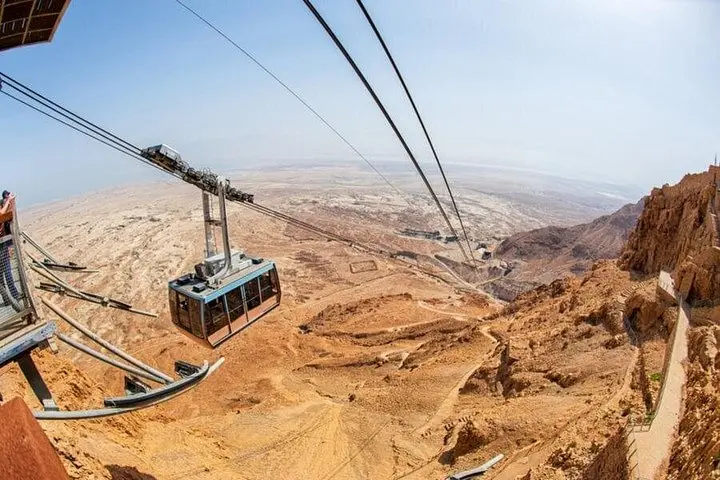

You step out of the air‑conditioned van into a wind that has been shaping these cliffs for millennia. The cable car hums; a ridge of sun‑bleached rock rises like a roof above the Dead Sea, and the horizon sits impossibly low — the earth here is literally below sea level.
You step out of the air‑conditioned van into a wind that has been shaping these cliffs for millennia. The cable car hums; a ridge of sun‑bleached rock rises like a roof above the Dead Sea, and the horizon sits impossibly low — the earth here is literally below sea level.
Masada’s terraces and ruined palaces are Herod’s engineering made visible: water cisterns, storerooms and a Roman siege camp etched into the basalt. Nearby, the Judean Desert holds the caves at Qumran where the Dead Sea Scrolls were discovered, a reminder of the region’s layered human story. Geologically, the Dead Sea is a closed basin collecting salts and minerals that give the water its uncanny buoyancy and therapeutic mud.
Culture here alternates between ancient solitude and modern practicalities — modest beach facilities offer changing rooms, and local vendors sell mineral products. The desert and sea don’t merely exist; they push and prod the visitor — the cliff dares you to look down, the water insists you float.
Practical guidance: this is a full‑day outing (about 10 hours) with periods of standing and short walks on uneven stone. Start early in hot months, bring at least 2 liters of water, a hat and reef‑style shoes for the salty shore. Floating is effortless but avoid getting water in your eyes and rinse immediately; use the provided showers to wash off mineral residue. The cable car spares a steep ascent, but there are exposed sections at Masada — sunscreen and sunglasses are essential. Respect fragile desert plants and leave the mineral mud where you found it.