THE ADVENTURE COLLECTIVE® · Independent discovery and booking for outdoor travel

Combine a climb to the rim of Masada with the surreal ease of floating in the Dead Sea on a private full-day tour. Expect guided history, desert geology, and practical stops for swimming and views.
Combine a climb to the rim of Masada with the surreal ease of floating in the Dead Sea on a private full-day tour. Expect guided history, desert geology, and practical stops for swimming and views.
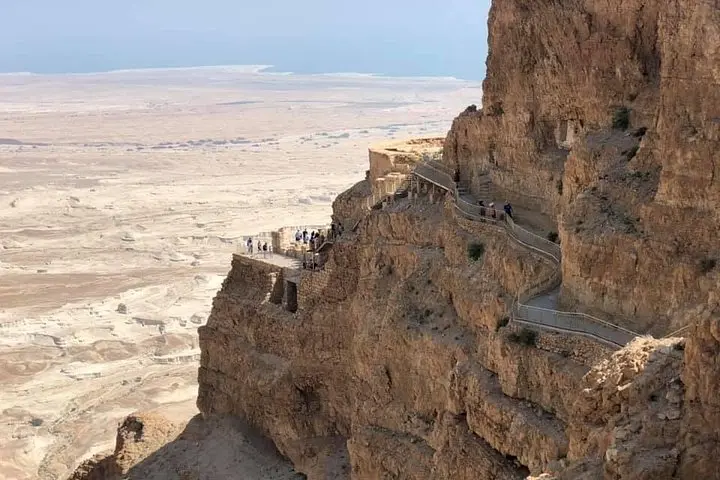
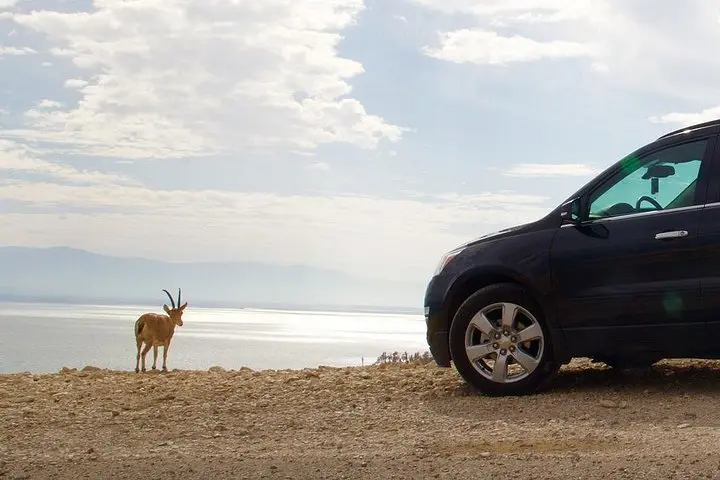
You start before sunrise, the bus humming toward a pale horizon where the Dead Sea glints like a flat mirror. The Judean hills slide by, and the air thins into desert clarity; by midmorning you'll be standing at Masada’s rim, where stone walls and Herod’s ruined palace look out over a landscape that has seen conquest and stubborn defiance.
Verified experiences and guided adventures in the surrounding area.
Operated by EYT Travel: Your trusted partner for leisure, business, and religious trips to Israel. · Masada, Southern District
You start before sunrise, the bus humming toward a pale horizon where the Dead Sea glints like a flat mirror. The Judean hills slide by, and the air thins into desert clarity; by midmorning you'll be standing at Masada’s rim, where stone walls and Herod’s ruined palace look out over a landscape that has seen conquest and stubborn defiance.
Masada is both archaeology and story: Herod’s building program overlays Roman siege scars and the memory of the 1st-century Jewish rebels. Geologically the area is dominated by evaporitic basins — the Dead Sea’s extreme salinity is a consequence of drainage and evaporation in a closed rift valley. Culturally, the sites connect Jewish history, early Christian pilgrimage, and Bedouin presence in the desert fringes.
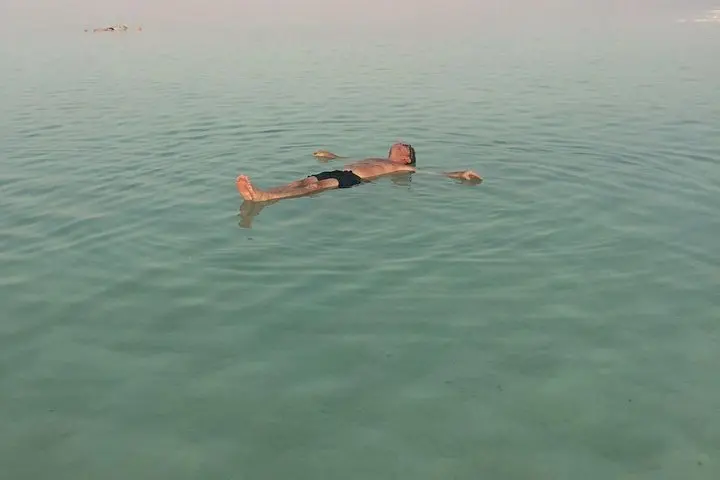
The experience pairs history with hands-on nature: a guided walk across fortress ruins and ramparts, then a dip in mineral-dense waters where buoyancy is immediate and strange. Guides typically explain conservation issues — the sea’s level is dropping and shorelines change year to year — and point out nearby features such as salt formations and spring-fed oases.
Practical guidance: expect a long day (9–10 hours), significant sun and reflective glare, and short sections of uneven walking at Masada. Bring sun protection, a swimsuit and towel, sturdy shoes for ancient stone, and a reusable water bottle. Plan pickups from Jerusalem or Tel Aviv; operators usually provide air-conditioned transport and a local guide. Timing matters: visit Masada early to avoid heat and use Dead Sea stops for relaxation and skin-soothing minerals before returning to the city.
Tours run about 9–10 hours and typically include private air-conditioned transport, a guide, parking fees, and stops at Masada and the Dead Sea; entrance fees may be separate depending on operator.
Most people float easily due to the high salinity, but avoid submerging your head and do not go in with open wounds; children should be supervised closely.
Masada can be reached by cable car which reduces walking; however, uneven surfaces at the top may be challenging—check accessibility options with the operator beforehand.
Heat and sun are primary hazards—carry water and sun protection. The Dead Sea shoreline changes frequently, so follow local guidance about safe bathing areas and avoid entering historically restricted zones.
EYT Travel: Your trusted partner for leisure, business, and religious trips to Israel. operates guided outdoor trips and adventures with an emphasis on safety, stewardship, and memorable experiences.

You start before sunrise, the bus humming toward a pale horizon where the Dead Sea glints like a flat mirror. The Judean hills slide by, and the air thins into desert clarity; by midmorning you'll be standing at Masada’s rim, where stone walls and Herod’s ruined palace look out over a landscape that has seen conquest and stubborn defiance.
You start before sunrise, the bus humming toward a pale horizon where the Dead Sea glints like a flat mirror. The Judean hills slide by, and the air thins into desert clarity; by midmorning you'll be standing at Masada’s rim, where stone walls and Herod’s ruined palace look out over a landscape that has seen conquest and stubborn defiance.
Masada is both archaeology and story: Herod’s building program overlays Roman siege scars and the memory of the 1st-century Jewish rebels. Geologically the area is dominated by evaporitic basins — the Dead Sea’s extreme salinity is a consequence of drainage and evaporation in a closed rift valley. Culturally, the sites connect Jewish history, early Christian pilgrimage, and Bedouin presence in the desert fringes.
The experience pairs history with hands-on nature: a guided walk across fortress ruins and ramparts, then a dip in mineral-dense waters where buoyancy is immediate and strange. Guides typically explain conservation issues — the sea’s level is dropping and shorelines change year to year — and point out nearby features such as salt formations and spring-fed oases.
Practical guidance: expect a long day (9–10 hours), significant sun and reflective glare, and short sections of uneven walking at Masada. Bring sun protection, a swimsuit and towel, sturdy shoes for ancient stone, and a reusable water bottle. Plan pickups from Jerusalem or Tel Aviv; operators usually provide air-conditioned transport and a local guide. Timing matters: visit Masada early to avoid heat and use Dead Sea stops for relaxation and skin-soothing minerals before returning to the city.