THE ADVENTURE COLLECTIVE® · Independent discovery and booking for outdoor travel

Spend a day on Mascardi Lake paddling under wind‑scoured peaks and hiking into lenga forest to a small lagoon. This guided kayak-and-trek from Bariloche mixes geology, Mapuche stewardship and a relaxed pace ideal for first‑time paddlers.
Spend a day on Mascardi Lake paddling under wind‑scoured peaks and hiking into lenga forest to a small lagoon. This guided kayak-and-trek from Bariloche mixes geology, Mapuche stewardship and a relaxed pace ideal for first‑time paddlers.
The morning air off Mascardi Lake smells of cold water and wood smoke; the lake's surface flattens then shivers as a breeze pushes across it, daring you to step into its quiet. You meet your guide at a small dock after a 45‑minute transfer from Bariloche, shuffle into a bright kayak and push off. Paddles slice the pale blue, and the shoreline — ribs of worn granite and stands of lenga beech — slides by like a slow, attentive audience.
Verified experiences and guided adventures in the surrounding area.
Operated by Tangol · San Carlos de Bariloche, Río Negro
The morning air off Mascardi Lake smells of cold water and wood smoke; the lake's surface flattens then shivers as a breeze pushes across it, daring you to step into its quiet. You meet your guide at a small dock after a 45‑minute transfer from Bariloche, shuffle into a bright kayak and push off. Paddles slice the pale blue, and the shoreline — ribs of worn granite and stands of lenga beech — slides by like a slow, attentive audience.
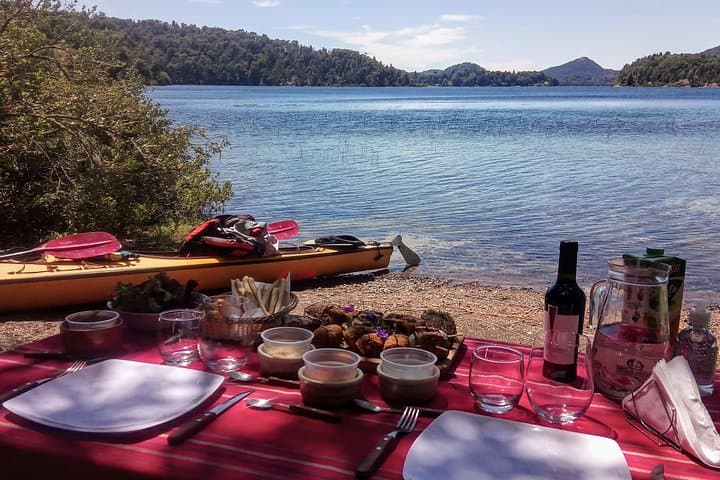
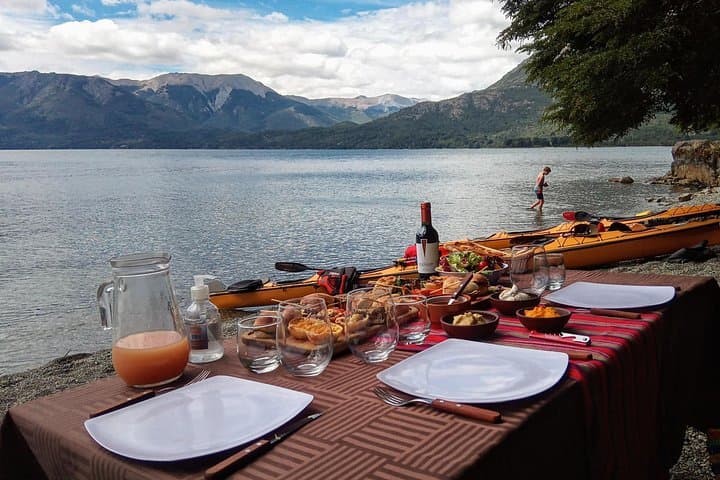
This is a day built around rhythm: 90 minutes on the water, 90 minutes on foot. The route threads coastal bays toward Playa Leones, a broad strip of pebble and sand where the Mapuche community's Camping Wiritray keeps a respectful distance from the national park. Here, the guide lays out a simple lunch and talks about the geology underfoot — sculpted by Quaternary glaciers, the valley shows striated bedrock and outcrops polished by ice and meltwater.
The natural history is compact and immediate. Lenga and coihue trees hold the slope; southern beech leaves rattle like small coins. Birdsong is directed and businesslike — kuntur-like caracaras and small flycatchers moving through branches — while the lake seems to breathe, spitting surf at the rocks when a gust comes through. The trek to Lagoon Yum runs through understory and boardwalks, an intimate walk that lets the guide explain freshwater ecology, the fragile peat and bogs that feed the lagoon, and the Mapuche relationship to this place.
Cultural notes are woven into the day: Camping Wiritray is stewarded by a Native Mapuche community, and local voices emphasize low-impact use and respect for plant medicines and sacred sites. The national park status protects wildlife and enforces limits, so the experience feels both wild and curated.
Practical edge: the paddling is steady but not technical, and the trail sections are short with modest elevation gain — expect uneven roots and wet patches. Bring layers: mountain weather turns quickly. Hydration is essential; even in cool air, long paddles demand electrolytes. Shoes that can get damp but still grip on rock and mud are the right call. The operation supplies kayaks, safety gear and a multilingual guide; lunch, snacks and bottled water are included.
Timing and logistics: plan a full day (about seven hours all-in) with hotel pickup in central Bariloche. The minimum age is 14 and moderate fitness is required. For photographers, the light is best at the shoreline at low sun; for solitude, ask for early departures. Above all, come ready to move between two elements — where the lake will push, and the forest will pull you inland — and you’ll return to Bariloche with a clearer sense of Patagonia’s slower, wetter cadence.
No — guides provide instruction and the kayaking section is at a relaxed pace suitable for beginners with basic fitness.
Professional guide, hotel pickup/drop‑off in central Bariloche, kayaking gear, bottled water, snacks and lunch are included.
The full excursion is about seven hours including a roughly 45‑minute transfer each way, 1.5 hours kayaking and 1.5 hours trekking with time for lunch and relaxation.
Minimum age is 14 years; younger participants are generally not permitted due to safety and equipment limits.
All sales are final — cancellations and refunds are not available, so plan accordingly.
Basic facilities are available at established beach and camping areas, but expect rustic conditions; bring hand sanitizer and consider comfort needs beforehand.
Tangol operates guided outdoor trips and adventures with an emphasis on safety, stewardship, and memorable experiences.
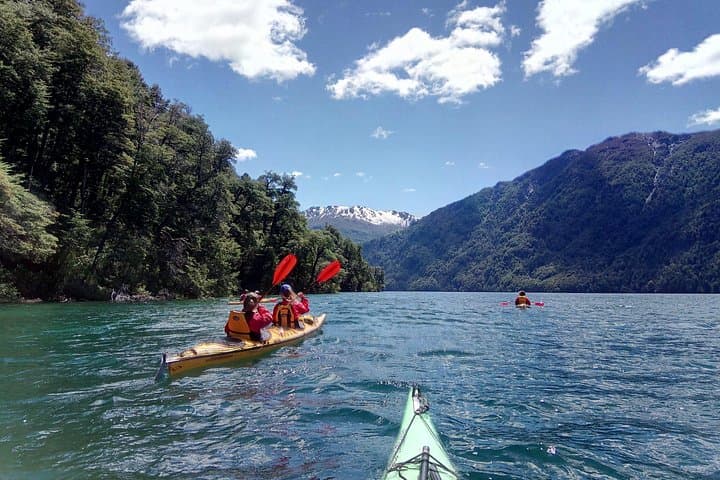
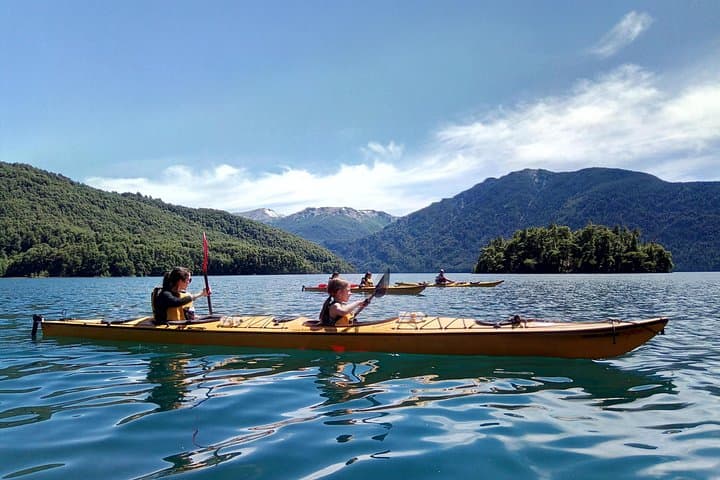
The morning air off Mascardi Lake smells of cold water and wood smoke; the lake's surface flattens then shivers as a breeze pushes across it, daring you to step into its quiet. You meet your guide at a small dock after a 45‑minute transfer from Bariloche, shuffle into a bright kayak and push off. Paddles slice the pale blue, and the shoreline — ribs of worn granite and stands of lenga beech — slides by like a slow, attentive audience.
The morning air off Mascardi Lake smells of cold water and wood smoke; the lake's surface flattens then shivers as a breeze pushes across it, daring you to step into its quiet. You meet your guide at a small dock after a 45‑minute transfer from Bariloche, shuffle into a bright kayak and push off. Paddles slice the pale blue, and the shoreline — ribs of worn granite and stands of lenga beech — slides by like a slow, attentive audience.
This is a day built around rhythm: 90 minutes on the water, 90 minutes on foot. The route threads coastal bays toward Playa Leones, a broad strip of pebble and sand where the Mapuche community's Camping Wiritray keeps a respectful distance from the national park. Here, the guide lays out a simple lunch and talks about the geology underfoot — sculpted by Quaternary glaciers, the valley shows striated bedrock and outcrops polished by ice and meltwater.
The natural history is compact and immediate. Lenga and coihue trees hold the slope; southern beech leaves rattle like small coins. Birdsong is directed and businesslike — kuntur-like caracaras and small flycatchers moving through branches — while the lake seems to breathe, spitting surf at the rocks when a gust comes through. The trek to Lagoon Yum runs through understory and boardwalks, an intimate walk that lets the guide explain freshwater ecology, the fragile peat and bogs that feed the lagoon, and the Mapuche relationship to this place.
Cultural notes are woven into the day: Camping Wiritray is stewarded by a Native Mapuche community, and local voices emphasize low-impact use and respect for plant medicines and sacred sites. The national park status protects wildlife and enforces limits, so the experience feels both wild and curated.
Practical edge: the paddling is steady but not technical, and the trail sections are short with modest elevation gain — expect uneven roots and wet patches. Bring layers: mountain weather turns quickly. Hydration is essential; even in cool air, long paddles demand electrolytes. Shoes that can get damp but still grip on rock and mud are the right call. The operation supplies kayaks, safety gear and a multilingual guide; lunch, snacks and bottled water are included.
Timing and logistics: plan a full day (about seven hours all-in) with hotel pickup in central Bariloche. The minimum age is 14 and moderate fitness is required. For photographers, the light is best at the shoreline at low sun; for solitude, ask for early departures. Above all, come ready to move between two elements — where the lake will push, and the forest will pull you inland — and you’ll return to Bariloche with a clearer sense of Patagonia’s slower, wetter cadence.