THE ADVENTURE COLLECTIVE® · Independent discovery and booking for outdoor travel

Board Maui’s custom Super Raft from Maalaea Harbor for an intimate, small-group whale watch. Naturalists, onboard hydrophone, and a smooth ride put you close to humpback whales while keeping comfort and conservation front and center.
Board Maui’s custom Super Raft from Maalaea Harbor for an intimate, small-group whale watch. Naturalists, onboard hydrophone, and a smooth ride put you close to humpback whales while keeping comfort and conservation front and center.
The bow punches through glassy Pacific at first light and a hush falls across the deck—then the ocean answers with a tail-slap that sends a spray of salt toward the rail. Onboard Maui’s only custom-built Super Raft, you sit low enough to feel the wake and steady enough to trust the guide who’s already cued the hydrophone. Underwater song bubbles up through speakers while a naturalist sketches whale behavior in plain English: nursing pairs, pectoral slaps, and the rare, full-body breach.
Verified experiences and guided adventures in the surrounding area.
Operated by Maui Reef Adventures · Maalaea, Hawaii
The bow punches through glassy Pacific at first light and a hush falls across the deck—then the ocean answers with a tail-slap that sends a spray of salt toward the rail. Onboard Maui’s only custom-built Super Raft, you sit low enough to feel the wake and steady enough to trust the guide who’s already cued the hydrophone. Underwater song bubbles up through speakers while a naturalist sketches whale behavior in plain English: nursing pairs, pectoral slaps, and the rare, full-body breach.
This stretch of water off Maalaea Harbor is a seasonal stage. Each winter thousands of humpback whales, or koholā in Hawaiian, swim from Alaskan feeding grounds to Maui’s warm, protected bays to breed and calve. The coastline here is a product of relatively young volcanic flows and fringing reef—shallow shelves where mothers and calves find calmer water. The modern whale watch also sits atop layers of island history: Hawaiian oral tradition that honored whales as powerful kin, and more recent protections that turned commercial whaling’s legacy into conservation and education.
The Super Raft balances two impulses—intimacy and comfort. Its low profile offers nearly eye-level views without the jostle of an open Zodiac, and onboard restrooms and bottled water keep the trip civilized. Naturalists are part scientist, part storyteller; they narrate behavior, point out identifying scars, and explain NOAA regulations that keep viewing safe for both people and whales.
Plan your timing: peak season runs roughly December through April when whales are most active. Check in early—Maalaea Harbor parking fills fast and the meeting point is at the south loading dock next to the Harbor Master building. Bring layered clothes (wind and spray cut through morning warmth), reef-safe sunscreen, and a compact camera with a fast shutter or burst mode. If you’re prone to seasickness, pick a seat near the center of the vessel and consider a preventive patch or pill.
This isn’t just sightseeing; it’s field biology on the water. Expect three types of encounters—surface behavior, slow approaches for mother-calf pairs, and the unexpected spectacle that prompts everyone on deck to hold their breath. The hydrophone adds a rare dimension: whale song is both data and drama, a living soundtrack to the visual show.
Practical notes: tours last about 1.5–2 hours, are family-friendly (no children under 4), and operators follow strict approach guidelines—no chasing, no noise intrusions, and a focus on minimizing fuel use where possible. For travelers who want to leave Maui with an unforgettable scene burned into memory—a breath, a fluke, the echo of song—this Super Raft trip is engineered to deliver that moment with both reverence and reliability.
Peak season is roughly December through April when humpbacks migrate to Hawaiian waters to breed and calve.
The excursion is about 105 minutes (roughly 1.5–2 hours) including transit and viewing time.
Yes—children are welcome but not under age 4; families should watch for seasickness and supervise kids on deck.
Yes, the Super Raft has onboard restrooms for guest comfort during the trip.
Yes—the boat carries an onboard hydrophone so guides can broadcast whale vocalizations live to the group.
Trips may be canceled for poor weather or insufficient travelers; full refund is typically available if canceled at least 24 hours prior.
Maui Reef Adventures operates guided outdoor trips and adventures with an emphasis on safety, stewardship, and memorable experiences.
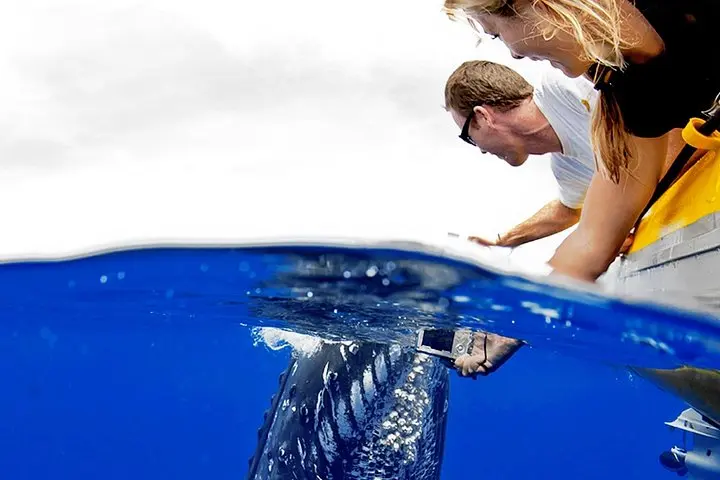
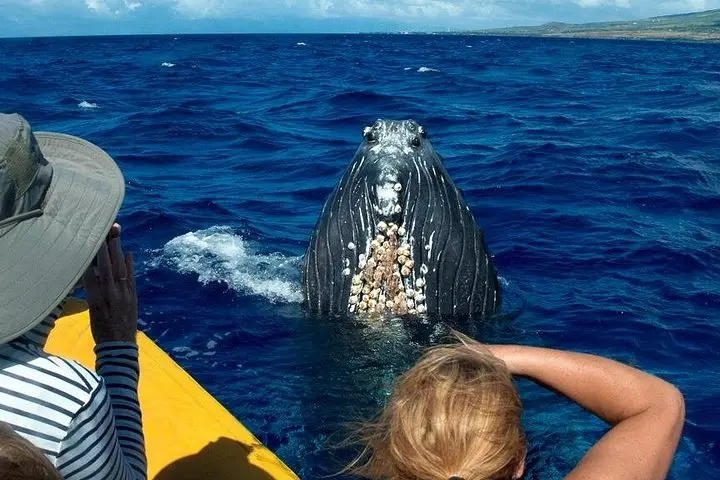
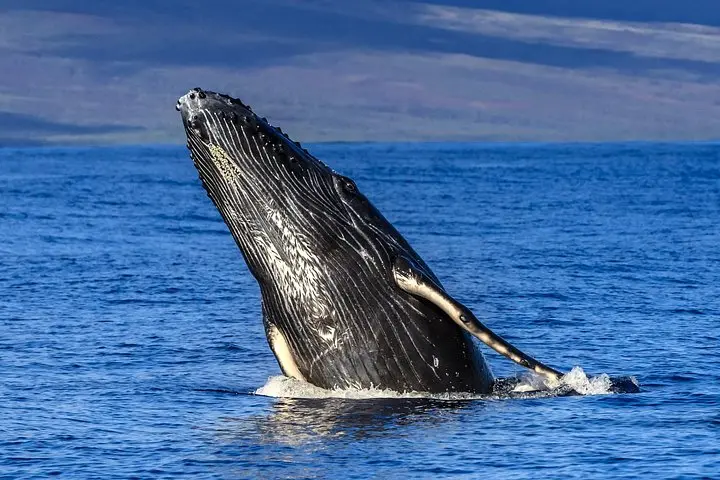
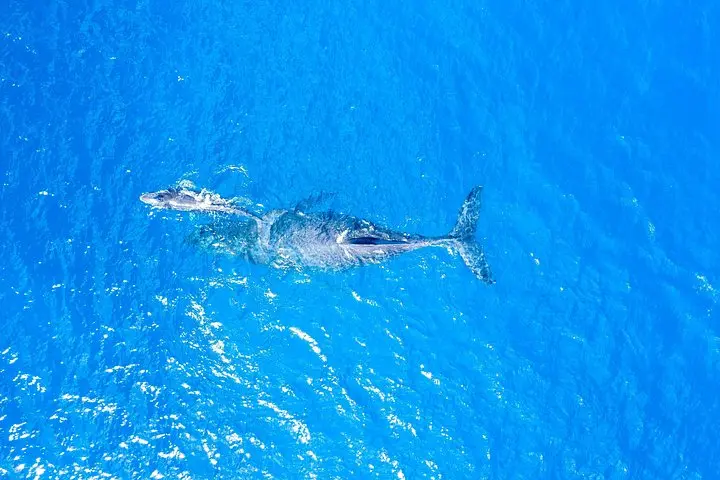
The bow punches through glassy Pacific at first light and a hush falls across the deck—then the ocean answers with a tail-slap that sends a spray of salt toward the rail. Onboard Maui’s only custom-built Super Raft, you sit low enough to feel the wake and steady enough to trust the guide who’s already cued the hydrophone. Underwater song bubbles up through speakers while a naturalist sketches whale behavior in plain English: nursing pairs, pectoral slaps, and the rare, full-body breach.
The bow punches through glassy Pacific at first light and a hush falls across the deck—then the ocean answers with a tail-slap that sends a spray of salt toward the rail. Onboard Maui’s only custom-built Super Raft, you sit low enough to feel the wake and steady enough to trust the guide who’s already cued the hydrophone. Underwater song bubbles up through speakers while a naturalist sketches whale behavior in plain English: nursing pairs, pectoral slaps, and the rare, full-body breach.
This stretch of water off Maalaea Harbor is a seasonal stage. Each winter thousands of humpback whales, or koholā in Hawaiian, swim from Alaskan feeding grounds to Maui’s warm, protected bays to breed and calve. The coastline here is a product of relatively young volcanic flows and fringing reef—shallow shelves where mothers and calves find calmer water. The modern whale watch also sits atop layers of island history: Hawaiian oral tradition that honored whales as powerful kin, and more recent protections that turned commercial whaling’s legacy into conservation and education.
The Super Raft balances two impulses—intimacy and comfort. Its low profile offers nearly eye-level views without the jostle of an open Zodiac, and onboard restrooms and bottled water keep the trip civilized. Naturalists are part scientist, part storyteller; they narrate behavior, point out identifying scars, and explain NOAA regulations that keep viewing safe for both people and whales.
Plan your timing: peak season runs roughly December through April when whales are most active. Check in early—Maalaea Harbor parking fills fast and the meeting point is at the south loading dock next to the Harbor Master building. Bring layered clothes (wind and spray cut through morning warmth), reef-safe sunscreen, and a compact camera with a fast shutter or burst mode. If you’re prone to seasickness, pick a seat near the center of the vessel and consider a preventive patch or pill.
This isn’t just sightseeing; it’s field biology on the water. Expect three types of encounters—surface behavior, slow approaches for mother-calf pairs, and the unexpected spectacle that prompts everyone on deck to hold their breath. The hydrophone adds a rare dimension: whale song is both data and drama, a living soundtrack to the visual show.
Practical notes: tours last about 1.5–2 hours, are family-friendly (no children under 4), and operators follow strict approach guidelines—no chasing, no noise intrusions, and a focus on minimizing fuel use where possible. For travelers who want to leave Maui with an unforgettable scene burned into memory—a breath, a fluke, the echo of song—this Super Raft trip is engineered to deliver that moment with both reverence and reliability.