THE ADVENTURE COLLECTIVE® · Independent discovery and booking for outdoor travel

Saddle up for a two‑hour horseback safari about 40 minutes from Maun, where horses and guides let you approach giraffes, zebras and antelope in a private reserve. Perfect for beginners, this ride blends close wildlife encounters with the rhythms of the Okavango floodplain.
Saddle up for a two‑hour horseback safari about 40 minutes from Maun, where horses and guides let you approach giraffes, zebras and antelope in a private reserve. Perfect for beginners, this ride blends close wildlife encounters with the rhythms of the Okavango floodplain.
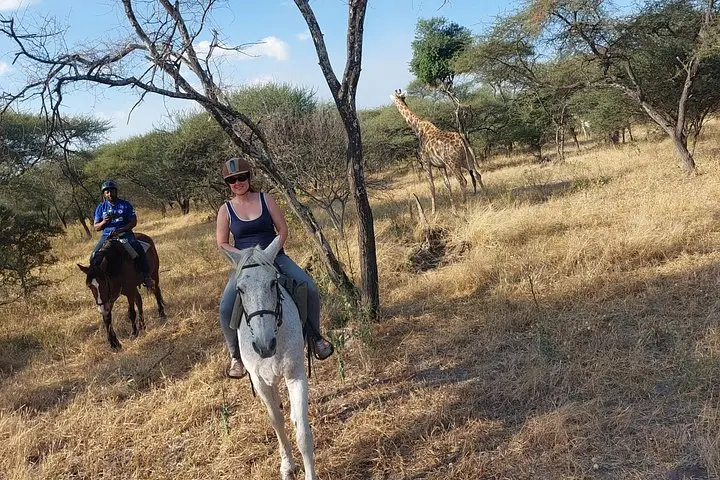
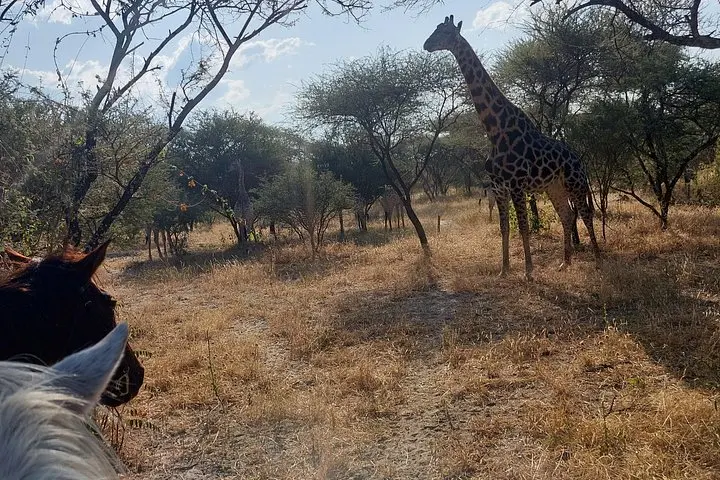
A morning hush settles over the scrub as you swing into the saddle — hooves answer the silence and the bush opens like a page. Acacia shadows shift, and a giraffe lifts its head between thorn trees as if scanning the horizon for company. On a two‑hour horseback safari just outside Maun, the landscape feels alive, the animals curious and the pace deliberate.
Verified experiences and guided adventures in the surrounding area.
Operated by Kalahari Breeze Safaris · Maun, North-West District
A morning hush settles over the scrub as you swing into the saddle — hooves answer the silence and the bush opens like a page. Acacia shadows shift, and a giraffe lifts its head between thorn trees as if scanning the horizon for company. On a two‑hour horseback safari just outside Maun, the landscape feels alive, the animals curious and the pace deliberate.
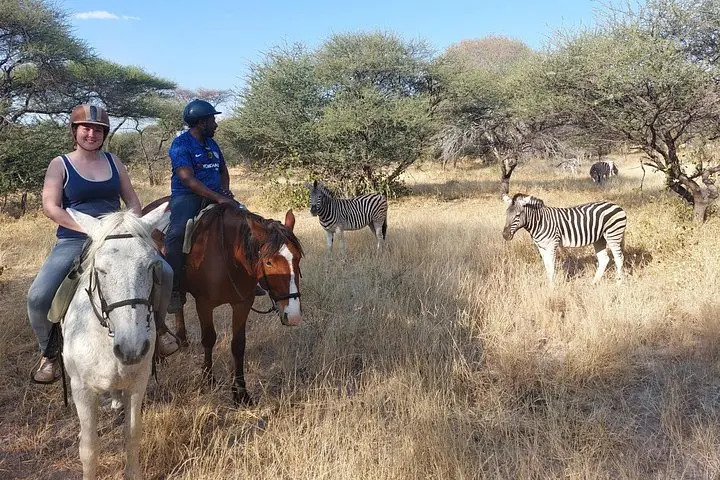
This region is the gateway to the Okavango Delta and sits on floodplain geology shaped by seasonal pulses of water; dry, sandy riverbeds give way to reed-lined channels when the rains arrive. Local communities, including Batawana groups, have long read the rhythms of this land, following fish and flood cycles and managing wildlife through communal knowledge. Riding here is intimate — horses let you approach plains species more quietly than a vehicle, so zebras, ostriches, giraffes and antelope may come close enough to study.
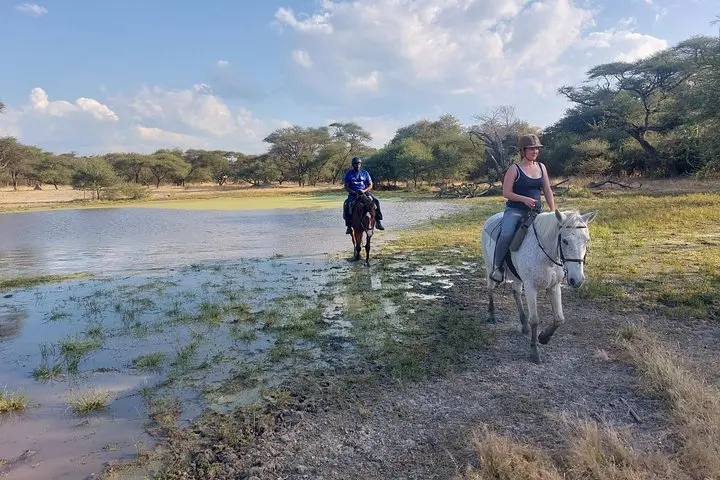
Practically, expect a roughly 40‑minute transfer from Maun to a private reserve, a short briefing, and about an hour in the saddle. Guides fit helmets and saddles and brief beginners; no prior riding experience is required, though there is a 120kg weight limit. Rides can cross shallow water depending on recent rain, so footwear and clothing that can tolerate dust or mud are sensible.
Bring sun protection, a small daypack with water, and binoculars. Morning rides deliver cooler temperatures and active wildlife; late afternoons offer long, soft light. Respect guide instructions around animals, avoid sudden movements, and let the horse set the tempo — the bush will tell you when to move and when to watch.
No — beginners are welcome; guides provide basic instruction and lead the group at a comfortable pace.
Yes — return transfers from accommodation in Maun to the private reserve are typically included in the price.
No — sightings vary with season and animal movements, but horseback rides improve chances of close encounters due to lower noise than vehicles.
There is a 120 kg weight limit and children from about three years old can ride, often on their own pony; check specifics with the operator before booking.
Kalahari Breeze Safaris operates guided outdoor trips and adventures with an emphasis on safety, stewardship, and memorable experiences.
A morning hush settles over the scrub as you swing into the saddle — hooves answer the silence and the bush opens like a page. Acacia shadows shift, and a giraffe lifts its head between thorn trees as if scanning the horizon for company. On a two‑hour horseback safari just outside Maun, the landscape feels alive, the animals curious and the pace deliberate.
A morning hush settles over the scrub as you swing into the saddle — hooves answer the silence and the bush opens like a page. Acacia shadows shift, and a giraffe lifts its head between thorn trees as if scanning the horizon for company. On a two‑hour horseback safari just outside Maun, the landscape feels alive, the animals curious and the pace deliberate.
This region is the gateway to the Okavango Delta and sits on floodplain geology shaped by seasonal pulses of water; dry, sandy riverbeds give way to reed-lined channels when the rains arrive. Local communities, including Batawana groups, have long read the rhythms of this land, following fish and flood cycles and managing wildlife through communal knowledge. Riding here is intimate — horses let you approach plains species more quietly than a vehicle, so zebras, ostriches, giraffes and antelope may come close enough to study.
Practically, expect a roughly 40‑minute transfer from Maun to a private reserve, a short briefing, and about an hour in the saddle. Guides fit helmets and saddles and brief beginners; no prior riding experience is required, though there is a 120kg weight limit. Rides can cross shallow water depending on recent rain, so footwear and clothing that can tolerate dust or mud are sensible.
Bring sun protection, a small daypack with water, and binoculars. Morning rides deliver cooler temperatures and active wildlife; late afternoons offer long, soft light. Respect guide instructions around animals, avoid sudden movements, and let the horse set the tempo — the bush will tell you when to move and when to watch.