THE ADVENTURE COLLECTIVE® · Independent discovery and booking for outdoor travel

Walk the High Line, taste Chelsea Market, and watch the Meatpacking District’s industrial bones give way to contemporary culture. This semi‑private tour condenses history, architecture, and food into a focused two‑hour neighborhood introduction.
Walk the High Line, taste Chelsea Market, and watch the Meatpacking District’s industrial bones give way to contemporary culture. This semi‑private tour condenses history, architecture, and food into a focused two‑hour neighborhood introduction.
You step off 9th Avenue and the city shifts rhythm. At the corner of 15th Street the noise thins; a guide waves a white flag and the group folds into Chelsea Market’s brick shadow. For two hours the tour moves at a walker’s pace—past cast‑iron storefronts turned boutiques, along an elevated ribbon of green where an old freight rail line lifts itself over traffic and rooftops, and into a marketplace that still smells faintly of sea salt and fresh coffee.
Verified experiences and guided adventures in the surrounding area.
Operated by Top Dog Tours Inc. · New York, New York
You step off 9th Avenue and the city shifts rhythm. At the corner of 15th Street the noise thins; a guide waves a white flag and the group folds into Chelsea Market’s brick shadow. For two hours the tour moves at a walker’s pace—past cast‑iron storefronts turned boutiques, along an elevated ribbon of green where an old freight rail line lifts itself over traffic and rooftops, and into a marketplace that still smells faintly of sea salt and fresh coffee.
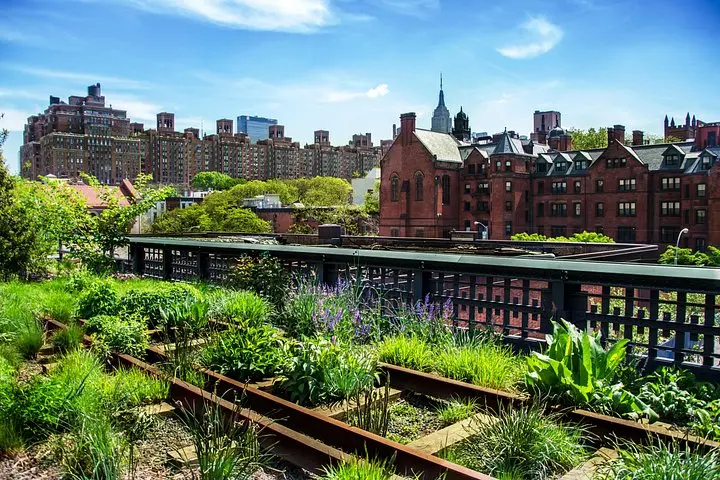
This stretch of Manhattan reads like a history of reinvention. The Meatpacking District was once dominated by slaughterhouses and meat trains; journalists dubbed part of it "Death Avenue" for the frequent accidents where wagons and steam engines intersected city life. The elevated West Side Line fell silent in the 1980s, then was reborn as the High Line park in 2009, a deliberate act of urban conservation that transformed disuse into public place. Walk here and you can see the layers: industrial brick and steel, art galleries and fashion showrooms, food stalls that preserve immigrant flavors in modern form.
Geology rarely feels relevant in Manhattan, but the shoreline and landfill undergird the piers and promenades nearby; the Hudson presses at the western edge of the neighborhood and has shaped commerce and street patterns for two centuries. Culture arrives in quick, tactile moments—a vendor offering a warm empanada, a passerby sketching the angular façade of a converted factory, a public art installation interrupting the path.
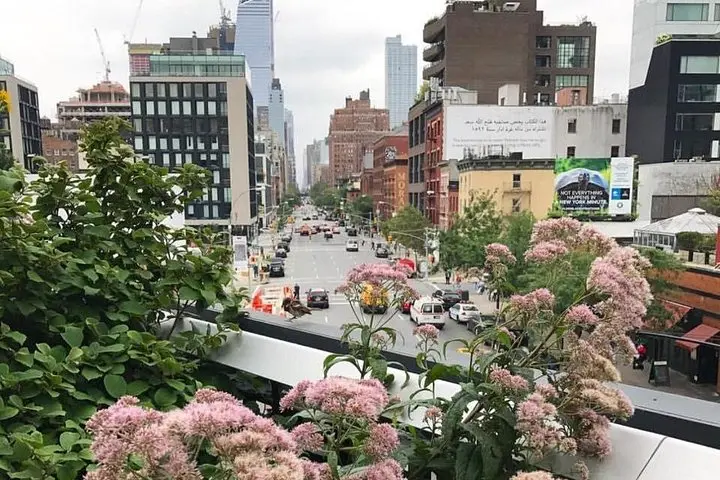
The tour balances atmosphere with practical detail. Expect roughly two miles of walking on paved city sidewalks and the raised boardwalk of the High Line, with short stops for stories and viewpoints. Guides point out architectural highlights, the High Line’s planting design, and the market stalls worth sampling. The route ends near Little Island, where the waterfront unfolds and the Hudson takes center stage.
Practical guidance: arrive 15 minutes early to find the guide, bring about $20 if you want to grab a snack at Chelsea Market, and wear comfortable shoes—the group keeps a steady pace. Mobility access is generally good but restroom availability is limited along the route. Tours run rain or shine unless the High Line is closed for safety reasons; check the operator’s cancellation policy if weather looks severe.
This is an approachable urban walk that trades vigorous elevation for dense layers of history, design, and taste. It’s ideal for curious travelers who want a compact orientation to one of New York’s most transformed neighborhoods and a few reliable tips on where to return after the tour.
The meeting point is the corner of 15th Street and 9th Avenue by the Chelsea Market entrance; the tour ends near Little Island/Gansevoort Market.
Plan on roughly two miles of walking over paved streets and the High Line, with several short stops for talks and views.
The operator lists wheelchair accessibility, but access can be limited by High Line conditions and nearby street layouts—contact the operator if you require specific accommodations.
Yes, there’s time to sample items at Chelsea Market at your own expense; bringing about $20 is recommended for a snack or drink.
Tours depart promptly; late arrivals may not be able to join once the group has left the meeting point, and refunds are not given for missed start times.
Children under 18 must be accompanied by an adult aged 21 or older; stroller access is possible on most surfaces.
Top Dog Tours Inc. operates guided outdoor trips and adventures with an emphasis on safety, stewardship, and memorable experiences.
You step off 9th Avenue and the city shifts rhythm. At the corner of 15th Street the noise thins; a guide waves a white flag and the group folds into Chelsea Market’s brick shadow. For two hours the tour moves at a walker’s pace—past cast‑iron storefronts turned boutiques, along an elevated ribbon of green where an old freight rail line lifts itself over traffic and rooftops, and into a marketplace that still smells faintly of sea salt and fresh coffee.
You step off 9th Avenue and the city shifts rhythm. At the corner of 15th Street the noise thins; a guide waves a white flag and the group folds into Chelsea Market’s brick shadow. For two hours the tour moves at a walker’s pace—past cast‑iron storefronts turned boutiques, along an elevated ribbon of green where an old freight rail line lifts itself over traffic and rooftops, and into a marketplace that still smells faintly of sea salt and fresh coffee.
This stretch of Manhattan reads like a history of reinvention. The Meatpacking District was once dominated by slaughterhouses and meat trains; journalists dubbed part of it "Death Avenue" for the frequent accidents where wagons and steam engines intersected city life. The elevated West Side Line fell silent in the 1980s, then was reborn as the High Line park in 2009, a deliberate act of urban conservation that transformed disuse into public place. Walk here and you can see the layers: industrial brick and steel, art galleries and fashion showrooms, food stalls that preserve immigrant flavors in modern form.
Geology rarely feels relevant in Manhattan, but the shoreline and landfill undergird the piers and promenades nearby; the Hudson presses at the western edge of the neighborhood and has shaped commerce and street patterns for two centuries. Culture arrives in quick, tactile moments—a vendor offering a warm empanada, a passerby sketching the angular façade of a converted factory, a public art installation interrupting the path.
The tour balances atmosphere with practical detail. Expect roughly two miles of walking on paved city sidewalks and the raised boardwalk of the High Line, with short stops for stories and viewpoints. Guides point out architectural highlights, the High Line’s planting design, and the market stalls worth sampling. The route ends near Little Island, where the waterfront unfolds and the Hudson takes center stage.
Practical guidance: arrive 15 minutes early to find the guide, bring about $20 if you want to grab a snack at Chelsea Market, and wear comfortable shoes—the group keeps a steady pace. Mobility access is generally good but restroom availability is limited along the route. Tours run rain or shine unless the High Line is closed for safety reasons; check the operator’s cancellation policy if weather looks severe.
This is an approachable urban walk that trades vigorous elevation for dense layers of history, design, and taste. It’s ideal for curious travelers who want a compact orientation to one of New York’s most transformed neighborhoods and a few reliable tips on where to return after the tour.