THE ADVENTURE COLLECTIVE® · Independent discovery and booking for outdoor travel

Ride through coffee terraces near Medellín, learn the bean-to-cup process, and sit down to a traditional fiambre lunch on a family-run finca. This half-day tour blends light horseback travel with hands-on coffee tasting and rural culture.
Ride through coffee terraces near Medellín, learn the bean-to-cup process, and sit down to a traditional fiambre lunch on a family-run finca. This half-day tour blends light horseback travel with hands-on coffee tasting and rural culture.
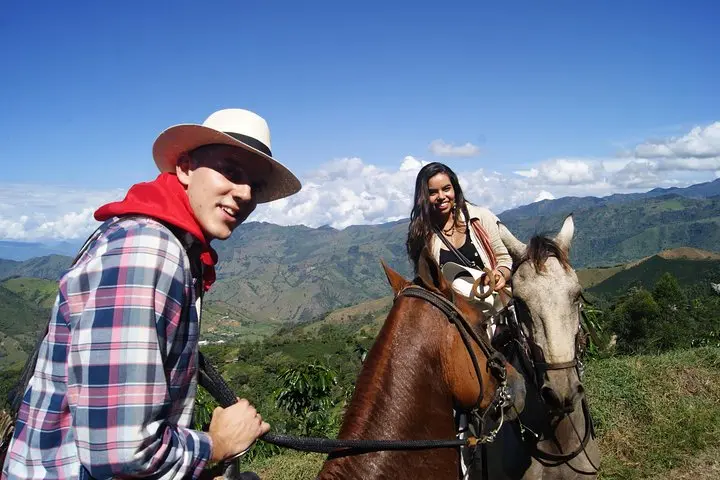
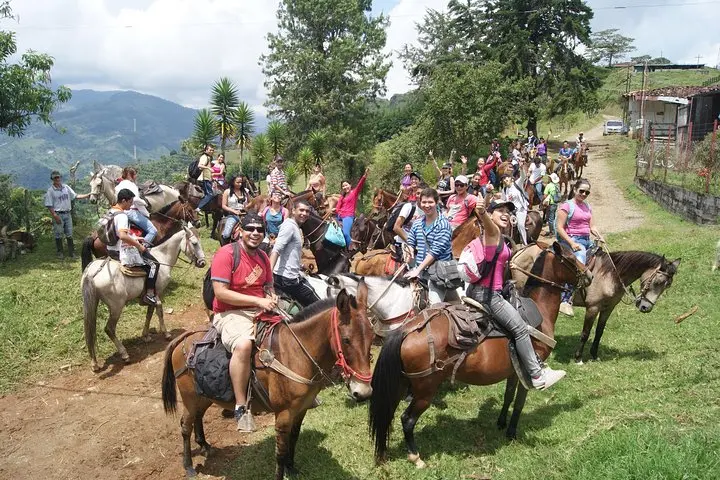
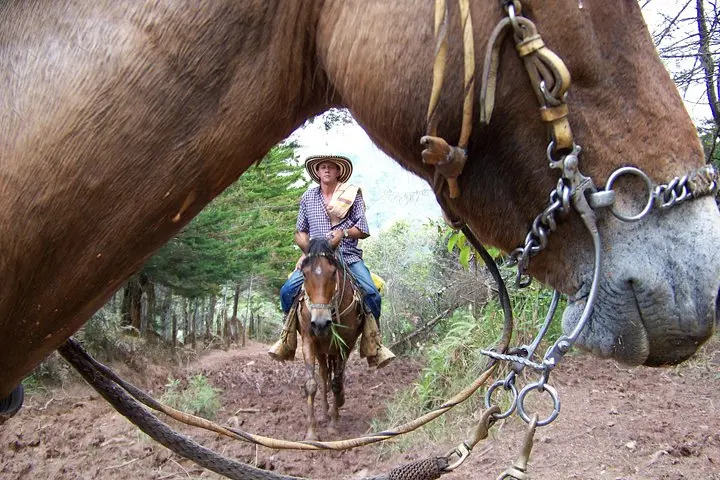
Morning light breaks across green terraces as you step off the van and breathe the first real coffee scent of the day — sweet, earthy, immediate. The hacienda at San Sebastián de Palmitas sits about 45 minutes northwest of Medellín, where mule tracks turn into horse trails and the hills roll like slow waves toward the Cauca Valley. You mount a calm, sure-footed horse and ride lanes lined with coffee bushes; the land seems to lean toward you, offering shade and the warm, humming chorus of insects.
Verified experiences and guided adventures in the surrounding area.
Operated by Viaja Medellin · Medellín, Antioquia
Morning light breaks across green terraces as you step off the van and breathe the first real coffee scent of the day — sweet, earthy, immediate. The hacienda at San Sebastián de Palmitas sits about 45 minutes northwest of Medellín, where mule tracks turn into horse trails and the hills roll like slow waves toward the Cauca Valley. You mount a calm, sure-footed horse and ride lanes lined with coffee bushes; the land seems to lean toward you, offering shade and the warm, humming chorus of insects.
This is coffee country shaped by volcanic soils and long-standing peasant traditions: plots worked by families, a history tied to Antioquia’s rural expansion, and a production chain that moves cherry to cup through hands that know each plant. Geology gives the soil depth and acidity optimal for Arabica; culture gives the tasting its ritual — from parchment drying to the careful cupping where acidity, body and aroma are teased apart.
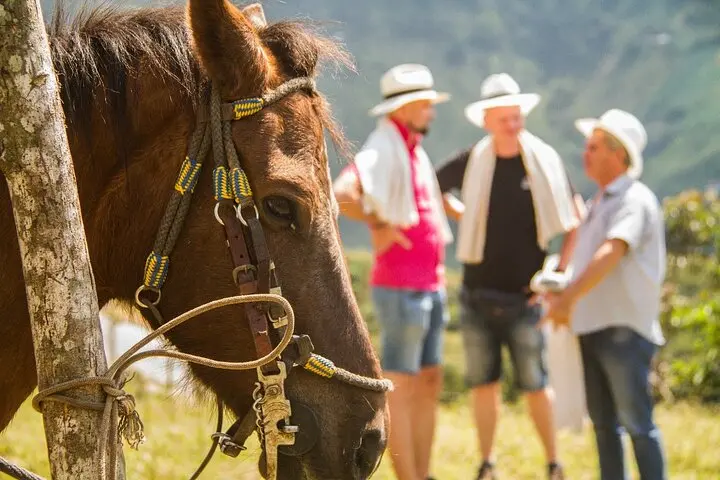
Expect a mix of gentle horseback travel and walking on uneven, sometimes slippery farm paths. The experience includes a guided tour of the coffee process, a specialty tasting at the finca, and a traditional lunch (fiambre). Guides often provide ponchos and hats for a photo-ready moment as you dress like a local muleteer.
Practical notes: wear closed-toe shoes with grip, bring sun protection and mosquito repellent, and plan for changing weather — afternoon showers are common. The tour is family-friendly but not recommended for people with serious mobility problems. By midday you’ll understand why Colombia’s coffee reputation rests in places like Palmitas: the land, the hands and the ritual all steer the cup toward excellence.
Hotel pickup and drop-off in Medellín are included; the operator will confirm a pickup point when you book.
No—horses are suitable for beginners, but riders should be able to sit steadily and follow guide instructions.
Lunch (fiambre) is included; notify the operator of dietary restrictions at booking so they can accommodate when possible.
The tour operates in most weather; rain may affect trails but the guide will adapt activities for safety and comfort.
Viaja Medellin operates guided outdoor trips and adventures with an emphasis on safety, stewardship, and memorable experiences.
Morning light breaks across green terraces as you step off the van and breathe the first real coffee scent of the day — sweet, earthy, immediate. The hacienda at San Sebastián de Palmitas sits about 45 minutes northwest of Medellín, where mule tracks turn into horse trails and the hills roll like slow waves toward the Cauca Valley. You mount a calm, sure-footed horse and ride lanes lined with coffee bushes; the land seems to lean toward you, offering shade and the warm, humming chorus of insects.
Morning light breaks across green terraces as you step off the van and breathe the first real coffee scent of the day — sweet, earthy, immediate. The hacienda at San Sebastián de Palmitas sits about 45 minutes northwest of Medellín, where mule tracks turn into horse trails and the hills roll like slow waves toward the Cauca Valley. You mount a calm, sure-footed horse and ride lanes lined with coffee bushes; the land seems to lean toward you, offering shade and the warm, humming chorus of insects.
This is coffee country shaped by volcanic soils and long-standing peasant traditions: plots worked by families, a history tied to Antioquia’s rural expansion, and a production chain that moves cherry to cup through hands that know each plant. Geology gives the soil depth and acidity optimal for Arabica; culture gives the tasting its ritual — from parchment drying to the careful cupping where acidity, body and aroma are teased apart.
Expect a mix of gentle horseback travel and walking on uneven, sometimes slippery farm paths. The experience includes a guided tour of the coffee process, a specialty tasting at the finca, and a traditional lunch (fiambre). Guides often provide ponchos and hats for a photo-ready moment as you dress like a local muleteer.
Practical notes: wear closed-toe shoes with grip, bring sun protection and mosquito repellent, and plan for changing weather — afternoon showers are common. The tour is family-friendly but not recommended for people with serious mobility problems. By midday you’ll understand why Colombia’s coffee reputation rests in places like Palmitas: the land, the hands and the ritual all steer the cup toward excellence.