THE ADVENTURE COLLECTIVE® · Independent discovery and booking for outdoor travel

A four-hour private tour that links Medellín’s most charged historical sites tied to Pablo Escobar with the vibrant street-art and social transformation of Comuna 13. Expect a guided mix of hard history and living community storytelling.
A four-hour private tour that links Medellín’s most charged historical sites tied to Pablo Escobar with the vibrant street-art and social transformation of Comuna 13. Expect a guided mix of hard history and living community storytelling.
You step out of a private van onto a steep Medellín street; the city hums and the Metrocable above rocks like a cablecar ferrying stories up the hills. The guide leads you through concrete alleys where painted faces and political stencils crowd the walls, then shifts tone to the quieter, shadowed sites tied to Pablo Escobar — a jail that felt like a fortress, a grave, and the house where the final operation unfolded.
Verified experiences and guided adventures in the surrounding area.
Operated by Camantours · Medellín, Antioquia
You step out of a private van onto a steep Medellín street; the city hums and the Metrocable above rocks like a cablecar ferrying stories up the hills. The guide leads you through concrete alleys where painted faces and political stencils crowd the walls, then shifts tone to the quieter, shadowed sites tied to Pablo Escobar — a jail that felt like a fortress, a grave, and the house where the final operation unfolded.
Medellín’s history is raw: once gripped by narcopower in the 1980s and 1990s, the city reinvented transit and public art as tools of recovery. Geologically, the valley of Aburrá narrows toward the west, driving dense neighborhoods up steep slopes that the Metrocable and outdoor escalators now stitch together. Comuna 13’s graffiti is public memory; murals and community projects map a transition from conflict to cultural tourism.
Expect a layered tour that alternates urban exploration with pointed historical context. Guides typically explain the Cathedral prison’s role as both hideout and power base, show the house tied to his death, point out burial grounds, then spend extended time in Comuna 13 — escalators, hidden murals, and community spaces where residents lead storytelling.
Practical notes: wear sturdy walking shoes and sun protection, bring water and local cash for small donations to mural caretakers. The route is mostly paved but includes stairs and steep streets; a moderate pace keeps the group together. Tours often include hotel pickup and run about four hours — arrive curious and respectful: these sites are part of a still-sensitive civic memory.
Yes — the tour is described as suitable for all fitness levels, but it includes stairs and some steep streets; consider mobility limits and notify the operator about accessibility needs.
Yes — private transportation and hotel pickup are included according to the tour details.
Yes — the itinerary lists the prison (La Catedral), the house where he died, and a cemetery visit; guides contextualize these sites historically and sensitively.
Photography is common in Comuna 13, but ask permission before photographing people and follow any guidelines the guide gives at memorial or private sites.
Camantours operates guided outdoor trips and adventures with an emphasis on safety, stewardship, and memorable experiences.
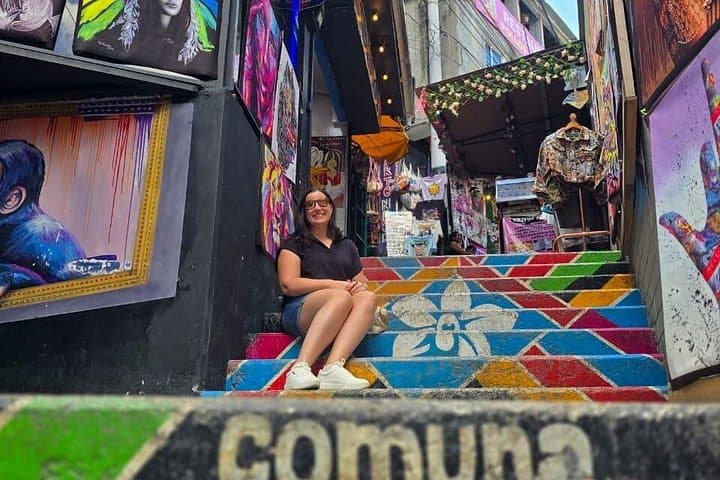
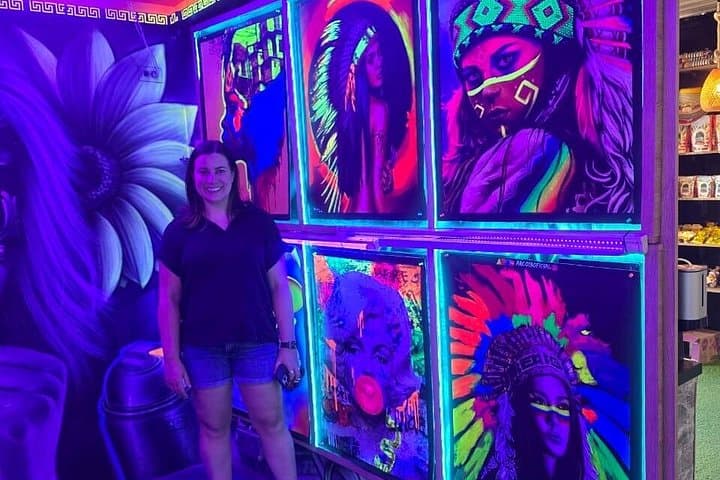
You step out of a private van onto a steep Medellín street; the city hums and the Metrocable above rocks like a cablecar ferrying stories up the hills. The guide leads you through concrete alleys where painted faces and political stencils crowd the walls, then shifts tone to the quieter, shadowed sites tied to Pablo Escobar — a jail that felt like a fortress, a grave, and the house where the final operation unfolded.
You step out of a private van onto a steep Medellín street; the city hums and the Metrocable above rocks like a cablecar ferrying stories up the hills. The guide leads you through concrete alleys where painted faces and political stencils crowd the walls, then shifts tone to the quieter, shadowed sites tied to Pablo Escobar — a jail that felt like a fortress, a grave, and the house where the final operation unfolded.
Medellín’s history is raw: once gripped by narcopower in the 1980s and 1990s, the city reinvented transit and public art as tools of recovery. Geologically, the valley of Aburrá narrows toward the west, driving dense neighborhoods up steep slopes that the Metrocable and outdoor escalators now stitch together. Comuna 13’s graffiti is public memory; murals and community projects map a transition from conflict to cultural tourism.
Expect a layered tour that alternates urban exploration with pointed historical context. Guides typically explain the Cathedral prison’s role as both hideout and power base, show the house tied to his death, point out burial grounds, then spend extended time in Comuna 13 — escalators, hidden murals, and community spaces where residents lead storytelling.
Practical notes: wear sturdy walking shoes and sun protection, bring water and local cash for small donations to mural caretakers. The route is mostly paved but includes stairs and steep streets; a moderate pace keeps the group together. Tours often include hotel pickup and run about four hours — arrive curious and respectful: these sites are part of a still-sensitive civic memory.