THE ADVENTURE COLLECTIVE® · Independent discovery and booking for outdoor travel

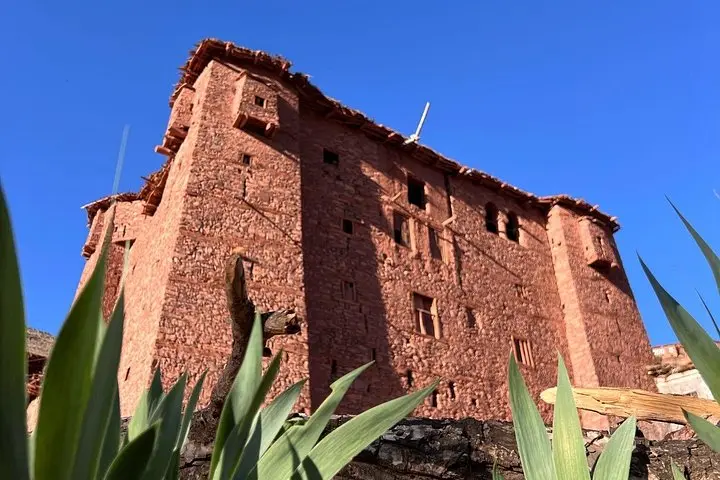
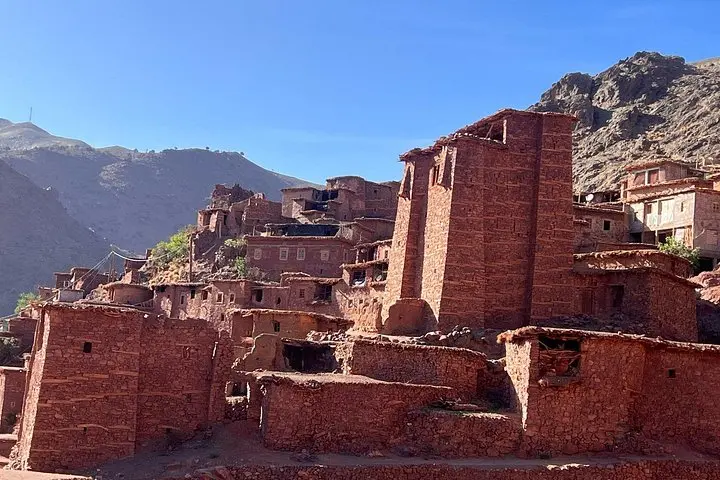
Leave the popular sights behind for a private day in Tassaoute Valley, where six centuries-old kasbahs and a short hill hike reveal authentic Berber life. Share a home-cooked lunch, hear the valley’s songs, and explore Granary Kasbahs set against terraced fields.
Leave the popular sights behind for a private day in Tassaoute Valley, where six centuries-old kasbahs and a short hill hike reveal authentic Berber life. Share a home-cooked lunch, hear the valley’s songs, and explore Granary Kasbahs set against terraced fields.
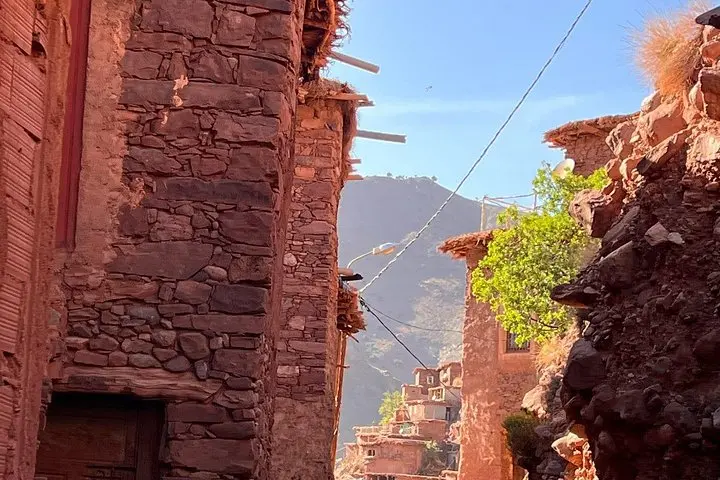
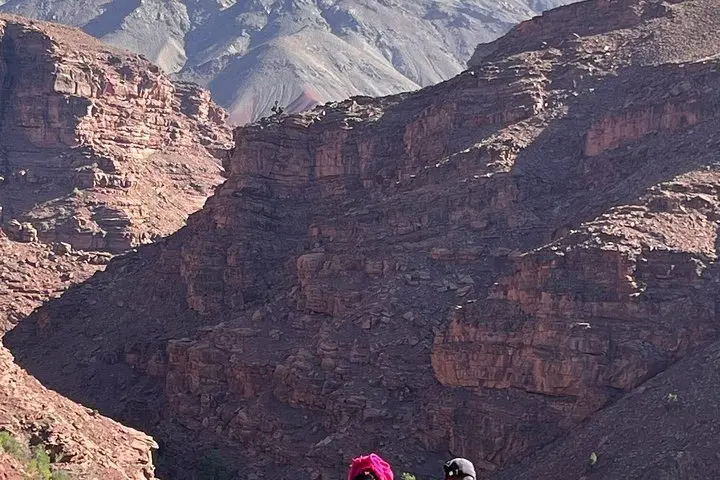
The road drops away from Ouarzazate and, within an hour, the High Atlas slips into a quieter tone—stone terraces thinning into uncrowded fields and earthen kasbahs rising from the valley floor. You step out in Megdaz to a village shaped by wind, sun and six ancient kasbahs; the earth here holds stories in its walls and the valley seems to watch as you begin a modest hill hike.
Verified experiences and guided adventures in the surrounding area.
Operated by Morocco Exposure · Ouarzazate, Drâa-Tafilalet
The road drops away from Ouarzazate and, within an hour, the High Atlas slips into a quieter tone—stone terraces thinning into uncrowded fields and earthen kasbahs rising from the valley floor. You step out in Megdaz to a village shaped by wind, sun and six ancient kasbahs; the earth here holds stories in its walls and the valley seems to watch as you begin a modest hill hike.
The Tassaoute Valley carries centuries of Berber craft and settlement patterns: rammed-earth and stone construction, small granaries, and irrigated plots fed by traditional channels. Geologically, the valley is an alluvial corridor between the High Atlas ridges and lower arid plains—rocky slopes give way to terraced soils where olive and almond trees cling to contour lines.
Culturally, Megdaz is quieter than tourist staples; it's a working valley where songs, like those of M’ririda N’ait Aatik, are part of daily memory. Expect to learn about kasbah construction and local family life during a shared lunch, and to read or hear passages that anchor the village’s voice.
Practical guidance: the outing is a private day tour with roughly 4–6 hours on site, including a 2–4 km guided hike that gains a few hundred meters on mixed dirt and rocky trails—suitable for most hikers with steady footwear. Wear sun protection, carry 1–2 liters of water, and bring cash for small purchases or extra tea. Pickup from Ouarzazate, Skoura or the Roses Valley is typical; the route is best attempted in spring or fall for moderate temperatures. Move respectfully through lanes and terraces—this is a living landscape, not a museum.
The guided hill hike is typically 2–4 km on mixed terrain, taking about 1–2 hours depending on pace and stops for views.
Yes; private round-trip transport from Ouarzazate, Skoura, or the Roses Valley is included in the tour.
Yes; the activity is family-friendly but supervise children on uneven sections and near walled terraces.
Guides commonly speak French and English; some guides also speak Arabic and local Amazigh dialects—confirm on booking if you need a specific language.
Morocco Exposure operates guided outdoor trips and adventures with an emphasis on safety, stewardship, and memorable experiences.
The road drops away from Ouarzazate and, within an hour, the High Atlas slips into a quieter tone—stone terraces thinning into uncrowded fields and earthen kasbahs rising from the valley floor. You step out in Megdaz to a village shaped by wind, sun and six ancient kasbahs; the earth here holds stories in its walls and the valley seems to watch as you begin a modest hill hike.
The road drops away from Ouarzazate and, within an hour, the High Atlas slips into a quieter tone—stone terraces thinning into uncrowded fields and earthen kasbahs rising from the valley floor. You step out in Megdaz to a village shaped by wind, sun and six ancient kasbahs; the earth here holds stories in its walls and the valley seems to watch as you begin a modest hill hike.
The Tassaoute Valley carries centuries of Berber craft and settlement patterns: rammed-earth and stone construction, small granaries, and irrigated plots fed by traditional channels. Geologically, the valley is an alluvial corridor between the High Atlas ridges and lower arid plains—rocky slopes give way to terraced soils where olive and almond trees cling to contour lines.
Culturally, Megdaz is quieter than tourist staples; it's a working valley where songs, like those of M’ririda N’ait Aatik, are part of daily memory. Expect to learn about kasbah construction and local family life during a shared lunch, and to read or hear passages that anchor the village’s voice.
Practical guidance: the outing is a private day tour with roughly 4–6 hours on site, including a 2–4 km guided hike that gains a few hundred meters on mixed dirt and rocky trails—suitable for most hikers with steady footwear. Wear sun protection, carry 1–2 liters of water, and bring cash for small purchases or extra tea. Pickup from Ouarzazate, Skoura or the Roses Valley is typical; the route is best attempted in spring or fall for moderate temperatures. Move respectfully through lanes and terraces—this is a living landscape, not a museum.