THE ADVENTURE COLLECTIVE® · Independent discovery and booking for outdoor travel

Walk three hours through nearly 200 acres of Delhi’s past with a local guide. Visit Balban’s Tomb, Jahaz Mahal, Jamali Kamali and Rajon Ki Baoli while learning the stories and stonework that shaped the city.
Walk three hours through nearly 200 acres of Delhi’s past with a local guide. Visit Balban’s Tomb, Jahaz Mahal, Jamali Kamali and Rajon Ki Baoli while learning the stories and stonework that shaped the city.
Morning light slants across broken stone and scrub, turning centuries-old masonry a warm ochre as the city wakes beyond the trees. You step through the main gate into an open expanse where chapels, tombs and stepwells hold the echoes of courts and prayers; the air carries dust and the distant traffic of modern Delhi, a reminder that history here sits within a living city.
Verified experiences and guided adventures in the surrounding area.
Operated by Sun Leisure World India · New Delhi, Delhi
Morning light slants across broken stone and scrub, turning centuries-old masonry a warm ochre as the city wakes beyond the trees. You step through the main gate into an open expanse where chapels, tombs and stepwells hold the echoes of courts and prayers; the air carries dust and the distant traffic of modern Delhi, a reminder that history here sits within a living city.
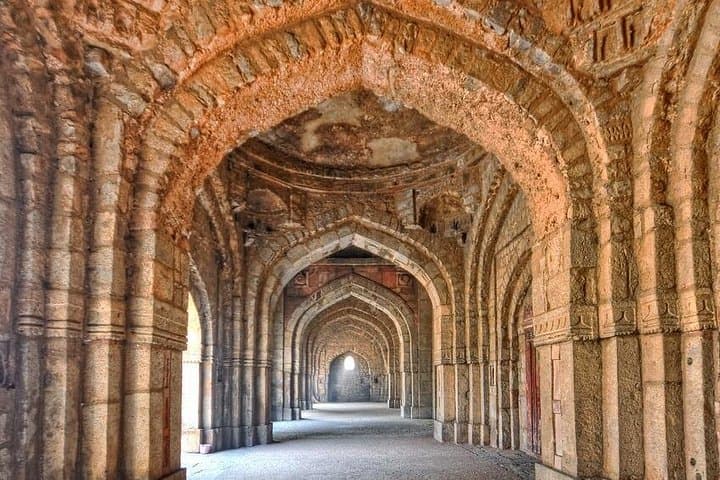
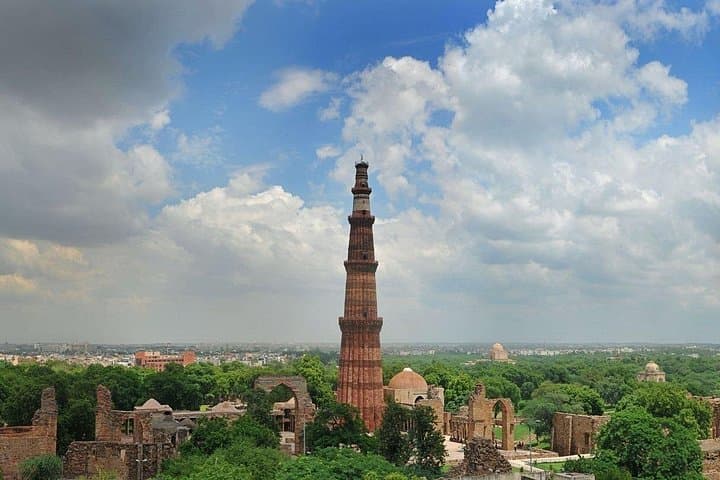
Mehrauli Archaeological Park covers nearly 200 acres and maps Delhi’s long arc — Khalji and Tughlaq fortifications, Lodi-era graves, Mughal-era pavilions and later British-era traces. Geologically the site sits on the Delhi ridge and features local quartzite and sandstone; Balban’s Tomb is a clear example, its grey quartzite blocks breaking the more familiar dome forms of later architecture. Culturally, complexes like Jamali Kamali remain active focal points for local storytellers and occasional devotees, giving the ruins a present-day rhythm.
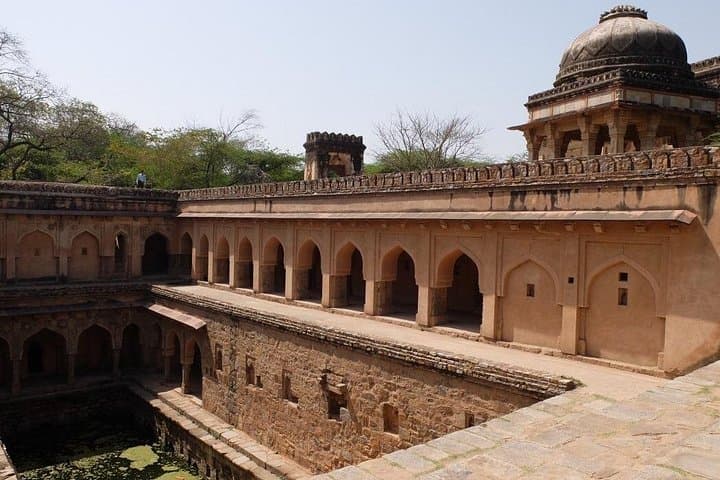
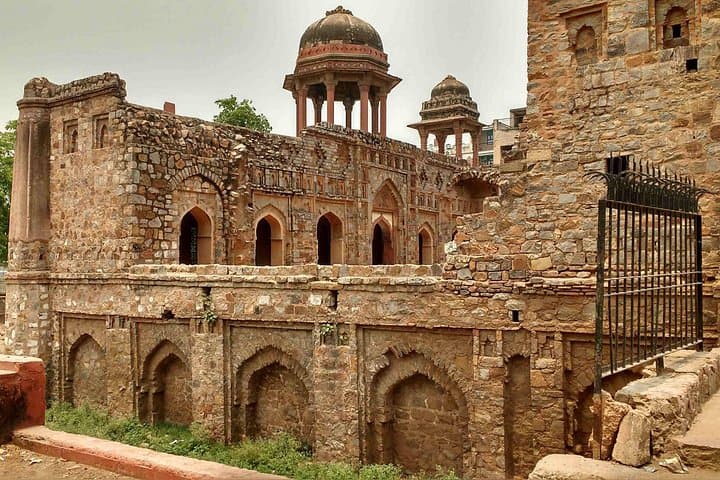
On a guided half-day walk you move at a deliberate pace: Balban’s Tomb, the reflective courtyard of Jahaz Mahal, Jamali Kamali’s tilework and the cool descent of Rajon Ki Baoli. The guide provides historical context and points out architectural details that are easy to miss on your own.
Practical notes: start early to avoid heat, bring sturdy footwear for uneven stone, and dress to protect from sun — bottled water is commonly available and often included. The park is free and reachable by Qutub Park or Qutub Minar metro; expect three hours of walking with short pauses to photograph and listen. Respect signposted areas and help preserve fragile masonry by staying on paths.
No — the park is free to enter, though some nearby monuments may have separate fees.
Take the Delhi Metro to Qutub Minar or Chhatarpur and a short taxi or auto-rickshaw ride to the park entrance; guides will list an exact meeting spot.
Yes — the walk is generally easy, but watch children around steps and the stepwell at Rajon Ki Baoli.
Guides are available in English and Spanish depending on the option booked; confirm language when reserving.
Sun Leisure World India operates guided outdoor trips and adventures with an emphasis on safety, stewardship, and memorable experiences.
Morning light slants across broken stone and scrub, turning centuries-old masonry a warm ochre as the city wakes beyond the trees. You step through the main gate into an open expanse where chapels, tombs and stepwells hold the echoes of courts and prayers; the air carries dust and the distant traffic of modern Delhi, a reminder that history here sits within a living city.
Morning light slants across broken stone and scrub, turning centuries-old masonry a warm ochre as the city wakes beyond the trees. You step through the main gate into an open expanse where chapels, tombs and stepwells hold the echoes of courts and prayers; the air carries dust and the distant traffic of modern Delhi, a reminder that history here sits within a living city.
Mehrauli Archaeological Park covers nearly 200 acres and maps Delhi’s long arc — Khalji and Tughlaq fortifications, Lodi-era graves, Mughal-era pavilions and later British-era traces. Geologically the site sits on the Delhi ridge and features local quartzite and sandstone; Balban’s Tomb is a clear example, its grey quartzite blocks breaking the more familiar dome forms of later architecture. Culturally, complexes like Jamali Kamali remain active focal points for local storytellers and occasional devotees, giving the ruins a present-day rhythm.
On a guided half-day walk you move at a deliberate pace: Balban’s Tomb, the reflective courtyard of Jahaz Mahal, Jamali Kamali’s tilework and the cool descent of Rajon Ki Baoli. The guide provides historical context and points out architectural details that are easy to miss on your own.
Practical notes: start early to avoid heat, bring sturdy footwear for uneven stone, and dress to protect from sun — bottled water is commonly available and often included. The park is free and reachable by Qutub Park or Qutub Minar metro; expect three hours of walking with short pauses to photograph and listen. Respect signposted areas and help preserve fragile masonry by staying on paths.