THE ADVENTURE COLLECTIVE® · Independent discovery and booking for outdoor travel

Float through the Mekong’s living marketplace on a focused two‑day route from Cai Be to Can Tho. Expect paddled canals, village cycling, family‑run candy mills, and the rising chaos of Cai Rang’s morning market.
Float through the Mekong’s living marketplace on a focused two‑day route from Cai Be to Can Tho. Expect paddled canals, village cycling, family‑run candy mills, and the rising chaos of Cai Rang’s morning market.
The boat nose parts the ribbon of brown water and an open-air market rises around you—poles of fruit, low-slung motorboats, a woman holding a steaming bowl. Morning light hits the river like a moving map; boats bob and the canal edges hum with daily work. This two-day trip through Cai Be and Can Tho is a close-up of the Mekong's human rhythm: paddled canals, village paths, and the clatter of coconut candy being made.
Verified experiences and guided adventures in the surrounding area.
Operated by Vietnam Travel Landscape · Can Tho, Can Tho
The boat nose parts the ribbon of brown water and an open-air market rises around you—poles of fruit, low-slung motorboats, a woman holding a steaming bowl. Morning light hits the river like a moving map; boats bob and the canal edges hum with daily work. This two-day trip through Cai Be and Can Tho is a close-up of the Mekong's human rhythm: paddled canals, village paths, and the clatter of coconut candy being made.
Geologically the delta is a wide, flat alluvial plain where silt from upstream builds islands and braided waterways. Historically, these channels have supported trade and rice cultivation for centuries; floating markets evolved as practical marketplaces when roads were scarce. Culturally the region leans southern—simple pagodas, Khmer influences in architecture, and folk songs that accompany harvesting and boat life.
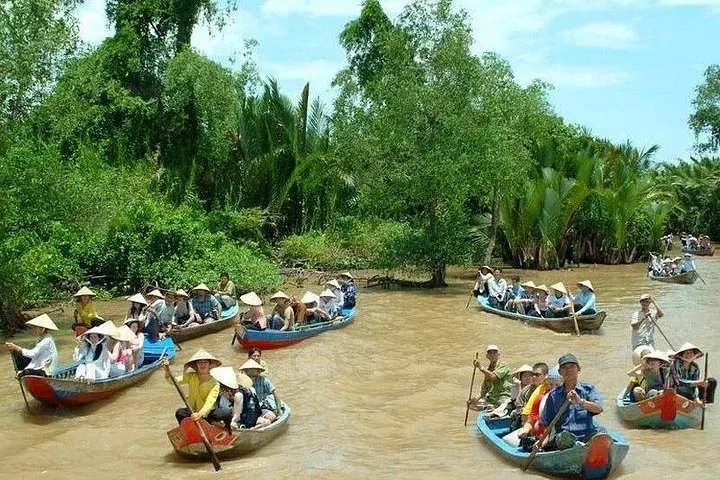
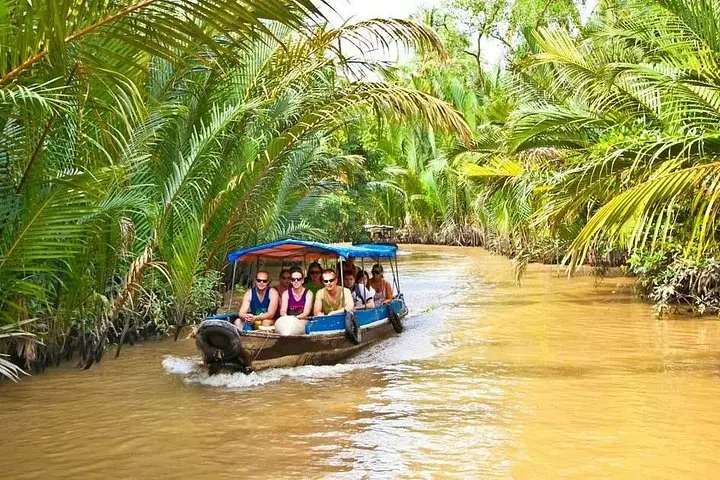
Expect hands-on moments: cycling orchard lanes, joining a family to cook river-sourced dishes, paddling narrow canals by kayak, and visiting Cai Rang’s early-morning market when trading peaks. The experience is sensory—humid air, sharp citrus from fruit stalls, and the steady thrum of outboard engines.
Practical guidance: plan for early starts to see markets at their liveliest, carry sun protection and a dry bag for electronics, and bring small bills for purchases. Accommodation is a basic homestay or local hotel; facilities vary. Hydrate frequently—delta humidity accelerates dehydration—and leave single-use plastics behind: communities you visit are increasingly focused on keeping waterways clean. With light fitness and curiosity, travelers will come away with a clear sense of the Mekong’s everyday pulse.
The market is most active before 7:00 AM; boats arrive and trading peaks at dawn, so tours typically start early to capture the busiest period.
The itinerary states meals are included—expect local lunches and a riverside meal where guests may help prepare dishes with hosts.
No—canal kayak stretches are calm and short; guides provide basic instruction and life jackets, making it suitable for novices.
Most tours offer pickup from central hotels in Ho Chi Minh City and handle luggage transfers; confirm with the operator about storage and size limits.
Vietnam Travel Landscape operates guided outdoor trips and adventures with an emphasis on safety, stewardship, and memorable experiences.
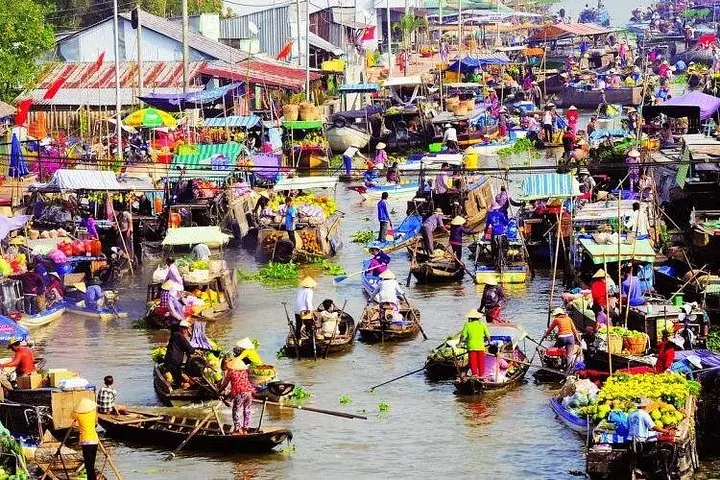
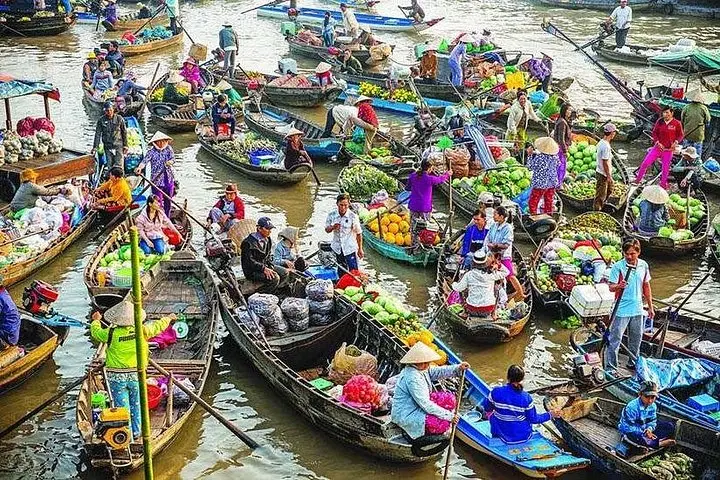
The boat nose parts the ribbon of brown water and an open-air market rises around you—poles of fruit, low-slung motorboats, a woman holding a steaming bowl. Morning light hits the river like a moving map; boats bob and the canal edges hum with daily work. This two-day trip through Cai Be and Can Tho is a close-up of the Mekong's human rhythm: paddled canals, village paths, and the clatter of coconut candy being made.
The boat nose parts the ribbon of brown water and an open-air market rises around you—poles of fruit, low-slung motorboats, a woman holding a steaming bowl. Morning light hits the river like a moving map; boats bob and the canal edges hum with daily work. This two-day trip through Cai Be and Can Tho is a close-up of the Mekong's human rhythm: paddled canals, village paths, and the clatter of coconut candy being made.
Geologically the delta is a wide, flat alluvial plain where silt from upstream builds islands and braided waterways. Historically, these channels have supported trade and rice cultivation for centuries; floating markets evolved as practical marketplaces when roads were scarce. Culturally the region leans southern—simple pagodas, Khmer influences in architecture, and folk songs that accompany harvesting and boat life.
Expect hands-on moments: cycling orchard lanes, joining a family to cook river-sourced dishes, paddling narrow canals by kayak, and visiting Cai Rang’s early-morning market when trading peaks. The experience is sensory—humid air, sharp citrus from fruit stalls, and the steady thrum of outboard engines.
Practical guidance: plan for early starts to see markets at their liveliest, carry sun protection and a dry bag for electronics, and bring small bills for purchases. Accommodation is a basic homestay or local hotel; facilities vary. Hydrate frequently—delta humidity accelerates dehydration—and leave single-use plastics behind: communities you visit are increasingly focused on keeping waterways clean. With light fitness and curiosity, travelers will come away with a clear sense of the Mekong’s everyday pulse.