THE ADVENTURE COLLECTIVE® · Independent discovery and booking for outdoor travel
Walk from Federation Square along the Yarra to Melbourne Park, learn about Indigenous sporting traditions and the city’s major sporting venues, then hit a blue court at the home of the Australian Open. A 3-hour, accessible, urban-sport experience that connects culture, history and play.
Walk from Federation Square along the Yarra to Melbourne Park, learn about Indigenous sporting traditions and the city’s major sporting venues, then hit a blue court at the home of the Australian Open. A 3-hour, accessible, urban-sport experience that connects culture, history and play.
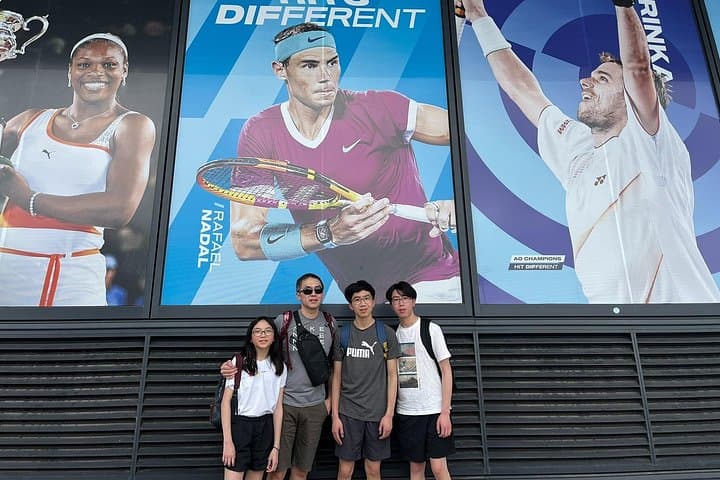
Federation Square opens like a starting gun — people moving, trams clattering, the Yarra glinting nearby — and the walk toward Melbourne Park feels like stepping into the city’s athletic heartbeat. Birrarung Marr runs alongside the river, public art and gum trees punctuating the route as guides draw a line from Indigenous games to Grand Slam glory.
Verified experiences and guided adventures in the surrounding area.
Operated by Sporting Capital Tours · Melbourne, Victoria
Federation Square opens like a starting gun — people moving, trams clattering, the Yarra glinting nearby — and the walk toward Melbourne Park feels like stepping into the city’s athletic heartbeat. Birrarung Marr runs alongside the river, public art and gum trees punctuating the route as guides draw a line from Indigenous games to Grand Slam glory.
The experience threads sport, place and history. Melbourne sits on the lands of the Kulin Nation; guides typically highlight Indigenous influence on local games while pointing out the Olympic Precinct, Rod Laver Arena and the 100,000-seat Melbourne Cricket Ground. Geologically the city sits on Port Phillip’s coastal plain with distant basalt flows shaping the wider region — a pragmatic landscape turned sporting stage.
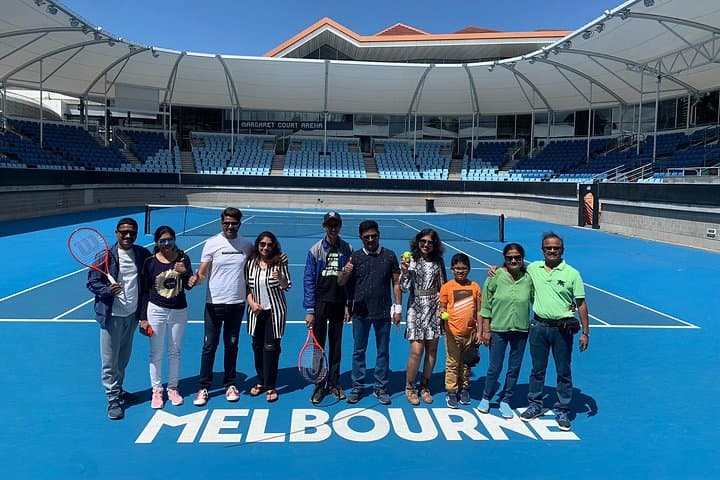
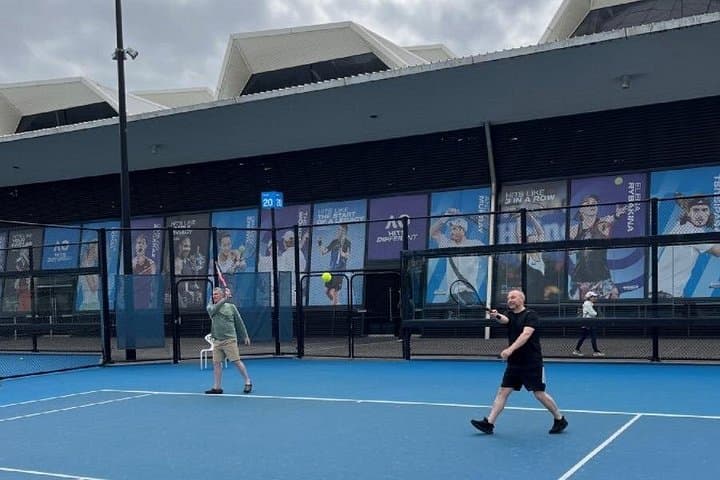
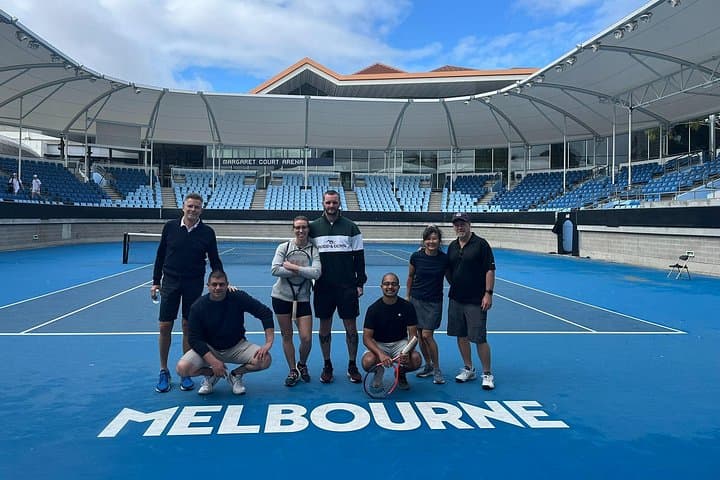
On arrival the blue Plexicushion courts stop traffic in the best way: clean lines, even bounce, and the peculiar hush of concentrated play. Guests get court hire, racquets and balls; during January the offering expands to include Australian Open tickets instead of play, and during December–early January courts may be restricted for tournament prep.
Practical matters are direct: the walk is mostly flat urban pavement, the full experience runs about three hours, and it’s wheelchair accessible. Wear sneakers, carry a refillable water bottle, and plan around the tournament calendar. Expect light walking between sites, family-friendly pacing, and a local guide who ties the city’s sporting obsession to culture and community. For anyone wanting to feel Melbourne’s sporting pulse, this is a brisk, informative slice of why sport is woven into the city’s daily life.
Court access is limited during late December and January; some bookings receive event tickets instead of court time—confirm at booking.
Yes — the route and most areas at Melbourne Park are wheelchair accessible; notify the operator of specific needs in advance.
Bring sneakers, sun protection, a refillable water bottle and a form of ID; racquets, balls and court hire are provided.
Yes — sessions and walking portions are suitable for all fitness levels; on-court play is recreational rather than competitive.
Sporting Capital Tours operates guided outdoor trips and adventures with an emphasis on safety, stewardship, and memorable experiences.
Federation Square opens like a starting gun — people moving, trams clattering, the Yarra glinting nearby — and the walk toward Melbourne Park feels like stepping into the city’s athletic heartbeat. Birrarung Marr runs alongside the river, public art and gum trees punctuating the route as guides draw a line from Indigenous games to Grand Slam glory.
Federation Square opens like a starting gun — people moving, trams clattering, the Yarra glinting nearby — and the walk toward Melbourne Park feels like stepping into the city’s athletic heartbeat. Birrarung Marr runs alongside the river, public art and gum trees punctuating the route as guides draw a line from Indigenous games to Grand Slam glory.
The experience threads sport, place and history. Melbourne sits on the lands of the Kulin Nation; guides typically highlight Indigenous influence on local games while pointing out the Olympic Precinct, Rod Laver Arena and the 100,000-seat Melbourne Cricket Ground. Geologically the city sits on Port Phillip’s coastal plain with distant basalt flows shaping the wider region — a pragmatic landscape turned sporting stage.
On arrival the blue Plexicushion courts stop traffic in the best way: clean lines, even bounce, and the peculiar hush of concentrated play. Guests get court hire, racquets and balls; during January the offering expands to include Australian Open tickets instead of play, and during December–early January courts may be restricted for tournament prep.
Practical matters are direct: the walk is mostly flat urban pavement, the full experience runs about three hours, and it’s wheelchair accessible. Wear sneakers, carry a refillable water bottle, and plan around the tournament calendar. Expect light walking between sites, family-friendly pacing, and a local guide who ties the city’s sporting obsession to culture and community. For anyone wanting to feel Melbourne’s sporting pulse, this is a brisk, informative slice of why sport is woven into the city’s daily life.
