THE ADVENTURE COLLECTIVE® · Independent discovery and booking for outdoor travel

Canter along Praia de Melides on a guided two‑hour beach ride that traces the Alentejo shoreline. This accessible coastal experience suits beginners and seasoned riders alike—expect flat sand, pine‑backed dunes, and occasional coastal birds.
Canter along Praia de Melides on a guided two‑hour beach ride that traces the Alentejo shoreline. This accessible coastal experience suits beginners and seasoned riders alike—expect flat sand, pine‑backed dunes, and occasional coastal birds.
The low sun cuts across a wide Atlantic corridor as hooves print the wet sand and the sea breathes salt into the air. On Praia de Melides a guided, two‑hour ride moves along a flat, forgiving shoreline where pine copses and wind‑shaped dunes stand to the east and the ocean dares riders to pick up the pace.
Verified experiences and guided adventures in the surrounding area.
Operated by Happy Limit Transfers · Melides, Setúbal District
The low sun cuts across a wide Atlantic corridor as hooves print the wet sand and the sea breathes salt into the air. On Praia de Melides a guided, two‑hour ride moves along a flat, forgiving shoreline where pine copses and wind‑shaped dunes stand to the east and the ocean dares riders to pick up the pace.
Melides sits on Portugal’s Alentejo coast within Setúbal District, a region shaped by shifting sands, coastal pine plantations and a long history of fishing and rice cultivation in nearby wetlands. Geology here is simple and open: broad beaches formed by longshore drift and dune systems that buffer the inland fields. Culturally, rides connect to local equestrian traditions and small‑scale agrarian life; horses have long been part of coastal transport and leisure in the area.
Expect mostly flat terrain with firm, compact sand at low tide and softer patches nearer the dunes; elevation gain is negligible. The guide manages pace and safety—ideal for first‑time riders as well as experienced equestrians who want a quiet coastal canter. Wildlife is present but subtle: waders and gulls patrol the surf while migratory birds use nearby marshes as pit stops.
Practical guidance: arrive with closed‑toe shoes, sun protection and a light layer for onshore breezes. Check tide times—the beach is widest at low tide and offers the safest footing—bring water (bottled water is included) and disclose riding experience and weight when booking. With a professional guide and small group sizes, the ride is a straightforward way to experience Alentejo’s coastline with minimal logistics and maximum shoreline time.
No—these guided rides accommodate beginners with basic instruction and steady horses, though riders should be comfortable following guide cues.
Children can usually participate if they meet age/weight requirements and can sit independently; verify specific age and weight limits when booking.
Provider policies vary; strong storms or unsafe conditions may require rescheduling—check cancellation terms and confirm if the tour runs in light rain.
The advertised duration is two hours; distance varies with pace and tides but typically covers several kilometers of shoreline with time for controlled trots or canters when conditions allow.
Happy Limit Transfers operates guided outdoor trips and adventures with an emphasis on safety, stewardship, and memorable experiences.
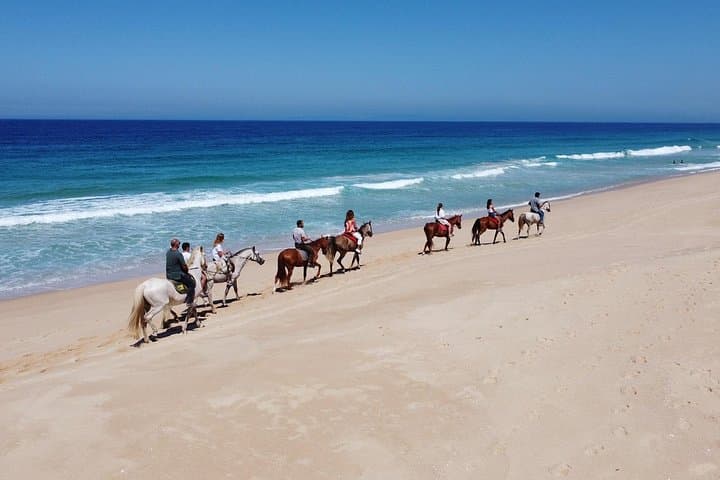



The low sun cuts across a wide Atlantic corridor as hooves print the wet sand and the sea breathes salt into the air. On Praia de Melides a guided, two‑hour ride moves along a flat, forgiving shoreline where pine copses and wind‑shaped dunes stand to the east and the ocean dares riders to pick up the pace.
The low sun cuts across a wide Atlantic corridor as hooves print the wet sand and the sea breathes salt into the air. On Praia de Melides a guided, two‑hour ride moves along a flat, forgiving shoreline where pine copses and wind‑shaped dunes stand to the east and the ocean dares riders to pick up the pace.
Melides sits on Portugal’s Alentejo coast within Setúbal District, a region shaped by shifting sands, coastal pine plantations and a long history of fishing and rice cultivation in nearby wetlands. Geology here is simple and open: broad beaches formed by longshore drift and dune systems that buffer the inland fields. Culturally, rides connect to local equestrian traditions and small‑scale agrarian life; horses have long been part of coastal transport and leisure in the area.
Expect mostly flat terrain with firm, compact sand at low tide and softer patches nearer the dunes; elevation gain is negligible. The guide manages pace and safety—ideal for first‑time riders as well as experienced equestrians who want a quiet coastal canter. Wildlife is present but subtle: waders and gulls patrol the surf while migratory birds use nearby marshes as pit stops.
Practical guidance: arrive with closed‑toe shoes, sun protection and a light layer for onshore breezes. Check tide times—the beach is widest at low tide and offers the safest footing—bring water (bottled water is included) and disclose riding experience and weight when booking. With a professional guide and small group sizes, the ride is a straightforward way to experience Alentejo’s coastline with minimal logistics and maximum shoreline time.