THE ADVENTURE COLLECTIVE® · Independent discovery and booking for outdoor travel

A private day trip from Addis delivers steep trails, ancient junipers and endemic wildlife. Hike toward Mt Wuchacha, listen for Abyssinian songbirds, and learn why this 15th-century conservation area remains vital.
A private day trip from Addis delivers steep trails, ancient junipers and endemic wildlife. Hike toward Mt Wuchacha, listen for Abyssinian songbirds, and learn why this 15th-century conservation area remains vital.
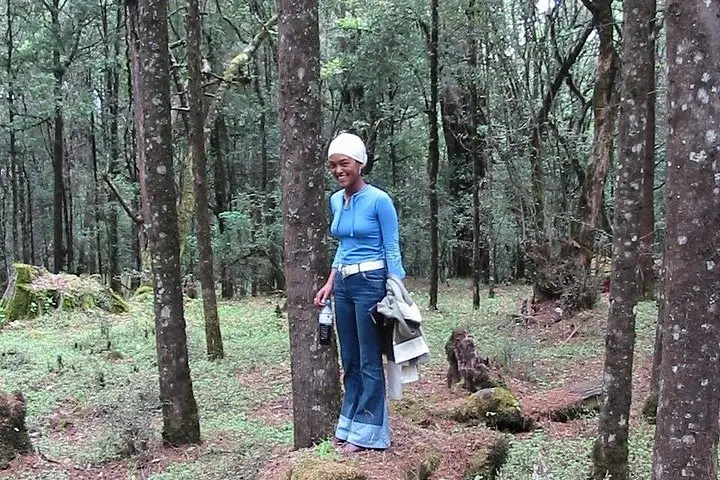
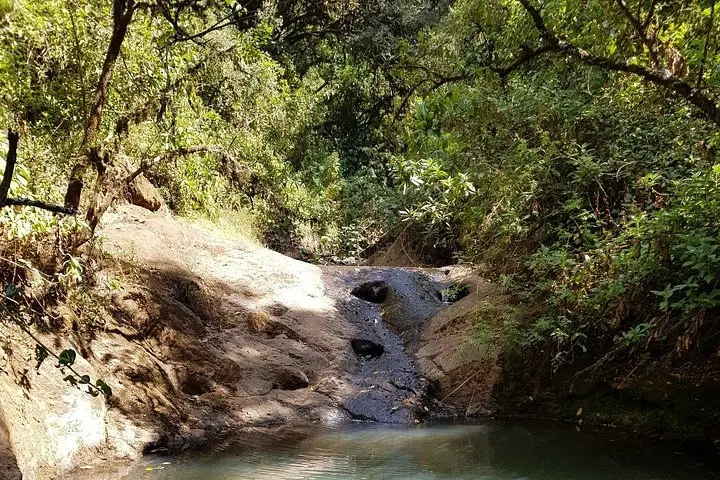
You leave the city behind on a morning when Addis Ababa is still shedding its heat—taxis and market stalls give way to the steady hum of rural roads and, finally, the incoming scent of damp earth and resin. After roughly a 40-minute drive west, the road narrows and a band of forest rises up: towering juniper trunks, Podocarpus branches, and a green corridor that has resisted urban sprawl for centuries.
Verified experiences and guided adventures in the surrounding area.
Operated by Venture Ethiopia · Addis Ababa, Addis Ababa
You leave the city behind on a morning when Addis Ababa is still shedding its heat—taxis and market stalls give way to the steady hum of rural roads and, finally, the incoming scent of damp earth and resin. After roughly a 40-minute drive west, the road narrows and a band of forest rises up: towering juniper trunks, Podocarpus branches, and a green corridor that has resisted urban sprawl for centuries.
Menagesha Suba is not a newly discovered refuge; it’s one of East Africa’s oldest protected areas. Imperial decrees from the mid-15th century set aside these 2,500 hectares, and some of the western slopes still hold trees—juniper and wanza—that are reputed to be over 400 years old. Geologically the park perches on the rim of an ancient volcanic landscape. Trails climb toward Mt Wuchacha (listed on some maps as Damocha or Wuchacha), a high point around 3,380–3,385 meters, whose crater slopes shape localized microclimates that favor endemic species.
The forest feels purposeful. Guereza (colobus) monkeys sweep through the canopy with a practiced economy; Menelik’s bushbuck keeps to thicker understory; and birds—Ethiopian oriole, yellow-fronted parrot, black-winged lovebird, banded barbet, Abyssinian woodpecker and the elusive Abyssinian catbird—call and flit like punctuation marks. Your guide points out uses for wanza bark, explains traditional links between the forest and nearby communities, and steers the group past fragile saplings and erosion-prone gullies.
This is a private, full-day experience tailored for hikers who want both wildlife viewing and a sustained climb. Expect forest trails that alternate between packed dirt and rocky steps, with an elevation gain that can approach 600–800 meters depending on the route to Wuchacha. The payoff is straightforward: clearer air, expansive views over the highlands, and close encounters with species that occur almost nowhere else.
Practical details matter here. The tour includes private transport from central Addis (pickup within about 6 km of the Taitu Hotel) and a provided lunch—useful after steady uphill hiking. Wear sturdy boots with tread for damp, rooty sections and bring layers; temperatures can drop quickly above 3,000 meters. Hydrate before you go and carry at least 1.5–2 liters. Because this is a living forest rather than a manicured park, trail footing can be uneven and muddy after rain; trekking poles help.
Culturally and environmentally, Menagesha Suba is both refuge and responsibility: it protects endemic life and supports local communities who rely on its watershed. Visit with curiosity and restraint—follow your guide, keep to trails, and leave the forest as it was when you arrived.
Driving to the Menagesha trailhead is about 40–60 minutes from central Addis Ababa, depending on traffic and exact pickup location.
Older children who are used to hikes and can handle several hours of walking at altitude can do the trip; inform the operator when booking for a tailored pace.
Admission to the park is included in the tour's itinerary as noted; confirm with your supplier at booking and show your ticket to the guide at the start.
Yes—Menelik's bushbuck, guereza monkeys and several endemic bird species are regularly seen, though wildlife sightings are never guaranteed.
Lunch is included on this private day tour; bring snacks and extra water for the hike itself.
Yes—pickup is available from hotels within approximately 6 km of the Taitu Hotel; provide your pickup details during booking.
Venture Ethiopia operates guided outdoor trips and adventures with an emphasis on safety, stewardship, and memorable experiences.
You leave the city behind on a morning when Addis Ababa is still shedding its heat—taxis and market stalls give way to the steady hum of rural roads and, finally, the incoming scent of damp earth and resin. After roughly a 40-minute drive west, the road narrows and a band of forest rises up: towering juniper trunks, Podocarpus branches, and a green corridor that has resisted urban sprawl for centuries.
You leave the city behind on a morning when Addis Ababa is still shedding its heat—taxis and market stalls give way to the steady hum of rural roads and, finally, the incoming scent of damp earth and resin. After roughly a 40-minute drive west, the road narrows and a band of forest rises up: towering juniper trunks, Podocarpus branches, and a green corridor that has resisted urban sprawl for centuries.
Menagesha Suba is not a newly discovered refuge; it’s one of East Africa’s oldest protected areas. Imperial decrees from the mid-15th century set aside these 2,500 hectares, and some of the western slopes still hold trees—juniper and wanza—that are reputed to be over 400 years old. Geologically the park perches on the rim of an ancient volcanic landscape. Trails climb toward Mt Wuchacha (listed on some maps as Damocha or Wuchacha), a high point around 3,380–3,385 meters, whose crater slopes shape localized microclimates that favor endemic species.
The forest feels purposeful. Guereza (colobus) monkeys sweep through the canopy with a practiced economy; Menelik’s bushbuck keeps to thicker understory; and birds—Ethiopian oriole, yellow-fronted parrot, black-winged lovebird, banded barbet, Abyssinian woodpecker and the elusive Abyssinian catbird—call and flit like punctuation marks. Your guide points out uses for wanza bark, explains traditional links between the forest and nearby communities, and steers the group past fragile saplings and erosion-prone gullies.
This is a private, full-day experience tailored for hikers who want both wildlife viewing and a sustained climb. Expect forest trails that alternate between packed dirt and rocky steps, with an elevation gain that can approach 600–800 meters depending on the route to Wuchacha. The payoff is straightforward: clearer air, expansive views over the highlands, and close encounters with species that occur almost nowhere else.
Practical details matter here. The tour includes private transport from central Addis (pickup within about 6 km of the Taitu Hotel) and a provided lunch—useful after steady uphill hiking. Wear sturdy boots with tread for damp, rooty sections and bring layers; temperatures can drop quickly above 3,000 meters. Hydrate before you go and carry at least 1.5–2 liters. Because this is a living forest rather than a manicured park, trail footing can be uneven and muddy after rain; trekking poles help.
Culturally and environmentally, Menagesha Suba is both refuge and responsibility: it protects endemic life and supports local communities who rely on its watershed. Visit with curiosity and restraint—follow your guide, keep to trails, and leave the forest as it was when you arrived.