THE ADVENTURE COLLECTIVE® · Independent discovery and booking for outdoor travel

Follow a 75 km footpath through Arcadia’s fir forests, river gorges, and stone-built villages on a seven-day guided route. Expect daily ridge walking, historic hamlets, luggage transfers, and authentic mountain hospitality.
Follow a 75 km footpath through Arcadia’s fir forests, river gorges, and stone-built villages on a seven-day guided route. Expect daily ridge walking, historic hamlets, luggage transfers, and authentic mountain hospitality.
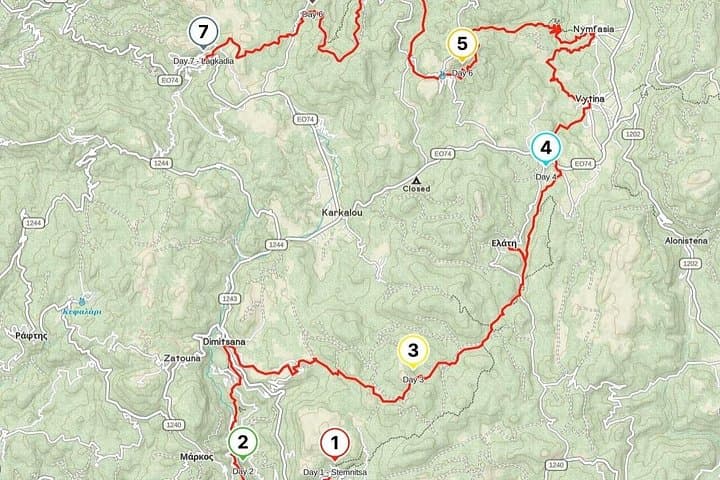
On the first morning the road from Athens drops the city behind and the mountains of Arcadia rise—granite ridgelines cut into forests, and villages of stone appear on narrow spurs. The Menalon Trail winds for about 75 km across that highland, threading valley floors, chestnut and fir stands, and river gorges that push the walker forward with a steady, audible urgency.
Verified experiences and guided adventures in the surrounding area.
Operated by Trail Path · Stemnitsa, Arcadia
On the first morning the road from Athens drops the city behind and the mountains of Arcadia rise—granite ridgelines cut into forests, and villages of stone appear on narrow spurs. The Menalon Trail winds for about 75 km across that highland, threading valley floors, chestnut and fir stands, and river gorges that push the walker forward with a steady, audible urgency.
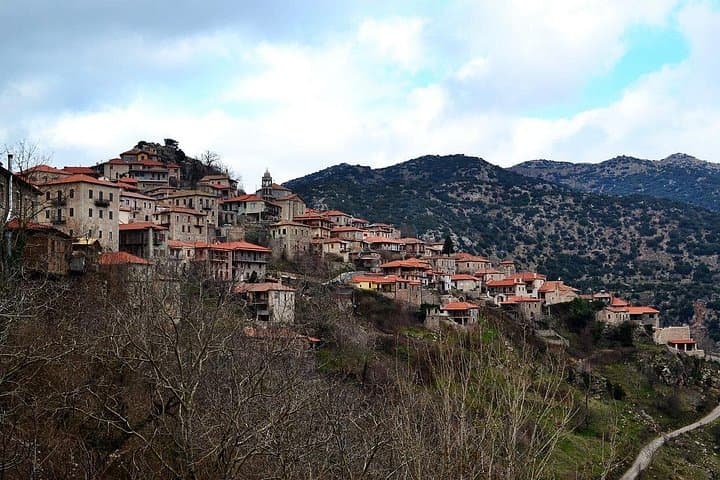
The route stitches together centuries-old settlements—Stemnitsa, Dimitsana, Vytina, Lagkadia—places shaped by Byzantine monasteries, Ottoman-era resistance, and a local stone-building craft. Geology is obvious underfoot: limestone outcrops, river-carved gorges, and high meadows that hold snow late into spring. You’ll pass restored watermills and Byzantine chapel ruins that explain why this landscape supported crafts, monasteries, and seasonal shepherding for generations.
Practically, expect 6–8 hours of walking on several days, with daily distances from ~12 to 19 km and repeated 300–600 m ascents. Trails vary from single-track dirt and rocky switchbacks to paved village lanes; luggage transfers are commonly provided so hikers carry only daypacks. Weather shifts quickly—sun and wind on ridges, cool shade under firs—so layers and waterproofs matter. Food is simple and local: mountain pies, beans, slow-cooked lamb, and hearty breads, served in family-run guesthouses.
This is a terrain-focused trek: move deliberately on uneven rock, plan for early starts to avoid heat, carry enough water between villages, and leave time to explore mills and monasteries—the human story is as rewarding as the view.
You should be comfortable hiking 12–19 km per day with 300–600 m of gain; regular hill training and back-to-back walking days will prepare you well.
Yes—most organized itineraries include luggage transfers between guesthouses so hikers carry a daypack only.
Late spring through early fall (May–October) offers the best weather; spring brings flowers and higher water flows, while summer can be hot at lower elevations.
Yes—the Menalon Trail is waymarked but carries stretches of loose rock and forest singletrack—basic map reading or guide support is recommended.
Trail Path operates guided outdoor trips and adventures with an emphasis on safety, stewardship, and memorable experiences.
On the first morning the road from Athens drops the city behind and the mountains of Arcadia rise—granite ridgelines cut into forests, and villages of stone appear on narrow spurs. The Menalon Trail winds for about 75 km across that highland, threading valley floors, chestnut and fir stands, and river gorges that push the walker forward with a steady, audible urgency.
On the first morning the road from Athens drops the city behind and the mountains of Arcadia rise—granite ridgelines cut into forests, and villages of stone appear on narrow spurs. The Menalon Trail winds for about 75 km across that highland, threading valley floors, chestnut and fir stands, and river gorges that push the walker forward with a steady, audible urgency.
The route stitches together centuries-old settlements—Stemnitsa, Dimitsana, Vytina, Lagkadia—places shaped by Byzantine monasteries, Ottoman-era resistance, and a local stone-building craft. Geology is obvious underfoot: limestone outcrops, river-carved gorges, and high meadows that hold snow late into spring. You’ll pass restored watermills and Byzantine chapel ruins that explain why this landscape supported crafts, monasteries, and seasonal shepherding for generations.
Practically, expect 6–8 hours of walking on several days, with daily distances from ~12 to 19 km and repeated 300–600 m ascents. Trails vary from single-track dirt and rocky switchbacks to paved village lanes; luggage transfers are commonly provided so hikers carry only daypacks. Weather shifts quickly—sun and wind on ridges, cool shade under firs—so layers and waterproofs matter. Food is simple and local: mountain pies, beans, slow-cooked lamb, and hearty breads, served in family-run guesthouses.
This is a terrain-focused trek: move deliberately on uneven rock, plan for early starts to avoid heat, carry enough water between villages, and leave time to explore mills and monasteries—the human story is as rewarding as the view.