THE ADVENTURE COLLECTIVE® · Independent discovery and booking for outdoor travel

Ride Andean whitewater on a half-day run of the Mendoza River in Potrerillos, where glacial melt turns the current playful in winter and punchy in summer. Expect Class II–III most of the year, rising to III/IV with big water—plus desert-mountain views, crisp air, and an easy city-to-river transfer.
Ride Andean whitewater on a half-day run of the Mendoza River in Potrerillos, where glacial melt turns the current playful in winter and punchy in summer. Expect Class II–III most of the year, rising to III/IV with big water—plus desert-mountain views, crisp air, and an easy city-to-river transfer.
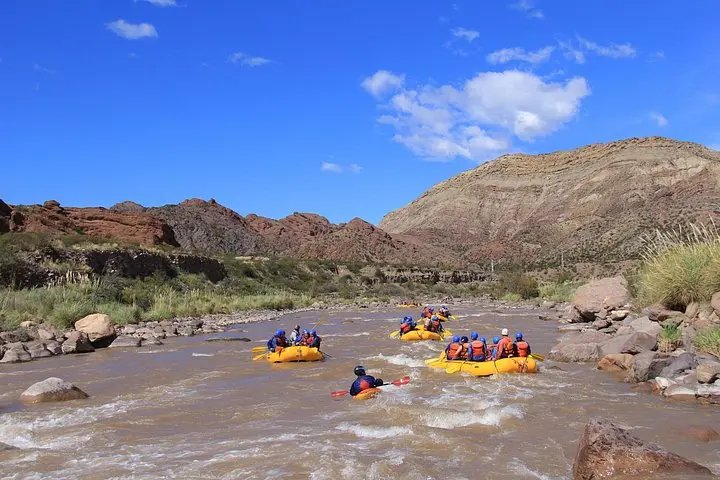
Dawn slides down the Andes as Route 7 leaves Mendoza and aims for the mountains. The road traces the Mendoza River, a silver ribbon flexing through ochre slopes, until the Potrerillos Dam flashes into view—a blue-green sheet backed by peaks and dry air that smells faintly of dust and jarilla. At the adventure base, guides cinch wetsuits, helmets, and life vests, running a clear safety briefing while the river mutters nearby as if impatient to get going. Minutes later, the raft noses into current and the Mendoza goes from background to main act, grabbing the tube and urging it forward.
Verified experiences and guided adventures in the surrounding area.
Operated by Kahuak · Potrerillos, Mendoza
Dawn slides down the Andes as Route 7 leaves Mendoza and aims for the mountains. The road traces the Mendoza River, a silver ribbon flexing through ochre slopes, until the Potrerillos Dam flashes into view—a blue-green sheet backed by peaks and dry air that smells faintly of dust and jarilla. At the adventure base, guides cinch wetsuits, helmets, and life vests, running a clear safety briefing while the river mutters nearby as if impatient to get going. Minutes later, the raft noses into current and the Mendoza goes from background to main act, grabbing the tube and urging it forward.
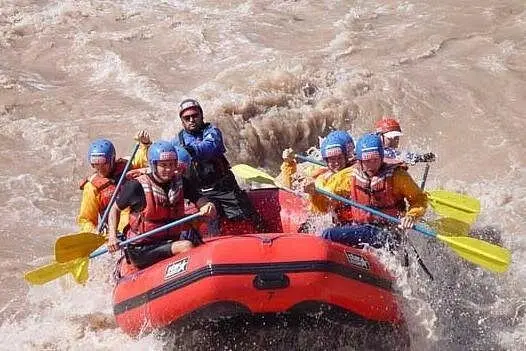
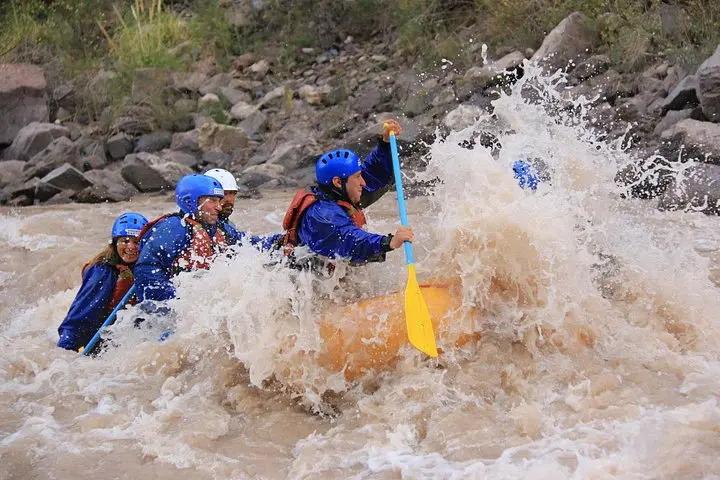
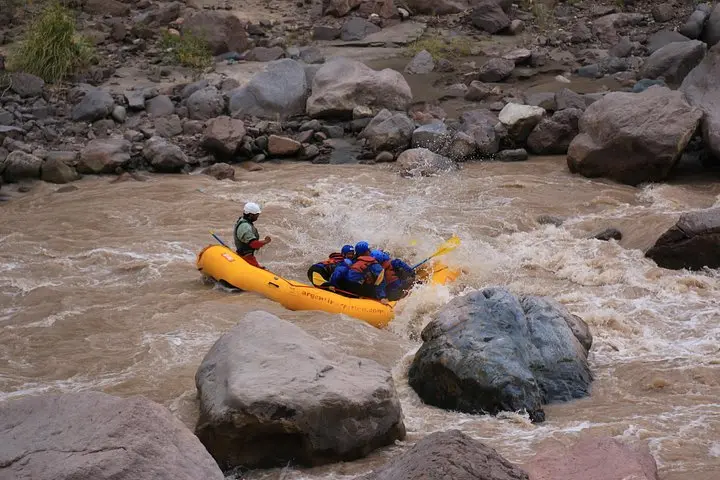
Here, whitewater is seasonal but spirited. Fed by the glaciers and snowfields of Tupungato, the Mendoza often runs Class II–III for most of the year, jumping to III/IV in summer when meltwater swells the flow. Waves slap high and cold, spray streaks cheeks, and the current threads boulder gardens that demand crisp paddle strokes. The river teases and dares—slow in the pools, quick and insistent in the rapids—until you’re reading its moods as much as the guide’s commands.
This valley holds stories beyond the splash. The Potrerillos Dam, completed in the early 2000s, steadied flows and powers the grid, reshaping downstream irrigation for a wine region famous for Malbec. The corridor once echoed with the Transandine Railway to Chile; today, the highway climbs toward the Cristo Redentor pass as condors ride thermals over the reservoir. Between runs, you might spot culpeo fox tracks in the sand or hear parrillas crackle at lakeside grills—hints that the adventure doesn’t end at the takeout.
Logistics are straightforward. Hotel pickup from Mendoza city makes the 45–70 minute drive an easy lift, and all technical gear—neoprene, PFD, and helmet—is provided. Expect about an hour on the water within a half-day window; in summer, return transfers often run mid- or late afternoon, leaving time to linger by the lake, grab an empanada, or pair the morning’s adrenaline with an afternoon winery visit. Minimum age is typically 12, and while no prior rafting experience is required, participants should be comfortable in moving water and ready to paddle.
Plan for altitude sun and cool river temps. Quick-dry layers, secure footwear, and a towel plus a warm change of clothes make transitions easy. Morning departures often mean calmer winds; summer brings the biggest waves and a faster cadence, while winter offers a steadier, more technical read-and-run. Either way, the Mendoza drives the storyline—you just supply the strokes.
Expect Class II–III most of the year and up to Class III/IV in summer (Dec–Feb) when snowmelt raises flows.
No. Guides provide a safety briefing and commands; you should be comfortable in water and ready to paddle.
River time is typically about 1 hour, within a half-day outing that includes transport and prep.
Yes, pickups are available from Mendoza city and Chacras de Coria; return shuttles often depart mid- or late afternoon.
Wear a swimsuit or synthetic base, bring secure water footwear, sunscreen, a towel, and a warm change of clothes. Technical gear is provided.
Small action cameras with leashes are fine at your own risk; leave phones and valuables at base or in the shuttle.
Kahuak operates guided outdoor trips and adventures with an emphasis on safety, stewardship, and memorable experiences.
Dawn slides down the Andes as Route 7 leaves Mendoza and aims for the mountains. The road traces the Mendoza River, a silver ribbon flexing through ochre slopes, until the Potrerillos Dam flashes into view—a blue-green sheet backed by peaks and dry air that smells faintly of dust and jarilla. At the adventure base, guides cinch wetsuits, helmets, and life vests, running a clear safety briefing while the river mutters nearby as if impatient to get going. Minutes later, the raft noses into current and the Mendoza goes from background to main act, grabbing the tube and urging it forward.
Dawn slides down the Andes as Route 7 leaves Mendoza and aims for the mountains. The road traces the Mendoza River, a silver ribbon flexing through ochre slopes, until the Potrerillos Dam flashes into view—a blue-green sheet backed by peaks and dry air that smells faintly of dust and jarilla. At the adventure base, guides cinch wetsuits, helmets, and life vests, running a clear safety briefing while the river mutters nearby as if impatient to get going. Minutes later, the raft noses into current and the Mendoza goes from background to main act, grabbing the tube and urging it forward.
Here, whitewater is seasonal but spirited. Fed by the glaciers and snowfields of Tupungato, the Mendoza often runs Class II–III for most of the year, jumping to III/IV in summer when meltwater swells the flow. Waves slap high and cold, spray streaks cheeks, and the current threads boulder gardens that demand crisp paddle strokes. The river teases and dares—slow in the pools, quick and insistent in the rapids—until you’re reading its moods as much as the guide’s commands.
This valley holds stories beyond the splash. The Potrerillos Dam, completed in the early 2000s, steadied flows and powers the grid, reshaping downstream irrigation for a wine region famous for Malbec. The corridor once echoed with the Transandine Railway to Chile; today, the highway climbs toward the Cristo Redentor pass as condors ride thermals over the reservoir. Between runs, you might spot culpeo fox tracks in the sand or hear parrillas crackle at lakeside grills—hints that the adventure doesn’t end at the takeout.
Logistics are straightforward. Hotel pickup from Mendoza city makes the 45–70 minute drive an easy lift, and all technical gear—neoprene, PFD, and helmet—is provided. Expect about an hour on the water within a half-day window; in summer, return transfers often run mid- or late afternoon, leaving time to linger by the lake, grab an empanada, or pair the morning’s adrenaline with an afternoon winery visit. Minimum age is typically 12, and while no prior rafting experience is required, participants should be comfortable in moving water and ready to paddle.
Plan for altitude sun and cool river temps. Quick-dry layers, secure footwear, and a towel plus a warm change of clothes make transitions easy. Morning departures often mean calmer winds; summer brings the biggest waves and a faster cadence, while winter offers a steadier, more technical read-and-run. Either way, the Mendoza drives the storyline—you just supply the strokes.