THE ADVENTURE COLLECTIVE® · Independent discovery and booking for outdoor travel

Follow the meltwater from Plaza San Martín to Lake Potrerillos on a half-day guided tour that mixes city park history, Andean geology, Cacheuta’s gorge, and optional ridge treks. Expect scenic drives, short to medium hikes, and local snacks along the way.
Follow the meltwater from Plaza San Martín to Lake Potrerillos on a half-day guided tour that mixes city park history, Andean geology, Cacheuta’s gorge, and optional ridge treks. Expect scenic drives, short to medium hikes, and local snacks along the way.
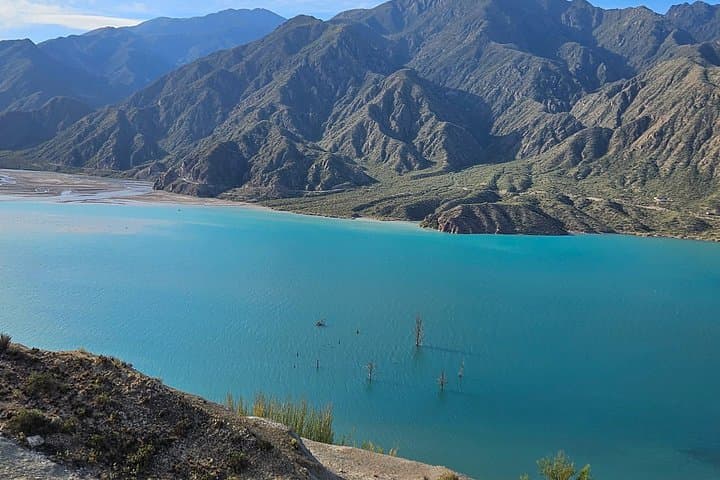
Morning in Mendoza starts with a wind that carries dust and the Andes’ chill into the city. Stand at Plaza San Martín—under the statue of the liberator—and watch the town unfold westward: irrigation canals branching like veins across the dry plain, the Mendoza River tracking toward the mountains, and, beyond, Potrerillos Lake catching light on its hard surface. The tour moves with that geography, following meltwater from urban green spaces into a high-country reservoir and the steep-sided valleys around Cacheuta.
Verified experiences and guided adventures in the surrounding area.
Operated by Jerónimo González · Mendoza, Mendoza
Morning in Mendoza starts with a wind that carries dust and the Andes’ chill into the city. Stand at Plaza San Martín—under the statue of the liberator—and watch the town unfold westward: irrigation canals branching like veins across the dry plain, the Mendoza River tracking toward the mountains, and, beyond, Potrerillos Lake catching light on its hard surface. The tour moves with that geography, following meltwater from urban green spaces into a high-country reservoir and the steep-sided valleys around Cacheuta.
The route is both urban and Andean. San Martín Park, one of South America’s largest city parks, illustrates Mendoza’s century-old experiment in desert irrigation: a grid of canals and channels that turned arid scrub into shade, alameda and grapevine. Historically, the region owes its agricultural riches to controlled meltwater from the Andes; the same flows shaped the route you’ll follow to Cipolletti Dam and the engineered basin at Potrerillos. Geologically, you’re watching uplift and erosion in motion—granite ridges carved into jagged teeth, talus slopes where seasonal streams cut gullies, and broad alluvial fans feeding the valley floor.
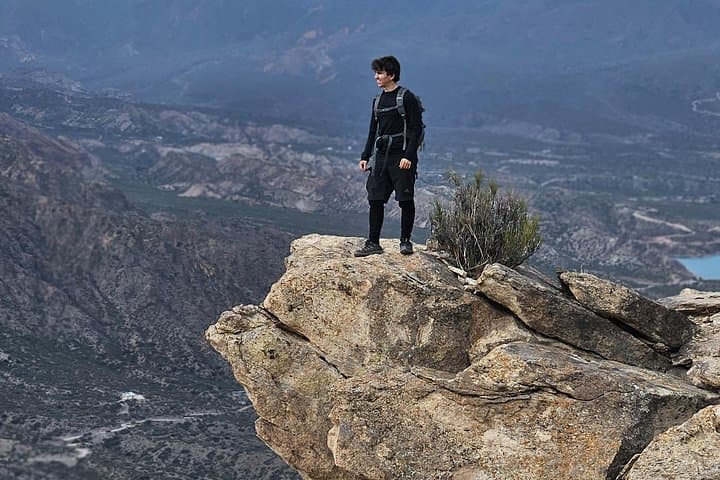
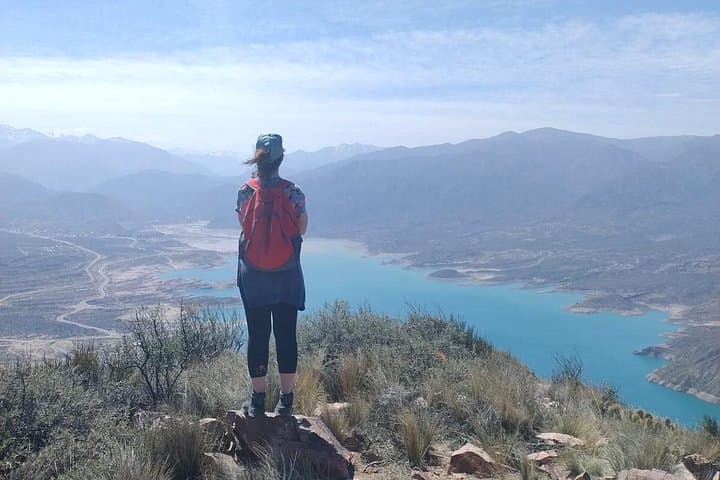
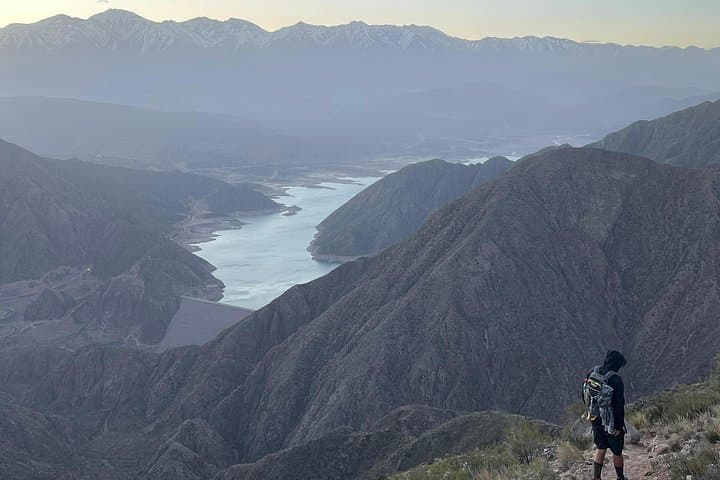
Cacheuta, halfway to the lake, feels like a different world: a narrow gorge with thermal springs, a suspension bridge that creaks underfoot, and shops selling goat cheeses and quince paste. Local guides point out condors thermalling above the canyon walls and explain how the dam reshaped water use downstream. At Potrerillos, the landscape opens: a glacially deepened basin ringed by lichen-streaked cliffs and patches of scrub where ñire and wild mint grow. If you opt for the trek, trails range from a gentle 3–5 km, 150–250 m elevation gain walk to ridge scrambles lasting up to 8–10 km and 400–600 m gain—choose based on weather and appetite for altitude.
Practical edge: the full experience is 5–6 hours with hotel pickup available; expect roughly 45–80 minutes of driving each way from central Mendoza depending on traffic. Wear sturdy shoes, bring 1.5–2 liters of water, and pack a wind layer—daily thermals and UV can shift fast between city and 1,000–1,500 m elevation at the lake. Learn a little Spanish for market chats (alfajores, empanadas and local wines are worth the detour), and leave no trace: trails are fragile and the area is managed for both tourism and irrigation infrastructure.
The Mendoza Water Path is part nature walk, part cultural primer—an itinerary that helps you read the landscape: where water has been harnessed, which peaks feed the river, and how mountain communities still trade in simple, excellent food. It’s a day that rewards curiosity and sensible planning: timing your trek for morning light or late-afternoon warmth will give you the best views and most comfortable walking conditions.
From central Mendoza expect 45–80 minutes each way to reach Cacheuta and Potrerillos depending on traffic and pickup location.
Yes—guides tailor the trek to your group: short walks (3–5 km) or longer ridge hikes (up to 8–10 km) lasting 1–3 hours.
Regional snacks and drinks are not included; the itinerary usually ends with coffee and a chance to buy empanadas, pastries or local products.
The tour is family-friendly and rated as physically easy to moderate, but those with serious mobility or cardiac issues should avoid it.
Altitude is moderate (often under 1,500 m at the lake) but some visitors feel mild effects; stay hydrated and pace yourself on hikes.
Yes—condors and other raptors are commonly sighted near Cacheuta, and local guides point out smaller mammals and bird species along trails.
Jerónimo González operates guided outdoor trips and adventures with an emphasis on safety, stewardship, and memorable experiences.
Morning in Mendoza starts with a wind that carries dust and the Andes’ chill into the city. Stand at Plaza San Martín—under the statue of the liberator—and watch the town unfold westward: irrigation canals branching like veins across the dry plain, the Mendoza River tracking toward the mountains, and, beyond, Potrerillos Lake catching light on its hard surface. The tour moves with that geography, following meltwater from urban green spaces into a high-country reservoir and the steep-sided valleys around Cacheuta.
Morning in Mendoza starts with a wind that carries dust and the Andes’ chill into the city. Stand at Plaza San Martín—under the statue of the liberator—and watch the town unfold westward: irrigation canals branching like veins across the dry plain, the Mendoza River tracking toward the mountains, and, beyond, Potrerillos Lake catching light on its hard surface. The tour moves with that geography, following meltwater from urban green spaces into a high-country reservoir and the steep-sided valleys around Cacheuta.
The route is both urban and Andean. San Martín Park, one of South America’s largest city parks, illustrates Mendoza’s century-old experiment in desert irrigation: a grid of canals and channels that turned arid scrub into shade, alameda and grapevine. Historically, the region owes its agricultural riches to controlled meltwater from the Andes; the same flows shaped the route you’ll follow to Cipolletti Dam and the engineered basin at Potrerillos. Geologically, you’re watching uplift and erosion in motion—granite ridges carved into jagged teeth, talus slopes where seasonal streams cut gullies, and broad alluvial fans feeding the valley floor.
Cacheuta, halfway to the lake, feels like a different world: a narrow gorge with thermal springs, a suspension bridge that creaks underfoot, and shops selling goat cheeses and quince paste. Local guides point out condors thermalling above the canyon walls and explain how the dam reshaped water use downstream. At Potrerillos, the landscape opens: a glacially deepened basin ringed by lichen-streaked cliffs and patches of scrub where ñire and wild mint grow. If you opt for the trek, trails range from a gentle 3–5 km, 150–250 m elevation gain walk to ridge scrambles lasting up to 8–10 km and 400–600 m gain—choose based on weather and appetite for altitude.
Practical edge: the full experience is 5–6 hours with hotel pickup available; expect roughly 45–80 minutes of driving each way from central Mendoza depending on traffic. Wear sturdy shoes, bring 1.5–2 liters of water, and pack a wind layer—daily thermals and UV can shift fast between city and 1,000–1,500 m elevation at the lake. Learn a little Spanish for market chats (alfajores, empanadas and local wines are worth the detour), and leave no trace: trails are fragile and the area is managed for both tourism and irrigation infrastructure.
The Mendoza Water Path is part nature walk, part cultural primer—an itinerary that helps you read the landscape: where water has been harnessed, which peaks feed the river, and how mountain communities still trade in simple, excellent food. It’s a day that rewards curiosity and sensible planning: timing your trek for morning light or late-afternoon warmth will give you the best views and most comfortable walking conditions.