THE ADVENTURE COLLECTIVE® · Independent discovery and booking for outdoor travel

A 15-day expedition that pairs high-altitude trekking with technical climbing to summit Mera Peak (6,461 m). Expect long approaches, guided acclimatization, and glacier travel with sweeping Himalayan panoramas.
A 15-day expedition that pairs high-altitude trekking with technical climbing to summit Mera Peak (6,461 m). Expect long approaches, guided acclimatization, and glacier travel with sweeping Himalayan panoramas.
You step off the short, rocky runway at Lukla and the air already tastes like thin winter—sharp, clear, and demanding. The trail slips through rhododendron forests, threads Sherpa villages where prayer flags snap like bright punctuation, then opens into the Hinku valley where glaciers and moraine begin to dominate the view. Mera Peak (6,461 m) sits beyond a ladder of snow ridges; it waits with that blunt Himalayan honesty climbers come for.
Verified experiences and guided adventures in the surrounding area.
Operated by Broad Adventure P. Ltd. · Kathmandu, Bagmati Province
You step off the short, rocky runway at Lukla and the air already tastes like thin winter—sharp, clear, and demanding. The trail slips through rhododendron forests, threads Sherpa villages where prayer flags snap like bright punctuation, then opens into the Hinku valley where glaciers and moraine begin to dominate the view. Mera Peak (6,461 m) sits beyond a ladder of snow ridges; it waits with that blunt Himalayan honesty climbers come for.
The route follows ancient trade paths and modern trekking tracks through a landscape carved by glacier action and uplifted by the collision of the Indian and Eurasian plates. Sherpa culture and Buddhist gompas line the approach; tea houses give way to tented high camps as infrastructure thins and altitude becomes the central concern.
Expect long approach days, a deliberate acclimatization schedule, and technical sections on the final ascent where crampons, ice axe, and basic ropework are required. Weather shifts fast—clear mornings can break into wind-loaded afternoons—so plan summit moves in early pre-dawn hours.
Practical guidance: build aerobic fitness plus heavy-pack experience, practice crampon and ice-axe technique before arrival, and budget extra days for weather and acclimatization. Hydrate consistently, eat salting snacks to maintain electrolytes, and carry layered insulation—temperatures swing dramatically between valley and summit.
This is a climbing-focused trip that rewards steady preparation and altitude discipline with one of the broadest Himalayan panoramas: Everest, Lhotse, Cho Oyu, Makalu and more arrayed like a hard-won gallery above the clouds.
Yes—while guided, the summit requires crampon and ice-axe proficiency and comfort on exposed snow/ice; pre-trip practice or a skills course is strongly recommended.
Climbing Mera Peak requires a peak-climbing permit from Nepal authorities and TIMS/trekking permits for the Solukhumbu region; guides typically handle paperwork included in the trip.
The itinerary builds acclimatization days with progressive elevation gains, including a rest day and short walks to higher altitudes before returning to sleep lower.
Altitude sickness, weather-related delays, and crevasse/ice hazards on the summit glacier are the primary risks—proper pacing, equipment, and a licensed guide mitigate these.
Broad Adventure P. Ltd. operates guided outdoor trips and adventures with an emphasis on safety, stewardship, and memorable experiences.
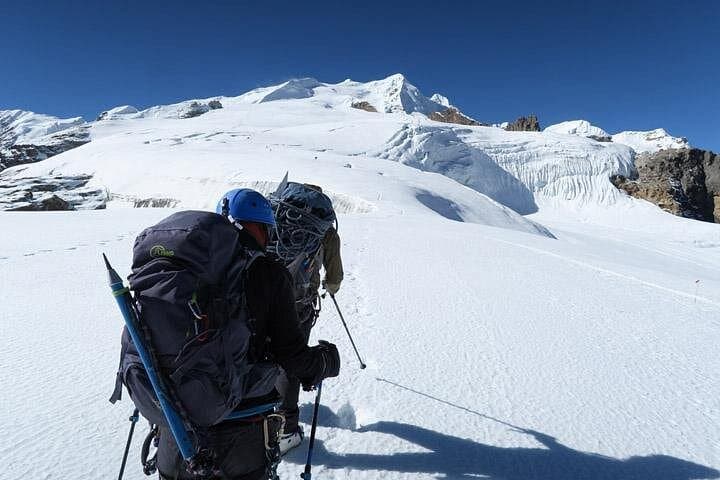

You step off the short, rocky runway at Lukla and the air already tastes like thin winter—sharp, clear, and demanding. The trail slips through rhododendron forests, threads Sherpa villages where prayer flags snap like bright punctuation, then opens into the Hinku valley where glaciers and moraine begin to dominate the view. Mera Peak (6,461 m) sits beyond a ladder of snow ridges; it waits with that blunt Himalayan honesty climbers come for.
You step off the short, rocky runway at Lukla and the air already tastes like thin winter—sharp, clear, and demanding. The trail slips through rhododendron forests, threads Sherpa villages where prayer flags snap like bright punctuation, then opens into the Hinku valley where glaciers and moraine begin to dominate the view. Mera Peak (6,461 m) sits beyond a ladder of snow ridges; it waits with that blunt Himalayan honesty climbers come for.
The route follows ancient trade paths and modern trekking tracks through a landscape carved by glacier action and uplifted by the collision of the Indian and Eurasian plates. Sherpa culture and Buddhist gompas line the approach; tea houses give way to tented high camps as infrastructure thins and altitude becomes the central concern.
Expect long approach days, a deliberate acclimatization schedule, and technical sections on the final ascent where crampons, ice axe, and basic ropework are required. Weather shifts fast—clear mornings can break into wind-loaded afternoons—so plan summit moves in early pre-dawn hours.
Practical guidance: build aerobic fitness plus heavy-pack experience, practice crampon and ice-axe technique before arrival, and budget extra days for weather and acclimatization. Hydrate consistently, eat salting snacks to maintain electrolytes, and carry layered insulation—temperatures swing dramatically between valley and summit.
This is a climbing-focused trip that rewards steady preparation and altitude discipline with one of the broadest Himalayan panoramas: Everest, Lhotse, Cho Oyu, Makalu and more arrayed like a hard-won gallery above the clouds.