THE ADVENTURE COLLECTIVE® · Independent discovery and booking for outdoor travel
A 14–15 day expedition that combines lodge trekking and glacier climbing to summit Mera Peak (6,461m). Expect mixed terrain, high camps, and a technical summit push requiring crampons and basic rope skills.
A 14–15 day expedition that combines lodge trekking and glacier climbing to summit Mera Peak (6,461m). Expect mixed terrain, high camps, and a technical summit push requiring crampons and basic rope skills.
You step out of the thin morning air and the ridge ahead bites at the sky — a knife of snow and rock that leads to one of Nepal’s most accessible 6,000m-plus summits. From Lukla’s bustling strip to the hush of Hinku Valley, the route threads Sherpa villages, rhododendron forest, glacier moraine and high camps where wind and white light set the pace.
Verified experiences and guided adventures in the surrounding area.
Operated by Everest Trekking Routes Pvt. Ltd. · Kathmandu, Bagmati Province
You step out of the thin morning air and the ridge ahead bites at the sky — a knife of snow and rock that leads to one of Nepal’s most accessible 6,000m-plus summits. From Lukla’s bustling strip to the hush of Hinku Valley, the route threads Sherpa villages, rhododendron forest, glacier moraine and high camps where wind and white light set the pace.
Mera Peak sits in Nepal’s Hinku Valley, part of the eastern Solukhumbu and close to Makalu-Barun and Everest regions. Geologically the peak is an outlying granite and metamorphic massif shaped by the uplift of the Himalaya; culturally the trail passes communities with Tibetan-Burman Sherpa traditions and mani stones marking high passes. Local tea houses and seasonal camps support a mixed trekking-climbing itinerary that blends lodge nights with a night in a high snow camp.
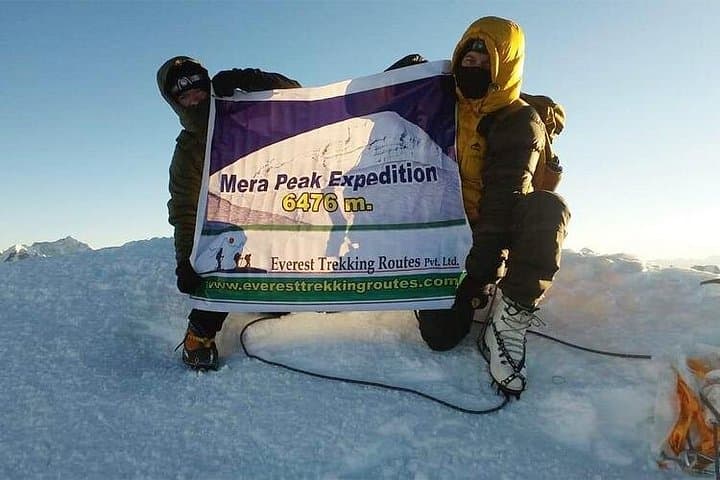
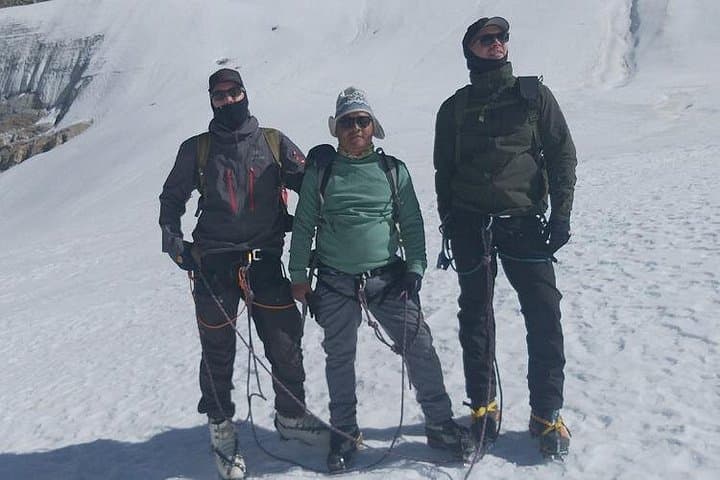
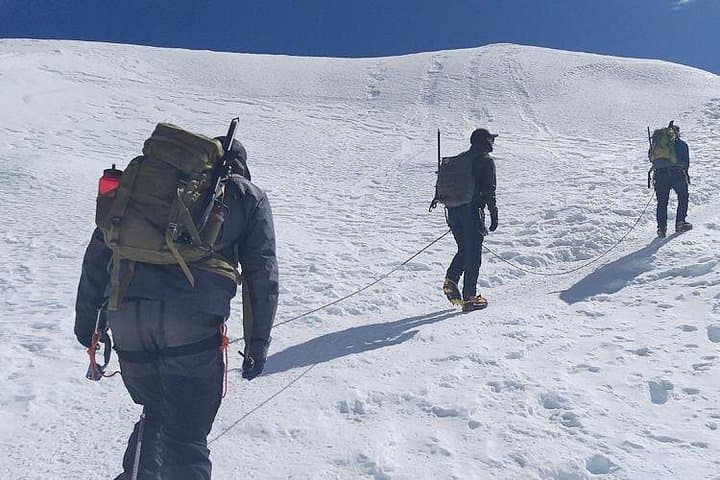
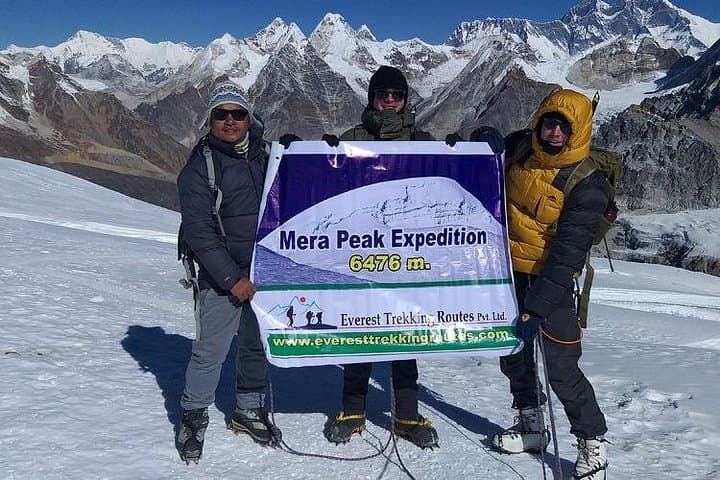
Expect long days on mixed terrain — forest tracks, rocky steps, moraine and crevassed glacier sections on the upper slopes. The summit day uses crampons, ice axe and fixed ropes; clear views from 6,461m include Everest, Makalu and Cho Oyu on a good day. Altitude is the challenge: progressive acclimatization, hydration and conservative pacing are non-negotiable.
Practical guidance: fly Kathmandu–Lukla early in your window and build buffer days for weather; practice crampon and rope work before arrival; pack layered, breathable insulating clothing and a sleeping system rated for sub-zero nights; and carry a personal medical kit and travel insurance that covers helicopter evacuation. Respect local regulations — climbing permits and garbage deposits are part of the permit process — and leave no trace on fragile alpine slopes.
Spring (April–May) and autumn (September–November) offer the most stable weather and clear summit views; monsoon brings heavy snow and winter is colder and windier.
Yes — a special climbing permit and national park or conservation area fees are required and typically managed by your operator.
The summit involves glacier travel, steep snow slopes and fixed ropes; it’s non-technical for experienced mountaineers but requires crampon and rope skills.
Operators arrange helicopter evacuation options but you must have travel insurance that covers high-altitude rescue and medical repatriation.
Everest Trekking Routes Pvt. Ltd. operates guided outdoor trips and adventures with an emphasis on safety, stewardship, and memorable experiences.
You step out of the thin morning air and the ridge ahead bites at the sky — a knife of snow and rock that leads to one of Nepal’s most accessible 6,000m-plus summits. From Lukla’s bustling strip to the hush of Hinku Valley, the route threads Sherpa villages, rhododendron forest, glacier moraine and high camps where wind and white light set the pace.
You step out of the thin morning air and the ridge ahead bites at the sky — a knife of snow and rock that leads to one of Nepal’s most accessible 6,000m-plus summits. From Lukla’s bustling strip to the hush of Hinku Valley, the route threads Sherpa villages, rhododendron forest, glacier moraine and high camps where wind and white light set the pace.
Mera Peak sits in Nepal’s Hinku Valley, part of the eastern Solukhumbu and close to Makalu-Barun and Everest regions. Geologically the peak is an outlying granite and metamorphic massif shaped by the uplift of the Himalaya; culturally the trail passes communities with Tibetan-Burman Sherpa traditions and mani stones marking high passes. Local tea houses and seasonal camps support a mixed trekking-climbing itinerary that blends lodge nights with a night in a high snow camp.
Expect long days on mixed terrain — forest tracks, rocky steps, moraine and crevassed glacier sections on the upper slopes. The summit day uses crampons, ice axe and fixed ropes; clear views from 6,461m include Everest, Makalu and Cho Oyu on a good day. Altitude is the challenge: progressive acclimatization, hydration and conservative pacing are non-negotiable.
Practical guidance: fly Kathmandu–Lukla early in your window and build buffer days for weather; practice crampon and rope work before arrival; pack layered, breathable insulating clothing and a sleeping system rated for sub-zero nights; and carry a personal medical kit and travel insurance that covers helicopter evacuation. Respect local regulations — climbing permits and garbage deposits are part of the permit process — and leave no trace on fragile alpine slopes.
