THE ADVENTURE COLLECTIVE® · Independent discovery and booking for outdoor travel

An 18-day climb that begins with a Lukla flight and ends on Mera Peak’s 6,476m summit, offering close-up views of Everest and other 8,000m giants. This teahouse-to-camp route blends Sherpa villages with glacial climbing and requires careful acclimatization.
An 18-day climb that begins with a Lukla flight and ends on Mera Peak’s 6,476m summit, offering close-up views of Everest and other 8,000m giants. This teahouse-to-camp route blends Sherpa villages with glacial climbing and requires careful acclimatization.
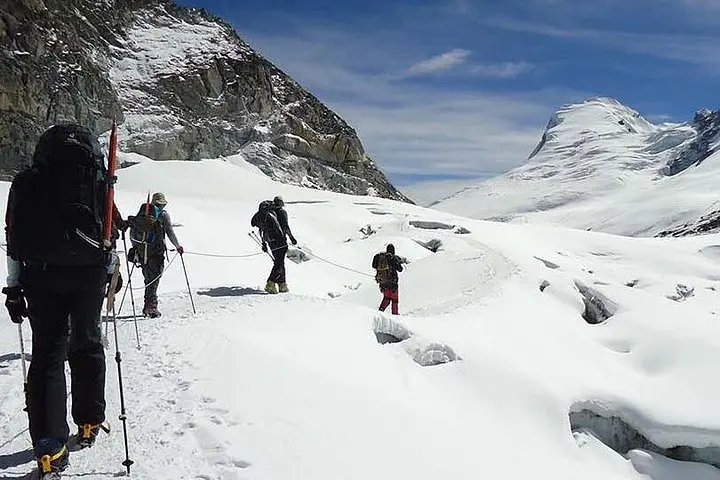
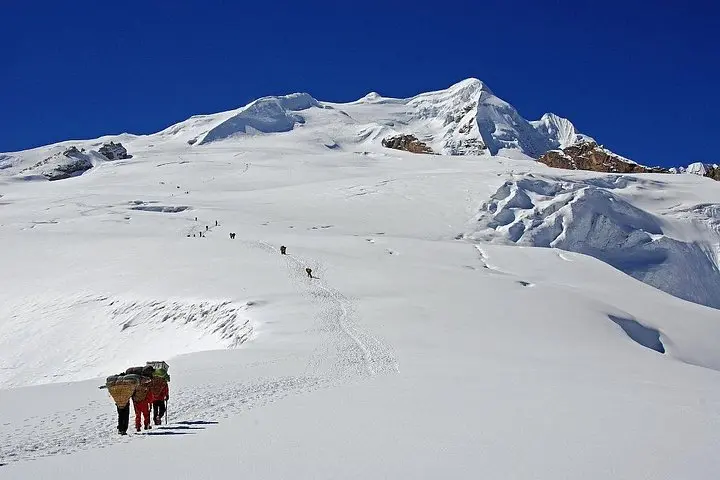
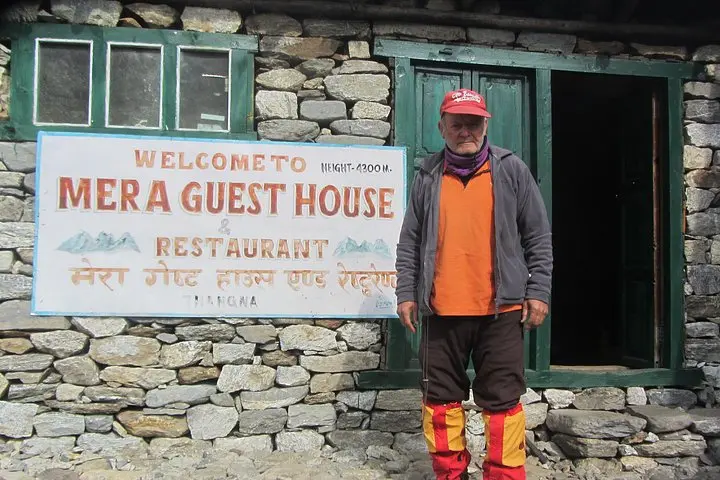
A thin, icy wind pushes across the moraine as you tighten your harness below the black ridgeline of Mera Peak. The trail rises in fits and starts from Lukla’s rickety airstrip, threading rhododendron forest, yak pastures and stone teahouses before opening to the high, white bowls above 5,000 meters where crampon marks score the snow.
Verified experiences and guided adventures in the surrounding area.
Operated by Nepal Mountain Trekkers - Day Tours · Lukla, Solukhumbu
A thin, icy wind pushes across the moraine as you tighten your harness below the black ridgeline of Mera Peak. The trail rises in fits and starts from Lukla’s rickety airstrip, threading rhododendron forest, yak pastures and stone teahouses before opening to the high, white bowls above 5,000 meters where crampon marks score the snow.
Geology here is raw: uplifted schist and granite carved by glacial tongues that still feed the Hinku and Mera glaciers. The route runs along a remote flank of the Khumbu — historically a crossroads for Tibetan-Nepalese traders — and today the valleys still carry strong Sherpa cultural identity in mani walls, prayer flags and mountain stupas.
Expect long trekking days, deliberate acclimatization stops and one to two nights of high-camp on the approach to the glacier; the climb itself uses fixed ropes and basic ice techniques. Summit mornings reward a staggeringly close panorama of Everest, Lhotse, Cho Oyu, Makalu and Kanchenjunga: those giants feel like neighbors rather than distant peaks.
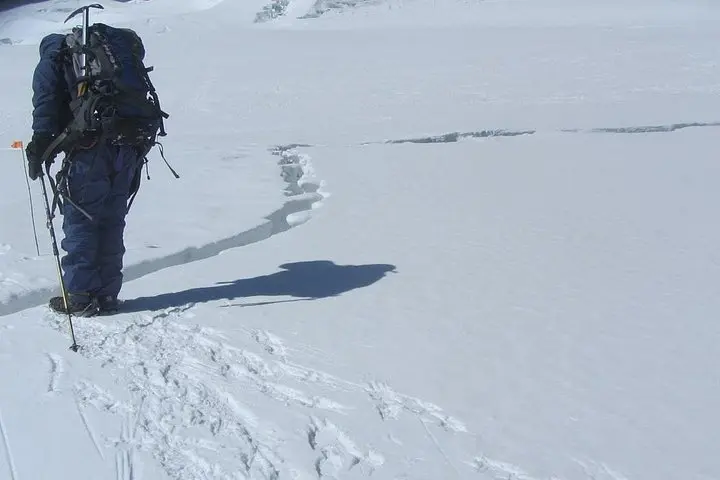
Practical edge: acclimatize with rest days, carry water treatment and a windshell for glacier nights, and trust guides for ropework and route-finding. Weather windows narrow in pre-monsoon and post-monsoon seasons; whiteouts and crevasse hazards mean summit pushes can be postponed. Footwear should be stiff-moderate mountaineering boots; practice with crampons before departure.
For an ambitious trekkers-climbers, Mera Peak balances technical exposure with achievable objectives — a high-altitude climb framed by Sherpa villages, sweeping icefields and some of the world’s largest mountains.
Pre-monsoon (April–May) and post-monsoon (September–October) offer the most stable weather and clear summit views.
Prior high-altitude trekking and basic ice skills are strongly recommended; guides provide fixed ropes but you should be comfortable with crampons and exposure.
You need a Peak Permit for Mera Peak, and entry fees for Sagarmatha National Park/Baruncha Conservation Area; operators typically handle permits.
Significant—AMS, HAPE and HACE are real risks; a staged itinerary, monitoring symptoms and descent plans are essential.
Nepal Mountain Trekkers - Day Tours operates guided outdoor trips and adventures with an emphasis on safety, stewardship, and memorable experiences.
A thin, icy wind pushes across the moraine as you tighten your harness below the black ridgeline of Mera Peak. The trail rises in fits and starts from Lukla’s rickety airstrip, threading rhododendron forest, yak pastures and stone teahouses before opening to the high, white bowls above 5,000 meters where crampon marks score the snow.
A thin, icy wind pushes across the moraine as you tighten your harness below the black ridgeline of Mera Peak. The trail rises in fits and starts from Lukla’s rickety airstrip, threading rhododendron forest, yak pastures and stone teahouses before opening to the high, white bowls above 5,000 meters where crampon marks score the snow.
Geology here is raw: uplifted schist and granite carved by glacial tongues that still feed the Hinku and Mera glaciers. The route runs along a remote flank of the Khumbu — historically a crossroads for Tibetan-Nepalese traders — and today the valleys still carry strong Sherpa cultural identity in mani walls, prayer flags and mountain stupas.
Expect long trekking days, deliberate acclimatization stops and one to two nights of high-camp on the approach to the glacier; the climb itself uses fixed ropes and basic ice techniques. Summit mornings reward a staggeringly close panorama of Everest, Lhotse, Cho Oyu, Makalu and Kanchenjunga: those giants feel like neighbors rather than distant peaks.
Practical edge: acclimatize with rest days, carry water treatment and a windshell for glacier nights, and trust guides for ropework and route-finding. Weather windows narrow in pre-monsoon and post-monsoon seasons; whiteouts and crevasse hazards mean summit pushes can be postponed. Footwear should be stiff-moderate mountaineering boots; practice with crampons before departure.
For an ambitious trekkers-climbers, Mera Peak balances technical exposure with achievable objectives — a high-altitude climb framed by Sherpa villages, sweeping icefields and some of the world’s largest mountains.