THE ADVENTURE COLLECTIVE® · Independent discovery and booking for outdoor travel

Drive into Erg Chebbi on a private 3-hour 4x4 tour that combines high dune viewpoints, visits to Berber villages, Khamlia Gnawa music, and meetings with nomadic families. Perfect for travelers seeking a compact, guided introduction to Merzouga’s desert landscape and culture.
Drive into Erg Chebbi on a private 3-hour 4x4 tour that combines high dune viewpoints, visits to Berber villages, Khamlia Gnawa music, and meetings with nomadic families. Perfect for travelers seeking a compact, guided introduction to Merzouga’s desert landscape and culture.
A 4x4 rumbles off the paved road and the desert widens: ridges of orange sand rise and fall like a slow sea, and the wind sculpts new shapes between passes. In a few short hours this Merzouga 4x4 excursion carries you across Erg Chebbi’s shifting slopes to meet musicians, miners and nomads who still read the land’s moods.
Verified experiences and guided adventures in the surrounding area.
Operated by Top Sahara Trips · Merzouga, Drâa-Tafilalet
A 4x4 rumbles off the paved road and the desert widens: ridges of orange sand rise and fall like a slow sea, and the wind sculpts new shapes between passes. In a few short hours this Merzouga 4x4 excursion carries you across Erg Chebbi’s shifting slopes to meet musicians, miners and nomads who still read the land’s moods.
Erg Chebbi is a living geological museum—aeolian processes have moved these dunes for millennia—while Merzouga sits at the edge of traditional trans-Saharan routes. Berber villages and Khamlia, a small community famed for Gnawa music, speak to a layered human history of trade, faith and desert survival. Scattered mineral workings and small oasis pockets remind you that life here adapts to scarcity.
Practically, the tour is short and intensively scenic: expect a 3-hour private drive with guided stops at high dune crests, local villages, khol (mineral) pits and a chance to meet nomadic families. The guide handles tracks and timing; travelers should bring 1–2 liters of water, sun protection and closed-toe shoes for walking on hot sand. Late afternoon departures offer cooler temperatures and stronger light for photos; midday is hottest and harshest. Respect local customs—ask before photographing people—and carry small cash for purchases or tips.
The route is physically easy but rough on the back; it’s not recommended for pregnant travelers or those with spinal issues. The real draw is the contrast: wind-swept silence punctuated by Gnawa rhythm and the bright geometry of dune lines—a compact Saharan experience that’s both immediate and instructive.
The tour runs about three hours and is offered as a private 4x4 transfer with multiple short stops.
Yes—guides typically stop at accessible dune crests for short walks and panoramic photos; deeper climbs are optional.
This 4x4 excursion focuses on vehicles and village stops; camel rides are separate activities and must be booked independently if desired.
Yes—infants must sit on an adult’s lap; the tour is marked suitable for all fitness levels but is not recommended for pregnant travelers or those with spinal problems.
Top Sahara Trips operates guided outdoor trips and adventures with an emphasis on safety, stewardship, and memorable experiences.
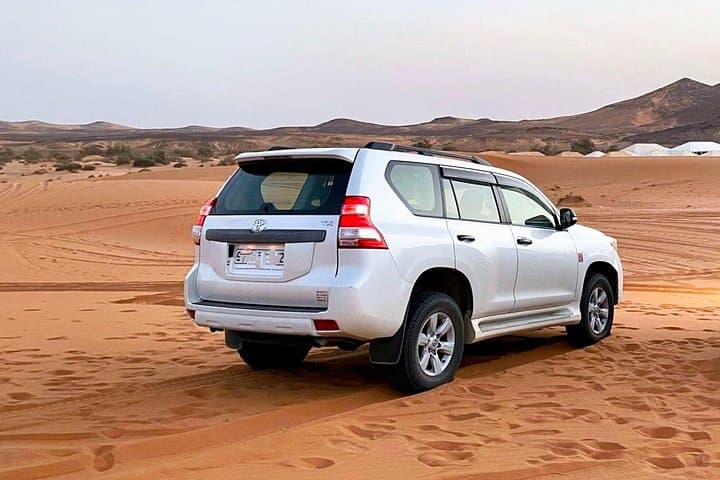
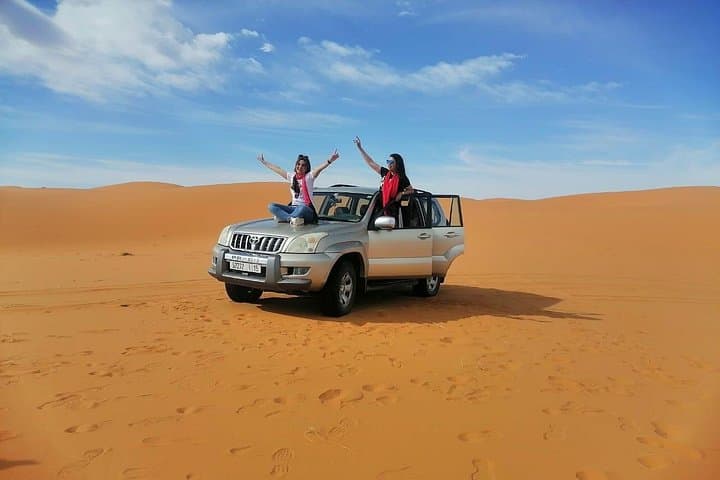
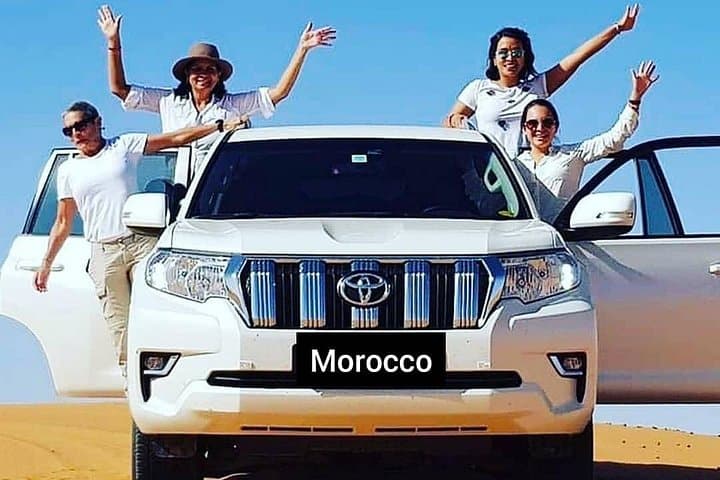
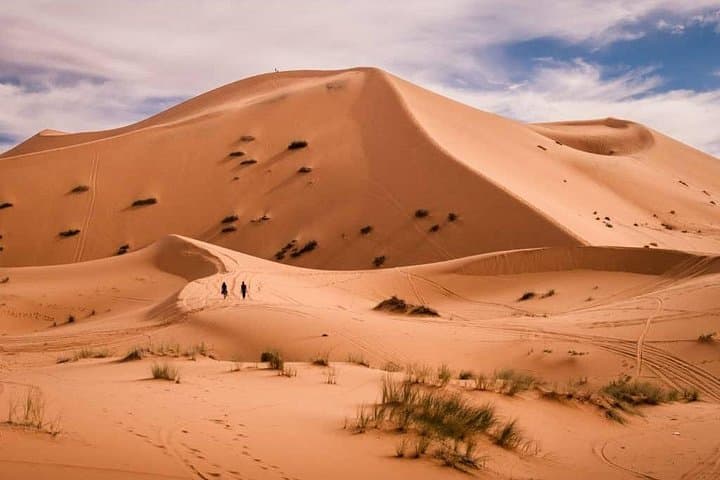
A 4x4 rumbles off the paved road and the desert widens: ridges of orange sand rise and fall like a slow sea, and the wind sculpts new shapes between passes. In a few short hours this Merzouga 4x4 excursion carries you across Erg Chebbi’s shifting slopes to meet musicians, miners and nomads who still read the land’s moods.
A 4x4 rumbles off the paved road and the desert widens: ridges of orange sand rise and fall like a slow sea, and the wind sculpts new shapes between passes. In a few short hours this Merzouga 4x4 excursion carries you across Erg Chebbi’s shifting slopes to meet musicians, miners and nomads who still read the land’s moods.
Erg Chebbi is a living geological museum—aeolian processes have moved these dunes for millennia—while Merzouga sits at the edge of traditional trans-Saharan routes. Berber villages and Khamlia, a small community famed for Gnawa music, speak to a layered human history of trade, faith and desert survival. Scattered mineral workings and small oasis pockets remind you that life here adapts to scarcity.
Practically, the tour is short and intensively scenic: expect a 3-hour private drive with guided stops at high dune crests, local villages, khol (mineral) pits and a chance to meet nomadic families. The guide handles tracks and timing; travelers should bring 1–2 liters of water, sun protection and closed-toe shoes for walking on hot sand. Late afternoon departures offer cooler temperatures and stronger light for photos; midday is hottest and harshest. Respect local customs—ask before photographing people—and carry small cash for purchases or tips.
The route is physically easy but rough on the back; it’s not recommended for pregnant travelers or those with spinal issues. The real draw is the contrast: wind-swept silence punctuated by Gnawa rhythm and the bright geometry of dune lines—a compact Saharan experience that’s both immediate and instructive.