THE ADVENTURE COLLECTIVE® · Independent discovery and booking for outdoor travel

Cross the High Atlas into the orange sweep of Erg Chebbi on this 3‑day private tour from Marrakech. Experience Aït Benhaddou, Todra Gorge and an overnight luxury camp reached by camel beneath huge desert skies.
Cross the High Atlas into the orange sweep of Erg Chebbi on this 3‑day private tour from Marrakech. Experience Aït Benhaddou, Todra Gorge and an overnight luxury camp reached by camel beneath huge desert skies.
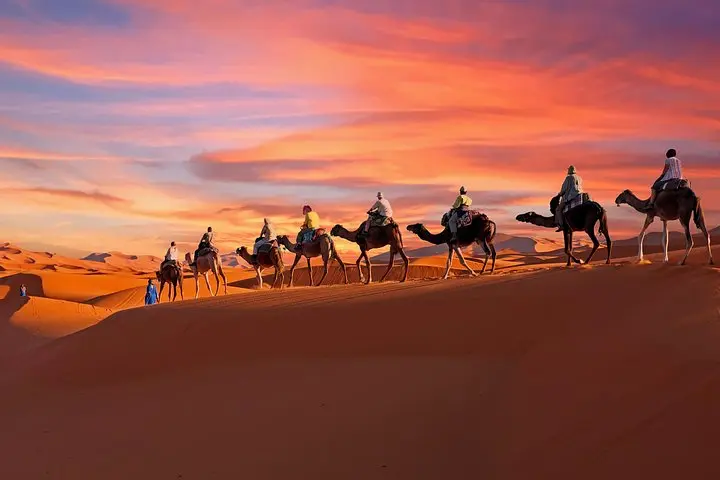
The first light on the Atlas pass thins like tea as your vehicle climbs Tizi n’Tichka, and by midmorning the high road drops into ochre kasbahs and palm groves. This three‑day loop runs from Marrakech over the High Atlas to the Dades and Todra gorges, then east into the rolling sea of Erg Chebbi near Merzouga — dunes that rise in long, wind-sculpted ribs that invite a slow, measured crossing by camel.
Verified experiences and guided adventures in the surrounding area.
Operated by Discover Morocco Tours · Merzouga, Drâa-Tafilalet
The first light on the Atlas pass thins like tea as your vehicle climbs Tizi n’Tichka, and by midmorning the high road drops into ochre kasbahs and palm groves. This three‑day loop runs from Marrakech over the High Atlas to the Dades and Todra gorges, then east into the rolling sea of Erg Chebbi near Merzouga — dunes that rise in long, wind-sculpted ribs that invite a slow, measured crossing by camel.
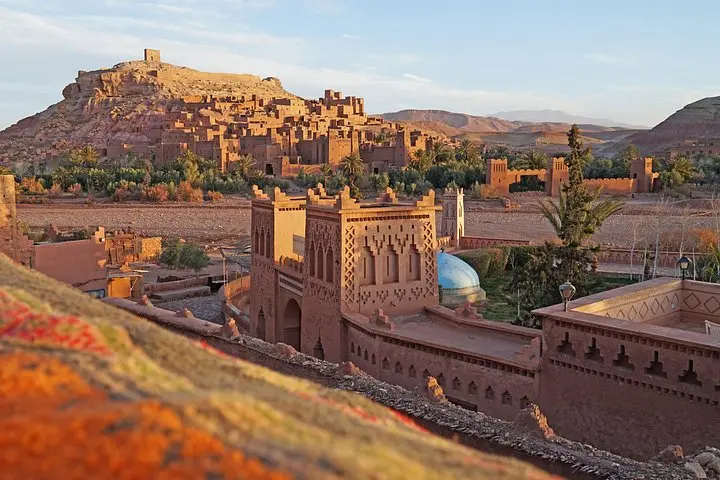
The route threads living history: Aït Benhaddou’s fortified ksar recalls trans‑Saharan trade routes and film crews that have used its towers as a cinematic backdrop. Geologically, you move from fold mountains of Paleozoic rock to alluvial plains and finally to aeolian sand where wind rate and sand grain size shape the familiar dune faces. Culturally, evenings at the camp center on Berber music, tea, and stories that bridge nomad traditions and modern tourism.
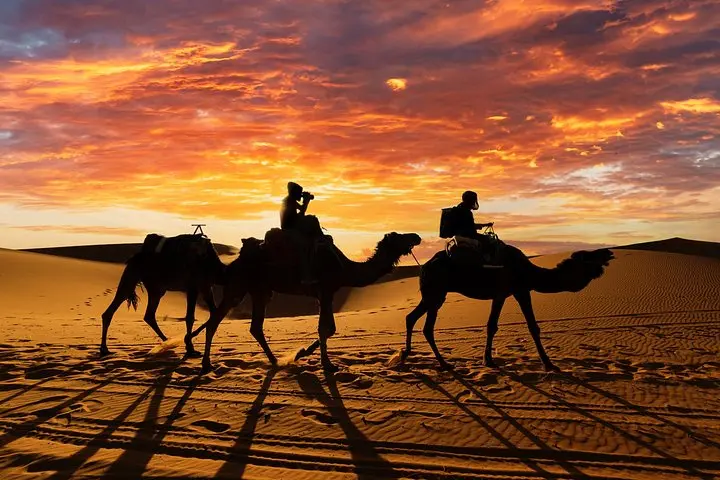
Expect long highway legs balanced by low‑effort active moments — a 90‑minute camel trek into camp, sunrise and sunset climbs of the nearest dune, and optional sandboarding runs. Nights in a luxury tent and a Dades hotel keep logistics simple, while guides handle permits and local relations.
Practical guidance: time your trip for spring or autumn to avoid extreme summer heat; pack layered sun protection, a headlamp and closed shoes for walking on shifting sand; bring cash for small purchases in villages. Hydration and pacing matter — desert days are dry and deceptively tiring, but route choices make this an accessible, immersive way to experience Morocco’s eastern desert.
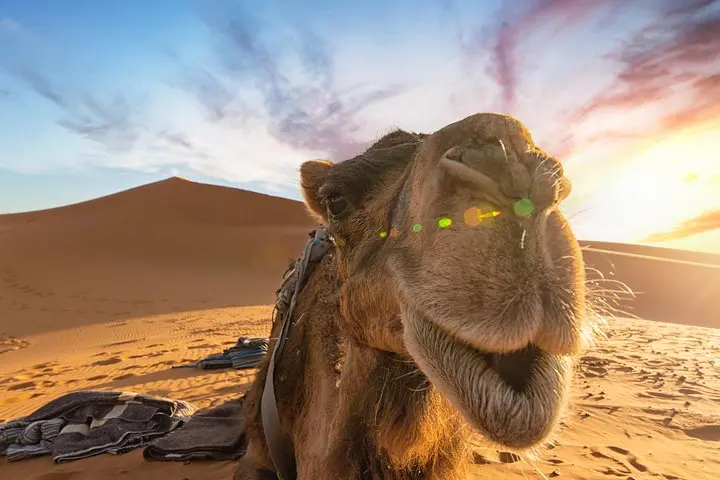
Camel rides are low-impact but require balance and comfort with mounting; rides are typically 1–1.5 hours across dunes with frequent rests.
Spring and fall days range 20–30°C (68–86°F) with cool nights; summer can exceed 40°C (104°F), and winter nights can drop near freezing.
The itinerary is family-friendly with private transport and accessible accommodations, but camel rides and dune walks may be challenging for very young children or those with limited mobility.
Yes — vegetarian options are available; inform the operator at booking so camps and hotels can prepare appropriate meals.
Discover Morocco Tours operates guided outdoor trips and adventures with an emphasis on safety, stewardship, and memorable experiences.
The first light on the Atlas pass thins like tea as your vehicle climbs Tizi n’Tichka, and by midmorning the high road drops into ochre kasbahs and palm groves. This three‑day loop runs from Marrakech over the High Atlas to the Dades and Todra gorges, then east into the rolling sea of Erg Chebbi near Merzouga — dunes that rise in long, wind-sculpted ribs that invite a slow, measured crossing by camel.
The first light on the Atlas pass thins like tea as your vehicle climbs Tizi n’Tichka, and by midmorning the high road drops into ochre kasbahs and palm groves. This three‑day loop runs from Marrakech over the High Atlas to the Dades and Todra gorges, then east into the rolling sea of Erg Chebbi near Merzouga — dunes that rise in long, wind-sculpted ribs that invite a slow, measured crossing by camel.
The route threads living history: Aït Benhaddou’s fortified ksar recalls trans‑Saharan trade routes and film crews that have used its towers as a cinematic backdrop. Geologically, you move from fold mountains of Paleozoic rock to alluvial plains and finally to aeolian sand where wind rate and sand grain size shape the familiar dune faces. Culturally, evenings at the camp center on Berber music, tea, and stories that bridge nomad traditions and modern tourism.
Expect long highway legs balanced by low‑effort active moments — a 90‑minute camel trek into camp, sunrise and sunset climbs of the nearest dune, and optional sandboarding runs. Nights in a luxury tent and a Dades hotel keep logistics simple, while guides handle permits and local relations.
Practical guidance: time your trip for spring or autumn to avoid extreme summer heat; pack layered sun protection, a headlamp and closed shoes for walking on shifting sand; bring cash for small purchases in villages. Hydration and pacing matter — desert days are dry and deceptively tiring, but route choices make this an accessible, immersive way to experience Morocco’s eastern desert.