THE ADVENTURE COLLECTIVE® · Independent discovery and booking for outdoor travel

Ride a camel into the Erg Chebbi dunes, dine by a desert fire, and sleep in a traditional tent beneath an immense starfield. This half-day-to-overnight experience pairs easy travel logistics with dramatic sunset and sunrise photography.
Ride a camel into the Erg Chebbi dunes, dine by a desert fire, and sleep in a traditional tent beneath an immense starfield. This half-day-to-overnight experience pairs easy travel logistics with dramatic sunset and sunrise photography.
You arrive at the edge of Erg Chebbi as late afternoon light paints the dunes in warm ochre; camels shift and breathe, patient and sure, while a local guide leads you away from the dust of the road and into the open sweep of the Sahara.
Verified experiences and guided adventures in the surrounding area.
Operated by Top sahara tours · Merzouga, Drâa-Tafilalet
You arrive at the edge of Erg Chebbi as late afternoon light paints the dunes in warm ochre; camels shift and breathe, patient and sure, while a local guide leads you away from the dust of the road and into the open sweep of the Sahara.
The experience centers on a 90-minute camel trek to a private Berber-style camp, an evening of simple hospitality—dinner by the fire, drummed songs, and a mattress in a nomad tent—and a sunrise walk to the dune crest. Geologically, these are wind-carved dunes of Quaternary sands, rising and falling with nighttime winds; culturally, the area is shaped by Amazigh (Berber) traditions and former caravan routes that threaded the desert between Rissani and the Sahara’s margins.
Expect intimate desert weather: hot, dry days and cold nights; bright sunscreens and layered insulation both matter. Photography opportunities peak at sunset and sunrise when shadows sculpt the sand and stars cluster overhead free of light pollution. The guides typically provide pickup from Merzouga, a simple dinner, and breakfast back at a guesthouse after returning by camel.
Practical tips: wear closed-toe shoes for the camel ride, carry at least 1–2 liters of water, and arrive with a warm layer and headlamp. If you’re prone to back or neck issues, request a low-saddle camel or consider walking segments; those with mobility needs should confirm accessibility in advance. This is an accessible, low-technical overnight that rewards simple preparation with a memorable night under one of the world’s most luminous skies.
The camel trek to the camp is about 90 minutes each way over rolling dunes and flat sand—handlers set a steady, walk-like pace.
Tents are simple nomad-style with a mattress and blanket; they are not heated, so bring warm layers for the night.
Yes—this activity is marketed as suitable for most fitness levels, but children and anyone with back or neck issues should check mounting assistance and camel technique first.
Dinner around the campfire and a light breakfast (tea and pastries) are included; fuller breakfasts and showers are typically available back at the guesthouse in Merzouga after return.
Top sahara tours operates guided outdoor trips and adventures with an emphasis on safety, stewardship, and memorable experiences.

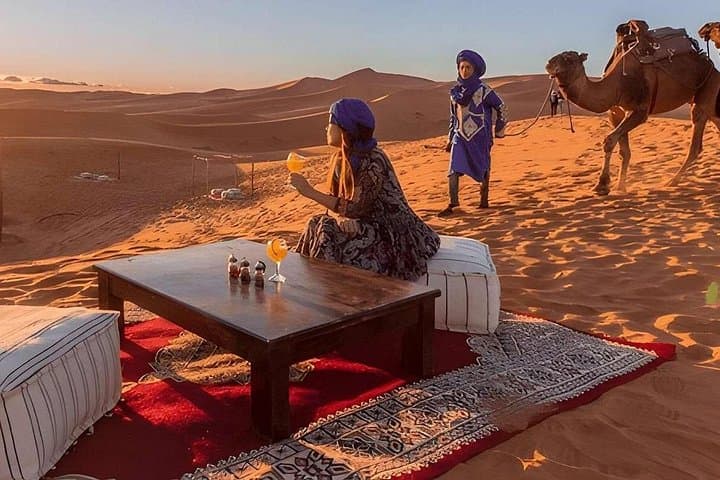

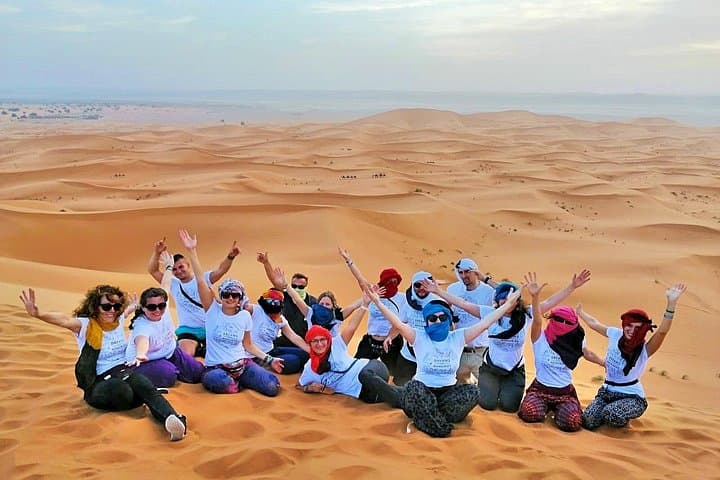
You arrive at the edge of Erg Chebbi as late afternoon light paints the dunes in warm ochre; camels shift and breathe, patient and sure, while a local guide leads you away from the dust of the road and into the open sweep of the Sahara.
You arrive at the edge of Erg Chebbi as late afternoon light paints the dunes in warm ochre; camels shift and breathe, patient and sure, while a local guide leads you away from the dust of the road and into the open sweep of the Sahara.
The experience centers on a 90-minute camel trek to a private Berber-style camp, an evening of simple hospitality—dinner by the fire, drummed songs, and a mattress in a nomad tent—and a sunrise walk to the dune crest. Geologically, these are wind-carved dunes of Quaternary sands, rising and falling with nighttime winds; culturally, the area is shaped by Amazigh (Berber) traditions and former caravan routes that threaded the desert between Rissani and the Sahara’s margins.
Expect intimate desert weather: hot, dry days and cold nights; bright sunscreens and layered insulation both matter. Photography opportunities peak at sunset and sunrise when shadows sculpt the sand and stars cluster overhead free of light pollution. The guides typically provide pickup from Merzouga, a simple dinner, and breakfast back at a guesthouse after returning by camel.
Practical tips: wear closed-toe shoes for the camel ride, carry at least 1–2 liters of water, and arrive with a warm layer and headlamp. If you’re prone to back or neck issues, request a low-saddle camel or consider walking segments; those with mobility needs should confirm accessibility in advance. This is an accessible, low-technical overnight that rewards simple preparation with a memorable night under one of the world’s most luminous skies.