THE ADVENTURE COLLECTIVE® · Independent discovery and booking for outdoor travel

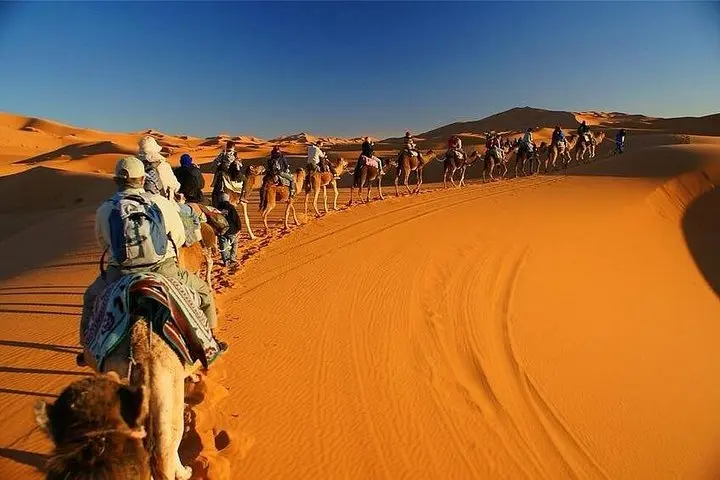
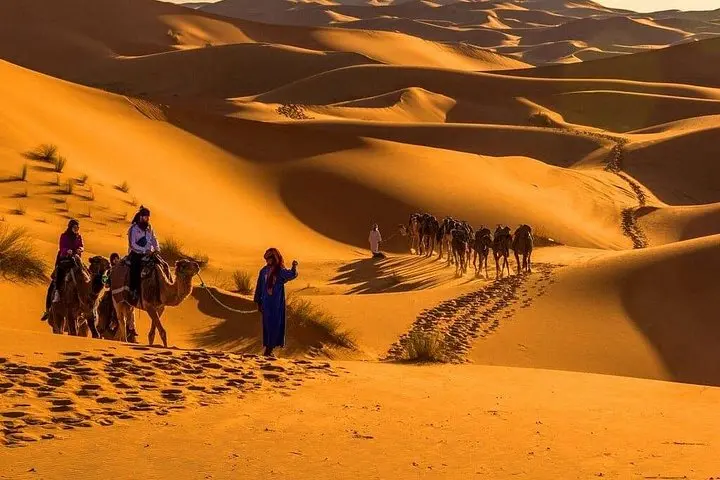
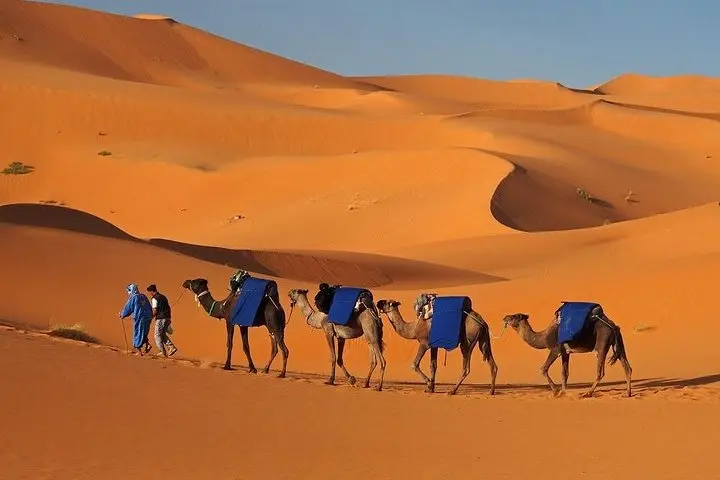
Cross the High Atlas, walk narrow canyons, then ride camels into Erg Chebbi for a night under the stars. This 3-day circuit from Marrakech mixes long drives with short treks, cultural stops, and a true Sahara bivouac.
Cross the High Atlas, walk narrow canyons, then ride camels into Erg Chebbi for a night under the stars. This 3-day circuit from Marrakech mixes long drives with short treks, cultural stops, and a true Sahara bivouac.
A pale ribbon of headlights peels away from Marrakech before dawn and the Atlas Mountains rise like an older world, dark and patient. Travelers cross Tizi n’Tichka—a high pass whose switchbacks open views of stony slopes and distant villages—before the low sunlight gilds the mud-brick towers of Ait Benhaddou. By day two the road gives way to palm groves and abruptly to the sweeping ridges of Erg Chebbi where the desert breathes and the dunes dare you to climb them.
Verified experiences and guided adventures in the surrounding area.
Operated by Day Out Marrakech · Merzouga, Drâa-Tafilalet
A pale ribbon of headlights peels away from Marrakech before dawn and the Atlas Mountains rise like an older world, dark and patient. Travelers cross Tizi n’Tichka—a high pass whose switchbacks open views of stony slopes and distant villages—before the low sunlight gilds the mud-brick towers of Ait Benhaddou. By day two the road gives way to palm groves and abruptly to the sweeping ridges of Erg Chebbi where the desert breathes and the dunes dare you to climb them.
The route threads through layers of history: Berber trading routes, kasbah architecture carved from local clay, and Ouarzazate, a modern film hub built beside an older caravan landscape. Geologically the journey moves from folded High Atlas limestone (Tizi n’Tichka, ~2,260 m) down to river-cut palm oases in Dades and Todra, then to wind-shaped sand seas—dunes reaching roughly 100–150 m high. Cultural highlights include the UNESCO-listed Ait Benhaddou and small Berber villages along the Road of a Thousand Kasbahs.
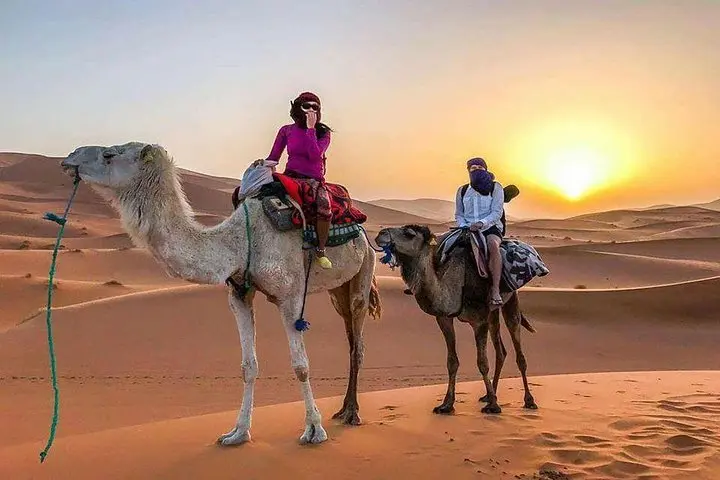
Practically, expect long driving stretches—most days include several hours on paved roads—short canyon walks (Todra’s 300 m walls), a 60-minute camel transfer at sunset, and a night in a desert bivouac under open sky. Temperatures swing: hot afternoons, cold nights. Bring layered clothing, sun protection, at least 2–3 liters of water per day, and sturdy footwear for sand and rocky gorges. Aim for sunrise and sunset for the best light and cooler walking. The experience is low-technical but high-on-immersion: the desert asks for patience and respect, and it rewards with silence and visible stars.
The typical camel transfer to the bivouac is about 45–60 minutes at sunset, timed to arrive before nightfall.
Bivouac nights are in nomadic-style tents with simple bedding; facilities are basic and designed for an authentic desert experience.
Local operators usually can handle common dietary needs if informed at booking—communicate allergies and preferences in advance.
The itinerary is physically accessible, but long drives and uneven terrain in gorges may be challenging for very young children or travelers with limited mobility.
Day Out Marrakech operates guided outdoor trips and adventures with an emphasis on safety, stewardship, and memorable experiences.
A pale ribbon of headlights peels away from Marrakech before dawn and the Atlas Mountains rise like an older world, dark and patient. Travelers cross Tizi n’Tichka—a high pass whose switchbacks open views of stony slopes and distant villages—before the low sunlight gilds the mud-brick towers of Ait Benhaddou. By day two the road gives way to palm groves and abruptly to the sweeping ridges of Erg Chebbi where the desert breathes and the dunes dare you to climb them.
A pale ribbon of headlights peels away from Marrakech before dawn and the Atlas Mountains rise like an older world, dark and patient. Travelers cross Tizi n’Tichka—a high pass whose switchbacks open views of stony slopes and distant villages—before the low sunlight gilds the mud-brick towers of Ait Benhaddou. By day two the road gives way to palm groves and abruptly to the sweeping ridges of Erg Chebbi where the desert breathes and the dunes dare you to climb them.
The route threads through layers of history: Berber trading routes, kasbah architecture carved from local clay, and Ouarzazate, a modern film hub built beside an older caravan landscape. Geologically the journey moves from folded High Atlas limestone (Tizi n’Tichka, ~2,260 m) down to river-cut palm oases in Dades and Todra, then to wind-shaped sand seas—dunes reaching roughly 100–150 m high. Cultural highlights include the UNESCO-listed Ait Benhaddou and small Berber villages along the Road of a Thousand Kasbahs.
Practically, expect long driving stretches—most days include several hours on paved roads—short canyon walks (Todra’s 300 m walls), a 60-minute camel transfer at sunset, and a night in a desert bivouac under open sky. Temperatures swing: hot afternoons, cold nights. Bring layered clothing, sun protection, at least 2–3 liters of water per day, and sturdy footwear for sand and rocky gorges. Aim for sunrise and sunset for the best light and cooler walking. The experience is low-technical but high-on-immersion: the desert asks for patience and respect, and it rewards with silence and visible stars.