THE ADVENTURE COLLECTIVE® · Independent discovery and booking for outdoor travel

Sleep under the Sahara sky at a luxury bivouac near Merzouga, combining a sunset camel trek with gourmet meals and traditional music. Expect dramatic dunes, dramatic temperature swings, and an early-morning sunrise over Erg Chebbi.
Sleep under the Sahara sky at a luxury bivouac near Merzouga, combining a sunset camel trek with gourmet meals and traditional music. Expect dramatic dunes, dramatic temperature swings, and an early-morning sunrise over Erg Chebbi.
The sun leans low and the Erg Chebbi dunes throw long shadows across the sand as your camel pads a slow rhythm toward the bivouac. Evening air sharpens; the dunes dare you to climb and watch the colors fade from gold to rust. At the luxury bivouac near Merzouga, comfort meets the Sahara—insulated tents, a shared fire circle, and a small team that handles camels and cuisine.
Verified experiences and guided adventures in the surrounding area.
Operated by Face Tours · Merzouga, Drâa-Tafilalet
The sun leans low and the Erg Chebbi dunes throw long shadows across the sand as your camel pads a slow rhythm toward the bivouac. Evening air sharpens; the dunes dare you to climb and watch the colors fade from gold to rust. At the luxury bivouac near Merzouga, comfort meets the Sahara—insulated tents, a shared fire circle, and a small team that handles camels and cuisine.
This stretch of the Sahara sits on Morocco’s southeastern edge, where shifting sands were shaped by winds over millennia and where nomadic Berber routes once threaded salt and dates across the desert. Erg Chebbi’s tallest dunes reach roughly 150 meters, providing dramatic ridgelines for sunset and sunrise vistas. Cultural notes are immediate: traditional Gnawa music around the fire, mint tea poured slowly, and locally woven textiles used in camp.
Practical details matter here. Most bivouac programs include an afternoon camel trek to the camp, dinner, allocated sleeping space in a tent with blankets, and an early-morning walk or ride for sunrise before returning. Temperatures swing dramatically—hot by day, cold overnight—so layers are essential. Hydrate before and during your trek; sand can sap energy quickly. Bring a headlamp, camera with spare batteries, and cash for small tips or local crafts.
Expect basic but thoughtful facilities rather than luxury resort amenities: flushing toilets may be limited and showers are often solar or communal. The real draw is the desert’s scale—the stars seem to push forward, and the silence is a clear, tactile thing. With modest planning you’ll leave with desert stories, sunrise photos, and a fresh respect for the Sahara’s vastness.
Most travelers drive or take a transfer from Erfoud, Rissani, or the nearest airports; many operators include pickup from Merzouga or nearby towns.
Camel rides and soft sand can be challenging; the experience is generally family-friendly but not recommended for those with serious mobility or spinal issues.
Yes—dinner, breakfast, tea/coffee and bottled water are typically included; bring extra snacks if you have specific dietary needs.
Camps vary—expect basic toilets and sometimes solar-heated or communal showers; luxury camps may offer improved amenities but not full hotel standards.
Face Tours operates guided outdoor trips and adventures with an emphasis on safety, stewardship, and memorable experiences.
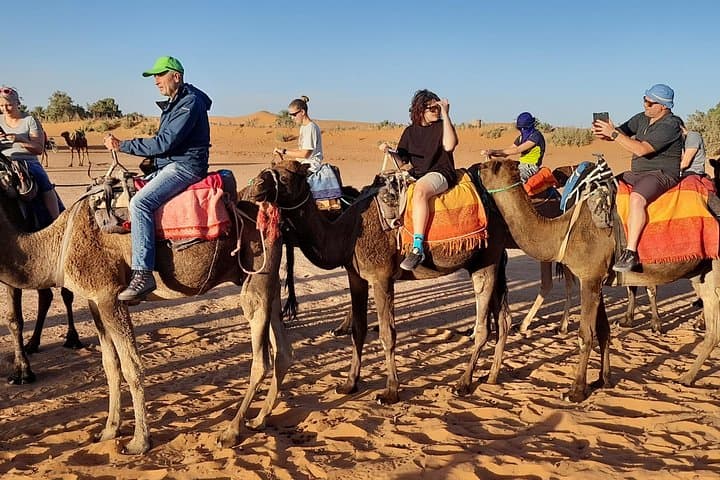
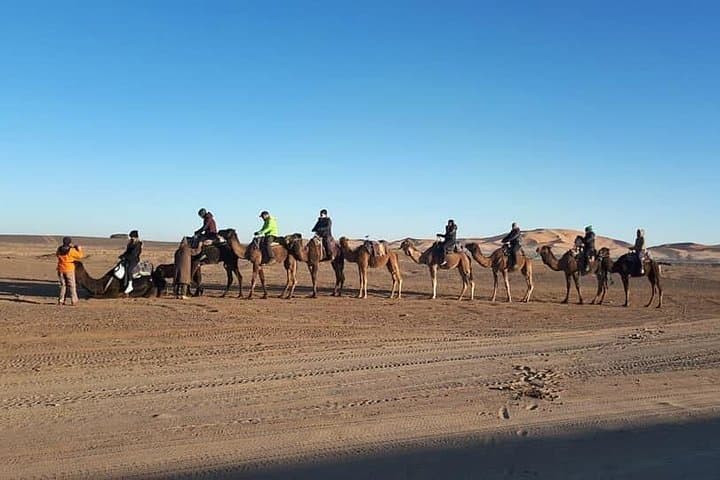
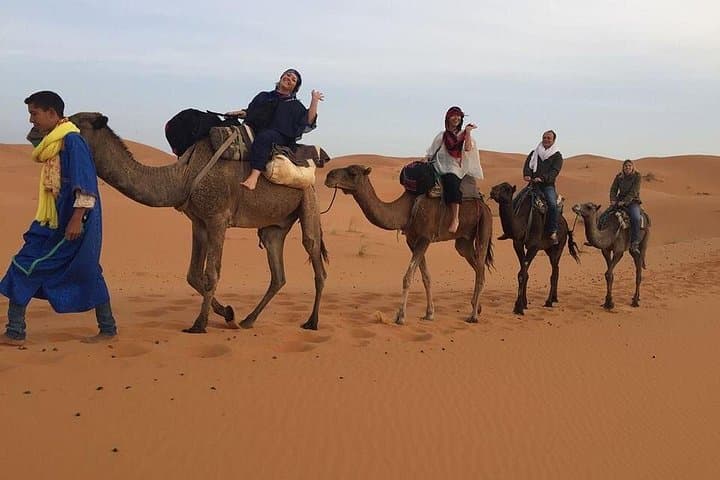
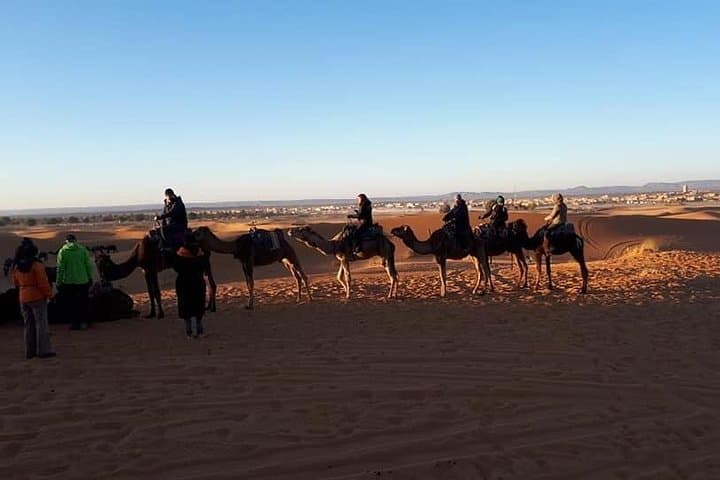
The sun leans low and the Erg Chebbi dunes throw long shadows across the sand as your camel pads a slow rhythm toward the bivouac. Evening air sharpens; the dunes dare you to climb and watch the colors fade from gold to rust. At the luxury bivouac near Merzouga, comfort meets the Sahara—insulated tents, a shared fire circle, and a small team that handles camels and cuisine.
The sun leans low and the Erg Chebbi dunes throw long shadows across the sand as your camel pads a slow rhythm toward the bivouac. Evening air sharpens; the dunes dare you to climb and watch the colors fade from gold to rust. At the luxury bivouac near Merzouga, comfort meets the Sahara—insulated tents, a shared fire circle, and a small team that handles camels and cuisine.
This stretch of the Sahara sits on Morocco’s southeastern edge, where shifting sands were shaped by winds over millennia and where nomadic Berber routes once threaded salt and dates across the desert. Erg Chebbi’s tallest dunes reach roughly 150 meters, providing dramatic ridgelines for sunset and sunrise vistas. Cultural notes are immediate: traditional Gnawa music around the fire, mint tea poured slowly, and locally woven textiles used in camp.
Practical details matter here. Most bivouac programs include an afternoon camel trek to the camp, dinner, allocated sleeping space in a tent with blankets, and an early-morning walk or ride for sunrise before returning. Temperatures swing dramatically—hot by day, cold overnight—so layers are essential. Hydrate before and during your trek; sand can sap energy quickly. Bring a headlamp, camera with spare batteries, and cash for small tips or local crafts.
Expect basic but thoughtful facilities rather than luxury resort amenities: flushing toilets may be limited and showers are often solar or communal. The real draw is the desert’s scale—the stars seem to push forward, and the silence is a clear, tactile thing. With modest planning you’ll leave with desert stories, sunrise photos, and a fresh respect for the Sahara’s vastness.