THE ADVENTURE COLLECTIVE® · Independent discovery and booking for outdoor travel

A two-day, one-night crossing from Fez to the Erg Chebbi dunes that pairs long scenic drives through the Middle Atlas with a sunset camel trek and night in a traditional Berber camp. Expect long driving stretches, dramatic light at dawn and dusk, and simple desert hospitality.
A two-day, one-night crossing from Fez to the Erg Chebbi dunes that pairs long scenic drives through the Middle Atlas with a sunset camel trek and night in a traditional Berber camp. Expect long driving stretches, dramatic light at dawn and dusk, and simple desert hospitality.
Morning light carves the Erg Chebbi ridge into gold as a small convoy pulls off the asphalt and onto packed desert approaches. Travelers board camels and move in a slow, swaying line; dunes rise and fall like the lungs of the Sahara, and the camp appears as a cluster of low tents against a wide, star-pinned sky.
Verified experiences and guided adventures in the surrounding area.
Operated by Travel to Sahara · Merzouga, Drâa-Tafilalet
Morning light carves the Erg Chebbi ridge into gold as a small convoy pulls off the asphalt and onto packed desert approaches. Travelers board camels and move in a slow, swaying line; dunes rise and fall like the lungs of the Sahara, and the camp appears as a cluster of low tents against a wide, star-pinned sky.
The route from Fez threads the Middle Atlas—Ifrane’s tidy European architecture, the cedar forests around Azrou where Barbary macaques roam, then the Ziz Valley’s palm-lined gorge before the desert opens. Geologically the Erg Chebbi dunes are recent wind-blown sand deposited against a harder bedrock; culturally the region sits within long-standing Berber routes and former trans-Saharan trade tracks, where hospitality and music remain central.
Expect a long day on the road—roughly 470 km (about 7–8 hours) of driving each way with stops for photos and lunch—followed by a 45–90 minute camel trek to camp. Nights are cold even after hot days; tents are simple but comfortable with shared facilities and a communal meal of Tajine and mint tea. Sunrise and sunset are the high points: climb a dune ridge for panoramic light and quiet.
Practical notes: carry ample water, sun protection, and layered clothing for desert temperature swings. Footwear should handle sand and short rocky stretches. If motion sickness is a concern, request a front seat on the minivan and move slowly on the camel. The experience is accessible to most fit travelers, but be prepared for long transfers and basic camp amenities.
Yes—most tours include hotel pickup in Fez at a stated time (often around 8:00 a.m.); confirm your pickup location when you book.
Typically 45–90 minutes depending on the camp location and pace; guides balance comfort and timing for sunset arrival.
Guests sleep in traditional Berber-style tents with mattresses and blankets; facilities are basic and often shared, with dinner and breakfast provided.
The tour lists wheelchair-accessible transport, but camel riding and sand terrain make the overnight portion challenging; discuss special needs with the operator before booking.
Travel to Sahara operates guided outdoor trips and adventures with an emphasis on safety, stewardship, and memorable experiences.
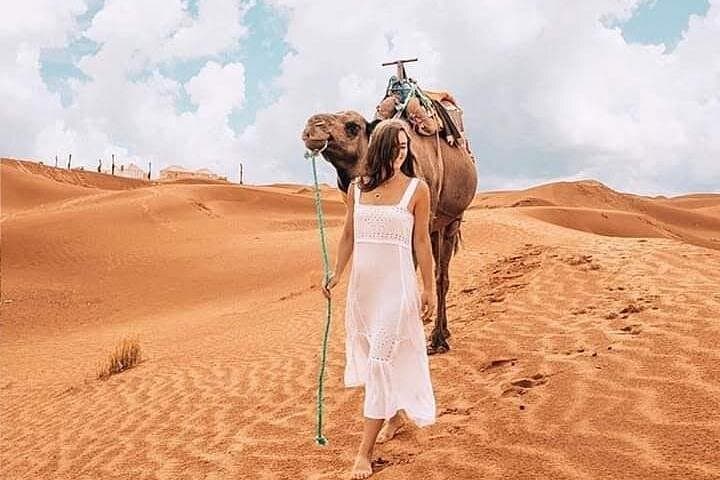

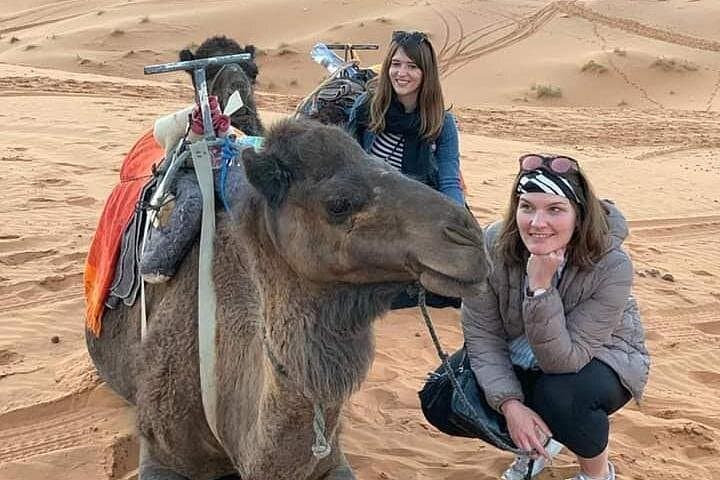

Morning light carves the Erg Chebbi ridge into gold as a small convoy pulls off the asphalt and onto packed desert approaches. Travelers board camels and move in a slow, swaying line; dunes rise and fall like the lungs of the Sahara, and the camp appears as a cluster of low tents against a wide, star-pinned sky.
Morning light carves the Erg Chebbi ridge into gold as a small convoy pulls off the asphalt and onto packed desert approaches. Travelers board camels and move in a slow, swaying line; dunes rise and fall like the lungs of the Sahara, and the camp appears as a cluster of low tents against a wide, star-pinned sky.
The route from Fez threads the Middle Atlas—Ifrane’s tidy European architecture, the cedar forests around Azrou where Barbary macaques roam, then the Ziz Valley’s palm-lined gorge before the desert opens. Geologically the Erg Chebbi dunes are recent wind-blown sand deposited against a harder bedrock; culturally the region sits within long-standing Berber routes and former trans-Saharan trade tracks, where hospitality and music remain central.
Expect a long day on the road—roughly 470 km (about 7–8 hours) of driving each way with stops for photos and lunch—followed by a 45–90 minute camel trek to camp. Nights are cold even after hot days; tents are simple but comfortable with shared facilities and a communal meal of Tajine and mint tea. Sunrise and sunset are the high points: climb a dune ridge for panoramic light and quiet.
Practical notes: carry ample water, sun protection, and layered clothing for desert temperature swings. Footwear should handle sand and short rocky stretches. If motion sickness is a concern, request a front seat on the minivan and move slowly on the camel. The experience is accessible to most fit travelers, but be prepared for long transfers and basic camp amenities.