THE ADVENTURE COLLECTIVE® · Independent discovery and booking for outdoor travel

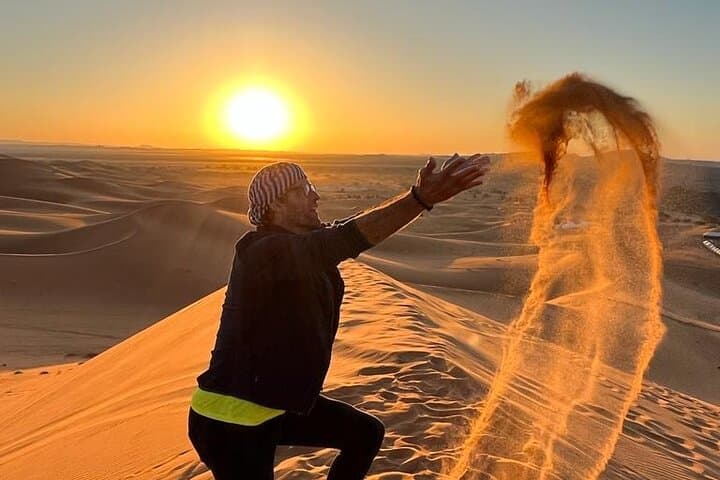
Spend a night in a traditional Sahara camp after a scenic camel ride across Erg Chebbi. Watch the desert sunrise, enjoy Berber music around the fire, and sleep under an enormous, clear sky.
Spend a night in a traditional Sahara camp after a scenic camel ride across Erg Chebbi. Watch the desert sunrise, enjoy Berber music around the fire, and sleep under an enormous, clear sky.
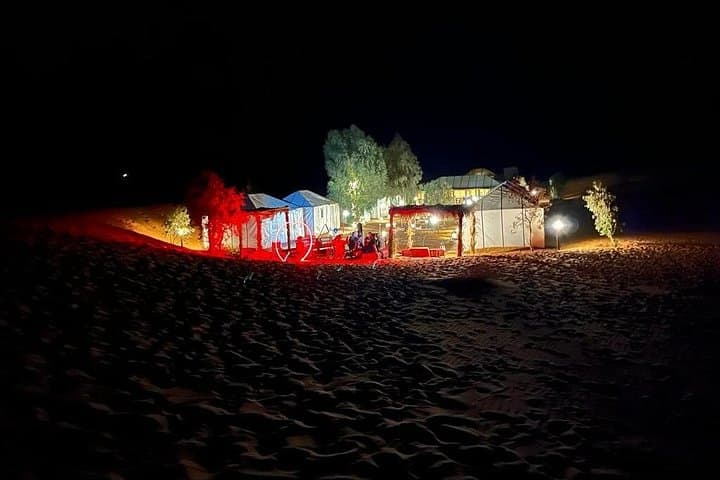
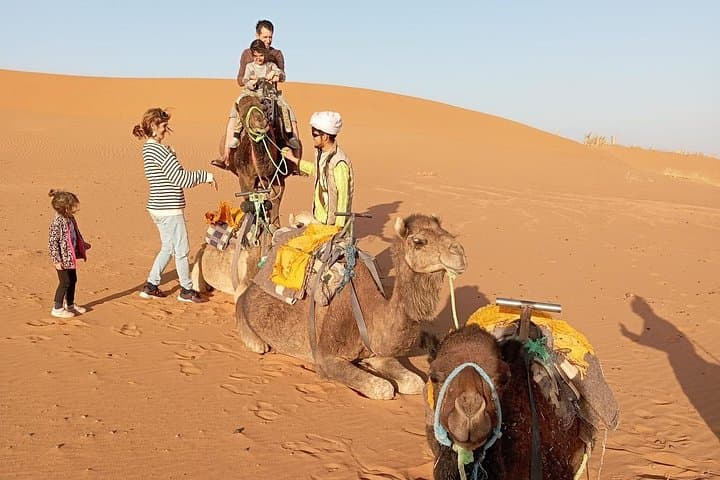
Late afternoon light bleeds across the Erg Chebbi dunes as the caravan forms — a row of camels stepping rhythmically into the long orange slope. The sand shifts underfoot and camel hooves, and the sky widens until the sun tips the crest in molten gold. By the time you spot the tents, the air has cooled and the desert opens into the clear, star-heavy night.
Verified experiences and guided adventures in the surrounding area.
Operated by Khamlia Morocco tours · Merzouga, Errachidia Province
Late afternoon light bleeds across the Erg Chebbi dunes as the caravan forms — a row of camels stepping rhythmically into the long orange slope. The sand shifts underfoot and camel hooves, and the sky widens until the sun tips the crest in molten gold. By the time you spot the tents, the air has cooled and the desert opens into the clear, star-heavy night.
Erg Chebbi is a geological sea of wind-shaped sand, the remnant of ancient river beds and Sahara winds pushing grains into linear, towering dunes. The area has long been traversed by Berber guides and caravan routes that linked oasis towns; modern camps preserve aspects of that hospitality with shared meals and evening music. Local culture centers on oral storytelling and songs played on the guembri, offering a direct line to the region’s nomadic past.
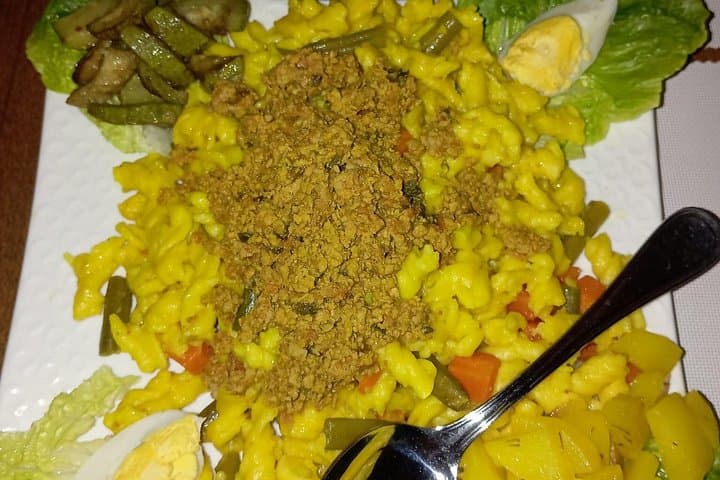
Practically, expect an easy, low-impact itinerary: a late-afternoon camel approach, an overnight in a standard tent with dinner and breakfast, evening Berber entertainment, and a sunrise ride back. Tents are basic but comfortable; bedding and simple wash facilities are provided in most standard camps. Temperatures swing dramatically—hot days, cool nights—so layer strategically and limit sunscreen application before evening performances to avoid disrupting local comfort.
Plan for minimal phone signal, bring extra water, and confirm transport timing with your provider; many travelers combine Merzouga with Rissani or Erfoud for logistics. Respect local customs, keep noise low after lights out, and follow guides for dune travel to avoid fragile areas. The reward is immediate: a vast, quiet horizon and a sky that seems to measure time by constellations rather than clocks.
Each camel leg is typically 45–90 minutes depending on where the camp sits among the dunes; the pace is steady and suitable for beginners.
Standard desert tents usually offer a private sleeping area with bedding and basic washing facilities nearby; toilets are often shared and simple.
Yes—operators describe the experience as suitable for all ages, but check mobility needs since camels and dunes can be challenging for some travelers.
Merzouga village is adjacent to the dunes; Erfoud is about 40–60 minutes by road and is the nearest larger transport hub for buses and trains.
Khamlia Morocco tours operates guided outdoor trips and adventures with an emphasis on safety, stewardship, and memorable experiences.
Late afternoon light bleeds across the Erg Chebbi dunes as the caravan forms — a row of camels stepping rhythmically into the long orange slope. The sand shifts underfoot and camel hooves, and the sky widens until the sun tips the crest in molten gold. By the time you spot the tents, the air has cooled and the desert opens into the clear, star-heavy night.
Late afternoon light bleeds across the Erg Chebbi dunes as the caravan forms — a row of camels stepping rhythmically into the long orange slope. The sand shifts underfoot and camel hooves, and the sky widens until the sun tips the crest in molten gold. By the time you spot the tents, the air has cooled and the desert opens into the clear, star-heavy night.
Erg Chebbi is a geological sea of wind-shaped sand, the remnant of ancient river beds and Sahara winds pushing grains into linear, towering dunes. The area has long been traversed by Berber guides and caravan routes that linked oasis towns; modern camps preserve aspects of that hospitality with shared meals and evening music. Local culture centers on oral storytelling and songs played on the guembri, offering a direct line to the region’s nomadic past.
Practically, expect an easy, low-impact itinerary: a late-afternoon camel approach, an overnight in a standard tent with dinner and breakfast, evening Berber entertainment, and a sunrise ride back. Tents are basic but comfortable; bedding and simple wash facilities are provided in most standard camps. Temperatures swing dramatically—hot days, cool nights—so layer strategically and limit sunscreen application before evening performances to avoid disrupting local comfort.
Plan for minimal phone signal, bring extra water, and confirm transport timing with your provider; many travelers combine Merzouga with Rissani or Erfoud for logistics. Respect local customs, keep noise low after lights out, and follow guides for dune travel to avoid fragile areas. The reward is immediate: a vast, quiet horizon and a sky that seems to measure time by constellations rather than clocks.