THE ADVENTURE COLLECTIVE® · Independent discovery and booking for outdoor travel

Roar across Erg Chebbi’s shifting ridges on a guided one-hour quad tour timed for sunrise or sunset. Learn what to expect from the sand, light and local culture before you go.
Roar across Erg Chebbi’s shifting ridges on a guided one-hour quad tour timed for sunrise or sunset. Learn what to expect from the sand, light and local culture before you go.
You climb onto the quad as the village of Merzouga blurs behind you and the dunes sharpen into ridgelines of gold. The engine’s thrum becomes part of the landscape; sand pitches and slides beneath the wheels, and the sun drags long shadows across steep faces of wind-sculpted sand.
Verified experiences and guided adventures in the surrounding area.
Operated by Agencia Turismo Marruecos · Merzouga, Drâa-Tafilalet
You climb onto the quad as the village of Merzouga blurs behind you and the dunes sharpen into ridgelines of gold. The engine’s thrum becomes part of the landscape; sand pitches and slides beneath the wheels, and the sun drags long shadows across steep faces of wind-sculpted sand.
Erg Chebbi is a living desert: dunes that reach roughly 100–150 meters in height, created by seasonal northerly winds that funnel Sahara sand into broad crescent seas. For centuries these dunes bordered caravan routes linking sub-Saharan trade centers with the Atlas foothills; today small nomadic and Berber communities maintain camps and music traditions nearby, while camel caravans still punctuate the horizon.
The one-hour quad tour runs from the operator’s office in Merzouga and threads a guided loop over dune crests at sunrise or sunset, often paired with a short sandboarding stop. Expect loose sand, steep climb-and-drop sections and panoramic viewpoints rather than long technical mileage—this is about terrain play and light as much as distance.
Practical notes: arrive 20 minutes early for a safety briefing and helmet fit; bring a closed-toe shoe, goggles, and 1 liter of water. Time your ride for low sun to avoid heat and to get sharp shadows for photography. Operators typically provide bottled water and local guides; tell them about any mobility or health issues when booking. Stick to the guide’s line to protect fragile desert crusts and local grazing areas—leave no trace and the dunes will keep moving on.
Operators usually provide a short safety briefing and basic instruction; licensing requirements vary—confirm with the vendor at booking.
The ride is not a long hike but requires balance and the ability to handle bumps; it’s suitable for most people in reasonable health.
Age and passenger rules differ by operator; some allow a child as a passenger or provide specialized seats—ask when you book.
Sunrise and sunset offer cooler temps, firmer sand and better light for photos; midday can be very hot, especially in summer.
Agencia Turismo Marruecos operates guided outdoor trips and adventures with an emphasis on safety, stewardship, and memorable experiences.
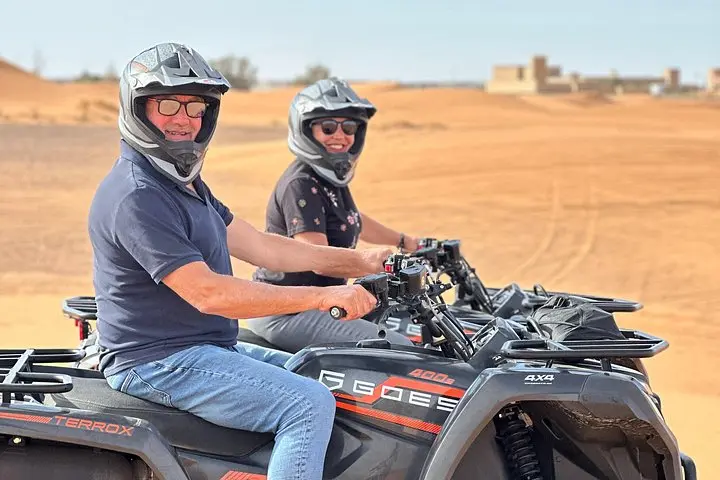
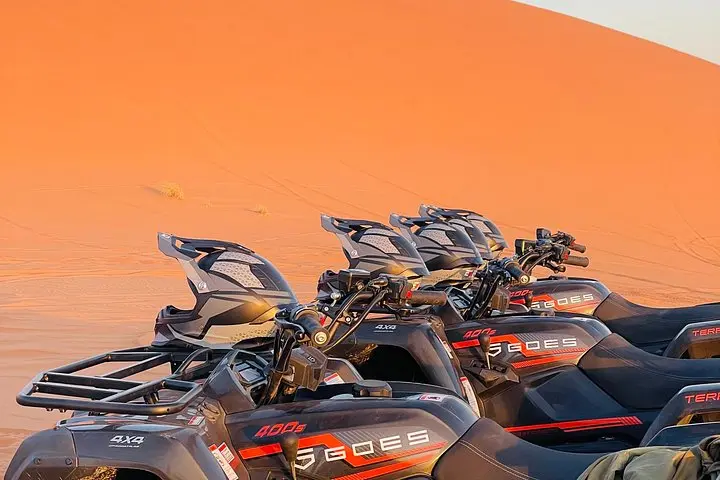
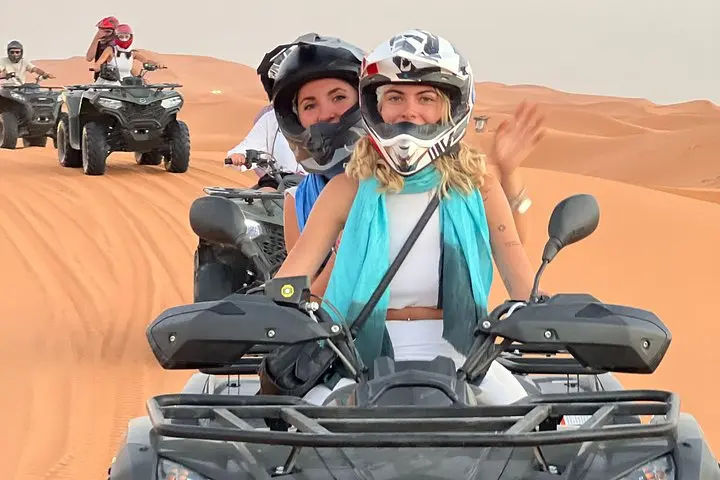
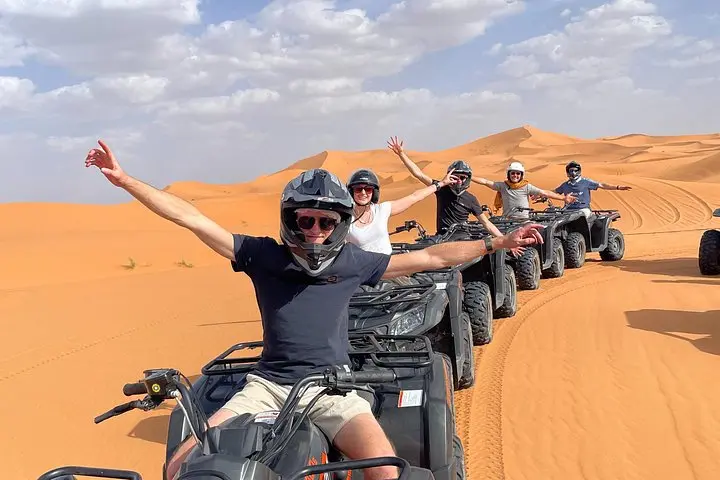
You climb onto the quad as the village of Merzouga blurs behind you and the dunes sharpen into ridgelines of gold. The engine’s thrum becomes part of the landscape; sand pitches and slides beneath the wheels, and the sun drags long shadows across steep faces of wind-sculpted sand.
You climb onto the quad as the village of Merzouga blurs behind you and the dunes sharpen into ridgelines of gold. The engine’s thrum becomes part of the landscape; sand pitches and slides beneath the wheels, and the sun drags long shadows across steep faces of wind-sculpted sand.
Erg Chebbi is a living desert: dunes that reach roughly 100–150 meters in height, created by seasonal northerly winds that funnel Sahara sand into broad crescent seas. For centuries these dunes bordered caravan routes linking sub-Saharan trade centers with the Atlas foothills; today small nomadic and Berber communities maintain camps and music traditions nearby, while camel caravans still punctuate the horizon.
The one-hour quad tour runs from the operator’s office in Merzouga and threads a guided loop over dune crests at sunrise or sunset, often paired with a short sandboarding stop. Expect loose sand, steep climb-and-drop sections and panoramic viewpoints rather than long technical mileage—this is about terrain play and light as much as distance.
Practical notes: arrive 20 minutes early for a safety briefing and helmet fit; bring a closed-toe shoe, goggles, and 1 liter of water. Time your ride for low sun to avoid heat and to get sharp shadows for photography. Operators typically provide bottled water and local guides; tell them about any mobility or health issues when booking. Stick to the guide’s line to protect fragile desert crusts and local grazing areas—leave no trace and the dunes will keep moving on.