THE ADVENTURE COLLECTIVE® · Independent discovery and booking for outdoor travel

Cross Erg Chebbi by camel, sleep in a Berber-style desert camp and watch sunrise paint the dunes. This overnight blends easy camel travel, campfire music and star-filled silence with practical comforts and local hospitality.
Cross Erg Chebbi by camel, sleep in a Berber-style desert camp and watch sunrise paint the dunes. This overnight blends easy camel travel, campfire music and star-filled silence with practical comforts and local hospitality.
When the late-afternoon sun drops behind the great sweep of Erg Chebbi, the dunes turn copper and the camels settle with a gentle sigh. You leave Merzouga village on camelback, the caravan tracing a slow arc across wind-formed ridges until the camp appears like an oasis of canvas and firelight.
Verified experiences and guided adventures in the surrounding area.
Operated by 3 days group tour from marrakech to merzouga · Merzouga, Drâa-Tafilalet
When the late-afternoon sun drops behind the great sweep of Erg Chebbi, the dunes turn copper and the camels settle with a gentle sigh. You leave Merzouga village on camelback, the caravan tracing a slow arc across wind-formed ridges until the camp appears like an oasis of canvas and firelight.
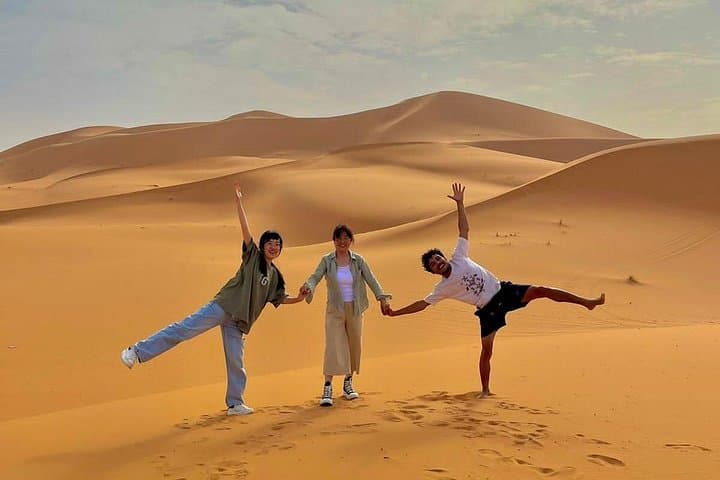
Erg Chebbi’s dunes are young by geological standards—mobile quartz sand sculpted by Sahara winds and the distant influence of the Atlas Mountains. The people you meet are largely Amazigh (Berber) communities whose seasonal movement and music shaped life here for centuries; once part of broader caravan routes, these dunes now host small desert camps that preserve oral traditions and nightly gnawa and Berber song.
Expect a practical, sensory night: a private tent with basic shared facilities, a communal fire under a black sky, and the sound of percussion that keeps time with the desert wind. Weather swings are sharp; hot days give way to cold nights, and sand is everywhere—fine, bright, alive.
Plan for short camel rides over soft, shifting sand, sunrise views from a high ridge, optional sandboarding and a jeep return on day two. Hydrate well, protect electronics from grit, and practice mounting/dismounting camels before you go. Arrive with cash for local tips and modest purchases, and respect the rhythms of camp life: meal times, quiet hours, and the local guides who read the dunes.
This overnight strikes a balance between comfort and raw landscape—ideal for travelers wanting close-up contact with Sahara night skies and the slow, tactile pace of desert travel.
The typical camel transfer from Merzouga to the camp is about 30–45 minutes, depending on which dunes the guide chooses for sunset viewing.
Tents are private but usually share bathroom facilities; ask when booking if you need an upgraded private bathroom option.
Yes—hosts commonly provide vegetarian, vegan and gluten-free options if you note requirements at booking.
Yes; the activity is labeled easy and suitable for most ages, but camel mounting can be challenging for some—consult guides about alternatives like short jeep transfers.
3 days group tour from marrakech to merzouga operates guided outdoor trips and adventures with an emphasis on safety, stewardship, and memorable experiences.
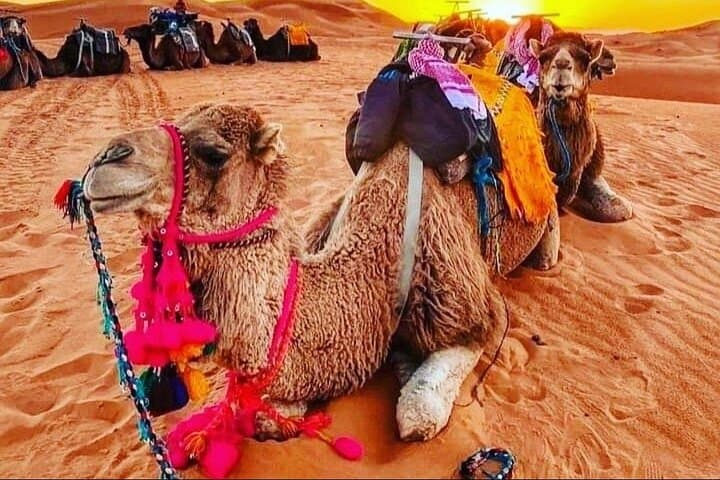
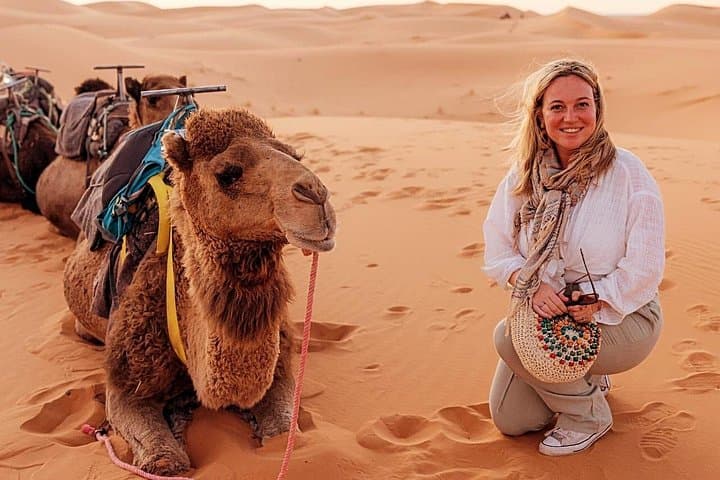

When the late-afternoon sun drops behind the great sweep of Erg Chebbi, the dunes turn copper and the camels settle with a gentle sigh. You leave Merzouga village on camelback, the caravan tracing a slow arc across wind-formed ridges until the camp appears like an oasis of canvas and firelight.
When the late-afternoon sun drops behind the great sweep of Erg Chebbi, the dunes turn copper and the camels settle with a gentle sigh. You leave Merzouga village on camelback, the caravan tracing a slow arc across wind-formed ridges until the camp appears like an oasis of canvas and firelight.
Erg Chebbi’s dunes are young by geological standards—mobile quartz sand sculpted by Sahara winds and the distant influence of the Atlas Mountains. The people you meet are largely Amazigh (Berber) communities whose seasonal movement and music shaped life here for centuries; once part of broader caravan routes, these dunes now host small desert camps that preserve oral traditions and nightly gnawa and Berber song.
Expect a practical, sensory night: a private tent with basic shared facilities, a communal fire under a black sky, and the sound of percussion that keeps time with the desert wind. Weather swings are sharp; hot days give way to cold nights, and sand is everywhere—fine, bright, alive.
Plan for short camel rides over soft, shifting sand, sunrise views from a high ridge, optional sandboarding and a jeep return on day two. Hydrate well, protect electronics from grit, and practice mounting/dismounting camels before you go. Arrive with cash for local tips and modest purchases, and respect the rhythms of camp life: meal times, quiet hours, and the local guides who read the dunes.
This overnight strikes a balance between comfort and raw landscape—ideal for travelers wanting close-up contact with Sahara night skies and the slow, tactile pace of desert travel.