THE ADVENTURE COLLECTIVE® · Independent discovery and booking for outdoor travel

A three-hour guided scramble up Meteora’s Great Saint rock that pairs medieval paths with via-ferrata sections. Expect exposed chimneys, fixed ropes, and a panoramic balcony overlooking the Thessalian plain.
A three-hour guided scramble up Meteora’s Great Saint rock that pairs medieval paths with via-ferrata sections. Expect exposed chimneys, fixed ropes, and a panoramic balcony overlooking the Thessalian plain.
You step from the shaded lane into a corridor of stone—towering sandstone pillars slicing the Thessalian sky. Few places make rock feel alive; here the pinnacles press close, wind threading through narrow chimneys and gullies that dare you forward.
Verified experiences and guided adventures in the surrounding area.
Operated by TREKKING HELLAS · Kalambaka, Thessaly
You step from the shaded lane into a corridor of stone—towering sandstone pillars slicing the Thessalian sky. Few places make rock feel alive; here the pinnacles press close, wind threading through narrow chimneys and gullies that dare you forward.
This scramble follows paths cut and worn by monks centuries ago, linking ruined hermitages and the remains of the Twelve Apostles monastery. Meteora’s pillars were born from river deposits and tectonic uplift millions of years ago; weather and time carved the soft rock into towering spires that became natural fortresses and spiritual refuges in the Byzantine era.
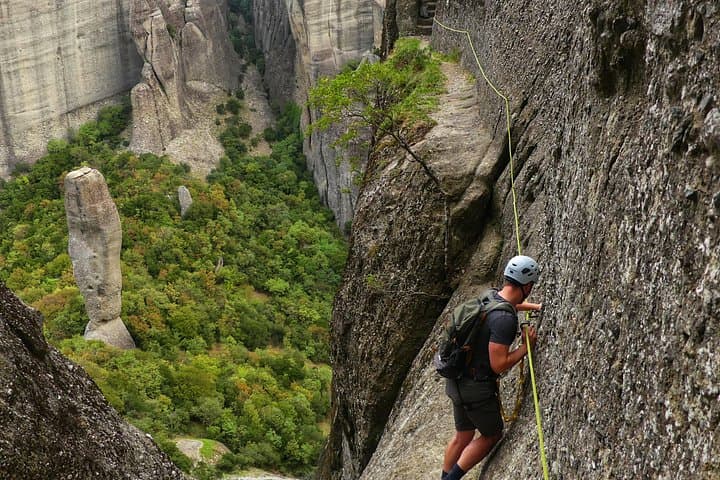
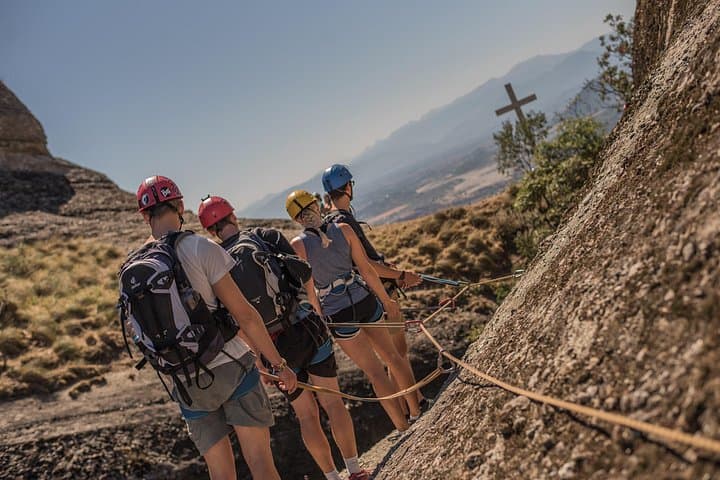
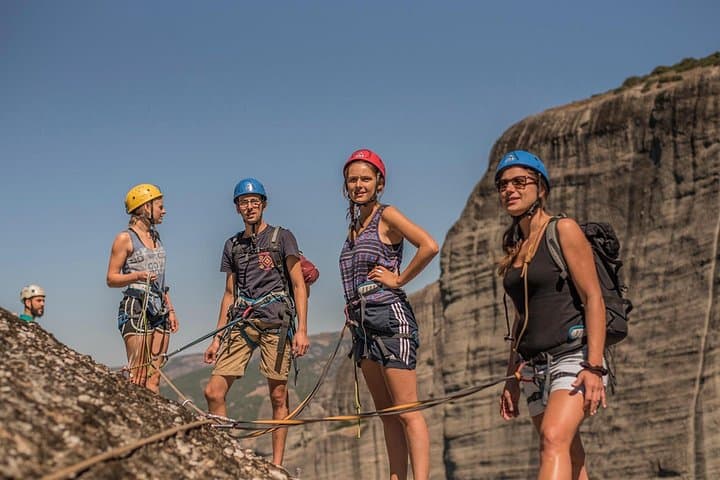
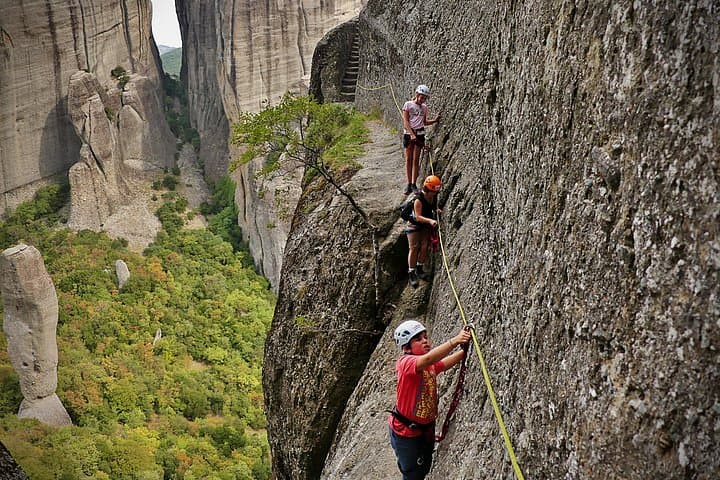
Expect tight chimneys, metal steps and fixed ropes on exposed faces as you move toward the Great Saint rock. Guides fit you with via-ferrata gear, coach basic rope techniques, and shepherd groups along medieval tracks hewn into the cliffs. The final perch—Hagia Cross balcony—rewards steady footing with sweeping views of the Thessalian plain, the Pindus range, and the stark geometry of the pinnacles.
Practical edge: the route is short but intense—three hours with steep, uneven terrain and exposed sections. Wear solid hiking boots, carry a refillable water bottle, and layer for sudden wind and sun. Start early to avoid heat and crowds; bring a small pack and hands free for scrambling. If you have moderate fitness and no serious heart issues, this is a concentrated, classic Meteora experience: physical, historical, and uncomfortably beautiful.
No formal climbing experience is required; guides provide all via-ferrata equipment and instruction, but you should be comfortable on exposed, uneven terrain.
Meet outside Qastiro Meteora in Kastraki near the Kalampaka–Kastraki road; optional pickup may be offered—confirm at booking.
Not recommended for travelers with poor cardiovascular health or significant mobility limitations due to steep, exposed sections and physical demands.
The operator cancels in unsafe weather; for full refund cancel at least 24 hours before departure, and tours may be rescheduled if possible.
TREKKING HELLAS operates guided outdoor trips and adventures with an emphasis on safety, stewardship, and memorable experiences.
You step from the shaded lane into a corridor of stone—towering sandstone pillars slicing the Thessalian sky. Few places make rock feel alive; here the pinnacles press close, wind threading through narrow chimneys and gullies that dare you forward.
You step from the shaded lane into a corridor of stone—towering sandstone pillars slicing the Thessalian sky. Few places make rock feel alive; here the pinnacles press close, wind threading through narrow chimneys and gullies that dare you forward.
This scramble follows paths cut and worn by monks centuries ago, linking ruined hermitages and the remains of the Twelve Apostles monastery. Meteora’s pillars were born from river deposits and tectonic uplift millions of years ago; weather and time carved the soft rock into towering spires that became natural fortresses and spiritual refuges in the Byzantine era.
Expect tight chimneys, metal steps and fixed ropes on exposed faces as you move toward the Great Saint rock. Guides fit you with via-ferrata gear, coach basic rope techniques, and shepherd groups along medieval tracks hewn into the cliffs. The final perch—Hagia Cross balcony—rewards steady footing with sweeping views of the Thessalian plain, the Pindus range, and the stark geometry of the pinnacles.
Practical edge: the route is short but intense—three hours with steep, uneven terrain and exposed sections. Wear solid hiking boots, carry a refillable water bottle, and layer for sudden wind and sun. Start early to avoid heat and crowds; bring a small pack and hands free for scrambling. If you have moderate fitness and no serious heart issues, this is a concentrated, classic Meteora experience: physical, historical, and uncomfortably beautiful.