THE ADVENTURE COLLECTIVE® · Independent discovery and booking for outdoor travel

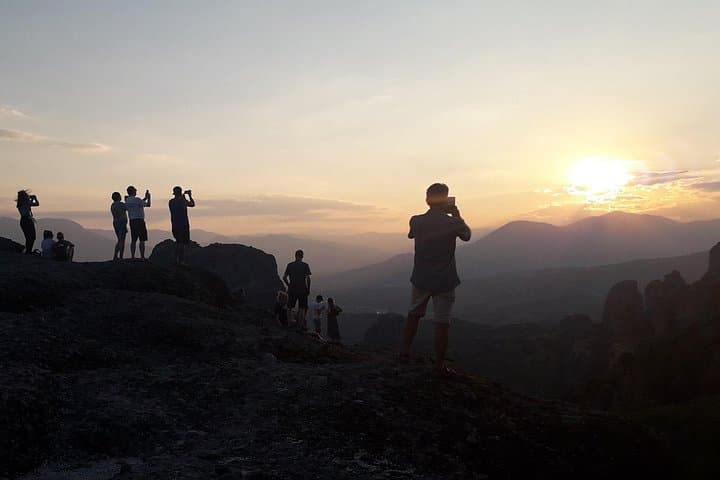
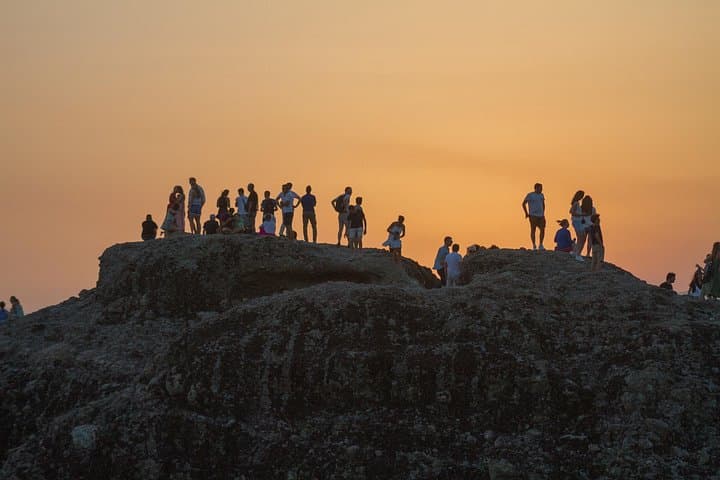
Watch sunset spill across Meteora’s monolithic pillars on a four-hour guided tour from Kalambaka. Visit Bandovas hermitage and a Byzantine church, then climb to a secluded peak for panoramic photography.
Watch sunset spill across Meteora’s monolithic pillars on a four-hour guided tour from Kalambaka. Visit Bandovas hermitage and a Byzantine church, then climb to a secluded peak for panoramic photography.
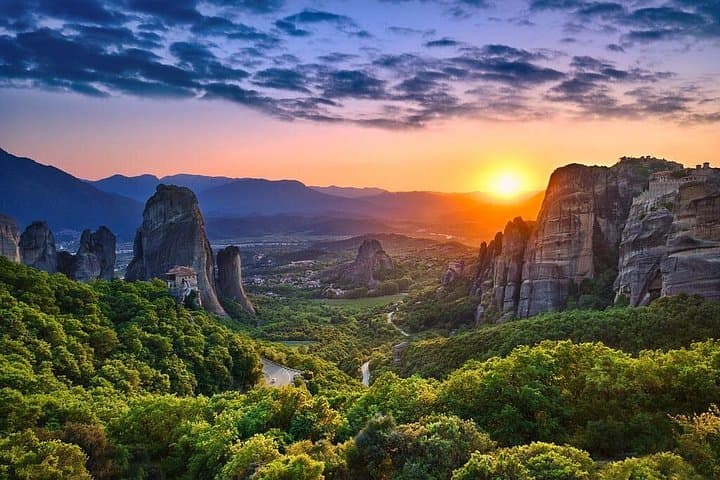
You arrive as the valley cools and the last light slides down sandstone columns that have refused to fall for millions of years. The driver eases the minibus onto a narrow road; wind teases at your jacket and the rocks seem to lean in, watching. A local guide points to a thin cleft where the Bandovas hermitage clings like a secret — a cave-built refuge whose passageways still echo with quiet prayer.
Verified experiences and guided adventures in the surrounding area.
Operated by Meteora Rocks · Kalabaka, Thessaly
You arrive as the valley cools and the last light slides down sandstone columns that have refused to fall for millions of years. The driver eases the minibus onto a narrow road; wind teases at your jacket and the rocks seem to lean in, watching. A local guide points to a thin cleft where the Bandovas hermitage clings like a secret — a cave-built refuge whose passageways still echo with quiet prayer.
Meteora’s geology reads like Earth’s slow protest: conglomerate rock formed from ancient riverbeds, uplifted and eroded into towers. Byzantine monks exploited those towers for solitude from the 11th century onward, building cliffside churches such as the Dormition of the Mother of God over earlier, Greco-Roman ruins. Frescoes and stone staircases tell a layered cultural story of faith, isolation, and adaptation.
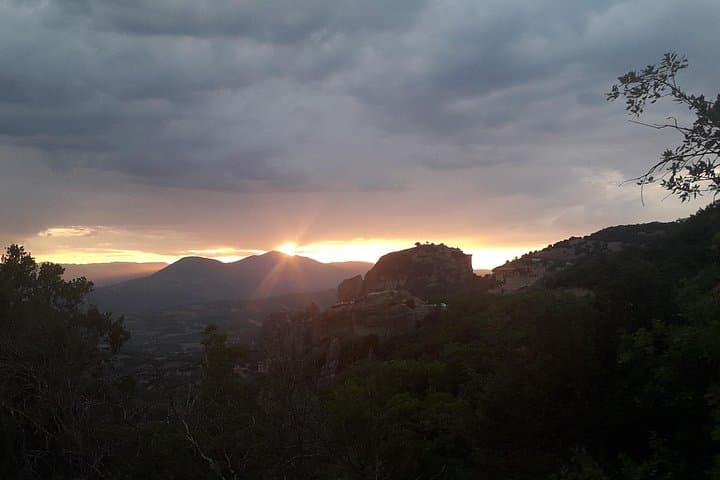
As you move from monastery courtyard to high rim, the wind takes on a voice — urging, daring — and the valley answers with olive groves and scattered shepherding settlements. The sunset viewpoint is deliberately chosen: a gap in the rocks frames an expansive plain and a sky that goes from honey to bruise in twenty minutes.
Practical notes: the tour is about four hours with hotel pickup in Kalabaka or Kastraki, light walking on uneven stone, and one monastery visit with admission included. Bring a compact jacket, comfortable shoes with grip for short stair sections, and a camera with a wide lens for low-light vistas. Aim for a late afternoon start to avoid midday heat; respect monastic dress codes and allow time to absorb the place rather than rush photographs.
The experience lasts approximately four hours, including pickups and a sunset stop.
Yes; the tour description indicates at least one monastery visit with admission included.
Yes; hotel pickup and drop-off in Kalabaka or Kastraki is included in an air-conditioned minibus.
The tour is rated easy but includes uneven steps; infants must sit on laps and some areas may be difficult for limited mobility.
Meteora Rocks operates guided outdoor trips and adventures with an emphasis on safety, stewardship, and memorable experiences.
You arrive as the valley cools and the last light slides down sandstone columns that have refused to fall for millions of years. The driver eases the minibus onto a narrow road; wind teases at your jacket and the rocks seem to lean in, watching. A local guide points to a thin cleft where the Bandovas hermitage clings like a secret — a cave-built refuge whose passageways still echo with quiet prayer.
You arrive as the valley cools and the last light slides down sandstone columns that have refused to fall for millions of years. The driver eases the minibus onto a narrow road; wind teases at your jacket and the rocks seem to lean in, watching. A local guide points to a thin cleft where the Bandovas hermitage clings like a secret — a cave-built refuge whose passageways still echo with quiet prayer.
Meteora’s geology reads like Earth’s slow protest: conglomerate rock formed from ancient riverbeds, uplifted and eroded into towers. Byzantine monks exploited those towers for solitude from the 11th century onward, building cliffside churches such as the Dormition of the Mother of God over earlier, Greco-Roman ruins. Frescoes and stone staircases tell a layered cultural story of faith, isolation, and adaptation.
As you move from monastery courtyard to high rim, the wind takes on a voice — urging, daring — and the valley answers with olive groves and scattered shepherding settlements. The sunset viewpoint is deliberately chosen: a gap in the rocks frames an expansive plain and a sky that goes from honey to bruise in twenty minutes.
Practical notes: the tour is about four hours with hotel pickup in Kalabaka or Kastraki, light walking on uneven stone, and one monastery visit with admission included. Bring a compact jacket, comfortable shoes with grip for short stair sections, and a camera with a wide lens for low-light vistas. Aim for a late afternoon start to avoid midday heat; respect monastic dress codes and allow time to absorb the place rather than rush photographs.