THE ADVENTURE COLLECTIVE® · Independent discovery and booking for outdoor travel

Watch Meteora’s sandstone pillars flare at sunset while visiting cliff-top monasteries and hermit caves. This four‑hour small-group tour pairs geology, Byzantine history, and panoramic views with practical tips on dress code and accessibility.
Watch Meteora’s sandstone pillars flare at sunset while visiting cliff-top monasteries and hermit caves. This four‑hour small-group tour pairs geology, Byzantine history, and panoramic views with practical tips on dress code and accessibility.
The last light slides across vertical sandstone faces, turning the Meteora pinnacles molten gold as you climb a narrow path toward a cliff-top monastery. Wind carries the faint echo of chanting from centuries-old cells; below, olive groves and the plain of Thessaly stretch away like a slow-moving sea.
Verified experiences and guided adventures in the surrounding area.
Operated by Visit Meteora · Kalambaka, Thessaly
The last light slides across vertical sandstone faces, turning the Meteora pinnacles molten gold as you climb a narrow path toward a cliff-top monastery. Wind carries the faint echo of chanting from centuries-old cells; below, olive groves and the plain of Thessaly stretch away like a slow-moving sea.
Meteora’s rock towers are the product of millions of years of sedimentation and tectonic uplift—soft sandstone carved by water and time into sheer pillars. From the 11th century onward hermits and monks scaled these columns, carving caves and building monasteries that would later house Byzantine frescoes and manuscripts. Saint Athanasios established the organized monastic community at Great Meteoron; Saint Stephen’s quieter bridge access shows a gentler side of monastic life.
Beyond geology and religion, Kastraki and Kalambaka preserve rural Greek culture: stone houses, local tavernas, and pathways lined with wild thyme. The tour’s highlight is the sunset—light that sharpens the rocks’ textures and reveals hidden hermitages clinging to narrow ledges.
Practical points: this is a short, guided walking tour (about four hours) with hotel pickup from Kalambaka/Kastraki. Monasteries enforce conservative dress—long sleeves and skirts for women, trousers for men—and modest behavior inside chapels. Expect uneven stone steps and brief stretches of exposed trail; comfortable shoes and an extra layer for evening wind are smart. Bring water, a camera, and respect access rules: some monasteries close certain days. Timing your visit for golden hour rewards you with the best views and quieter trails—sunset here frames the landscape in a way photographs rarely capture in full.
Admission to visited monasteries is typically included when specified, but some sites may charge a small entry fee or be substituted on certain days; Saint Stephen may be closed on Mondays and will be replaced by an alternative monastery.
The tour is family-friendly but not stroller-friendly due to stairs and uneven paths; infants must sit on laps as noted by the operator.
Yes—hotel pickup and drop-off in Kalambaka or Kastraki are included; confirm your pickup point when booking.
Photography is usually allowed in external areas; inside chapels, rules vary—avoid flash and follow posted signs or guide instructions.
Visit Meteora operates guided outdoor trips and adventures with an emphasis on safety, stewardship, and memorable experiences.
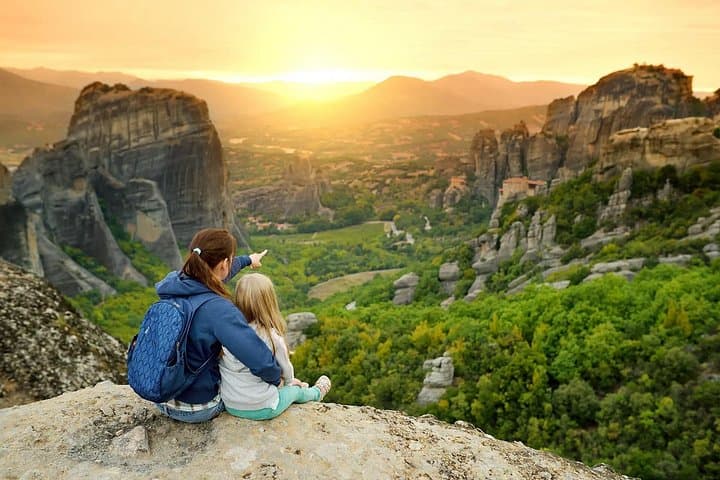


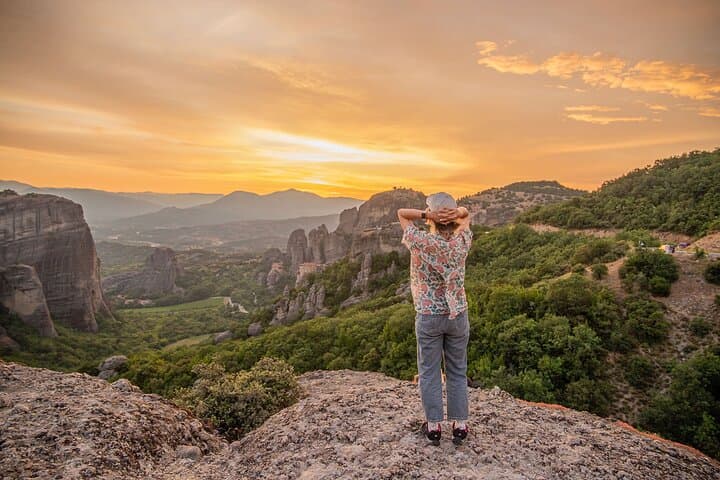
The last light slides across vertical sandstone faces, turning the Meteora pinnacles molten gold as you climb a narrow path toward a cliff-top monastery. Wind carries the faint echo of chanting from centuries-old cells; below, olive groves and the plain of Thessaly stretch away like a slow-moving sea.
The last light slides across vertical sandstone faces, turning the Meteora pinnacles molten gold as you climb a narrow path toward a cliff-top monastery. Wind carries the faint echo of chanting from centuries-old cells; below, olive groves and the plain of Thessaly stretch away like a slow-moving sea.
Meteora’s rock towers are the product of millions of years of sedimentation and tectonic uplift—soft sandstone carved by water and time into sheer pillars. From the 11th century onward hermits and monks scaled these columns, carving caves and building monasteries that would later house Byzantine frescoes and manuscripts. Saint Athanasios established the organized monastic community at Great Meteoron; Saint Stephen’s quieter bridge access shows a gentler side of monastic life.
Beyond geology and religion, Kastraki and Kalambaka preserve rural Greek culture: stone houses, local tavernas, and pathways lined with wild thyme. The tour’s highlight is the sunset—light that sharpens the rocks’ textures and reveals hidden hermitages clinging to narrow ledges.
Practical points: this is a short, guided walking tour (about four hours) with hotel pickup from Kalambaka/Kastraki. Monasteries enforce conservative dress—long sleeves and skirts for women, trousers for men—and modest behavior inside chapels. Expect uneven stone steps and brief stretches of exposed trail; comfortable shoes and an extra layer for evening wind are smart. Bring water, a camera, and respect access rules: some monasteries close certain days. Timing your visit for golden hour rewards you with the best views and quieter trails—sunset here frames the landscape in a way photographs rarely capture in full.