THE ADVENTURE COLLECTIVE® · Independent discovery and booking for outdoor travel

Pedal Mexico City after dark on a guided three-hour loop that threads Alameda Central, Palacio de Bellas Artes and the Postal Palace. Expect illuminated monuments, lively street food stops, and calm bike lanes.
Pedal Mexico City after dark on a guided three-hour loop that threads Alameda Central, Palacio de Bellas Artes and the Postal Palace. Expect illuminated monuments, lively street food stops, and calm bike lanes.
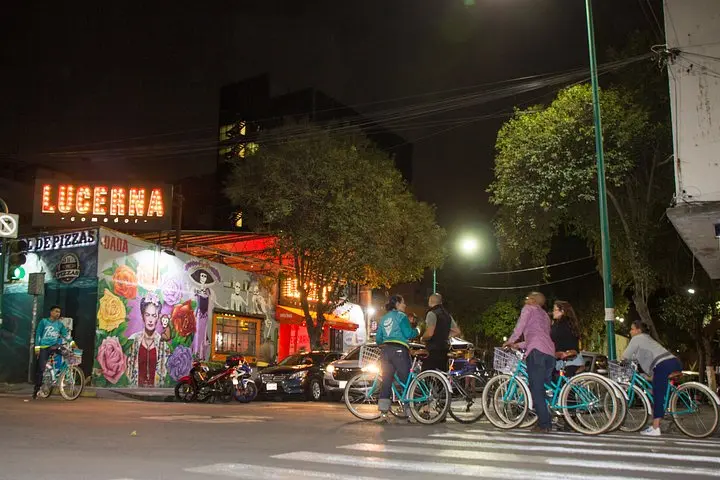
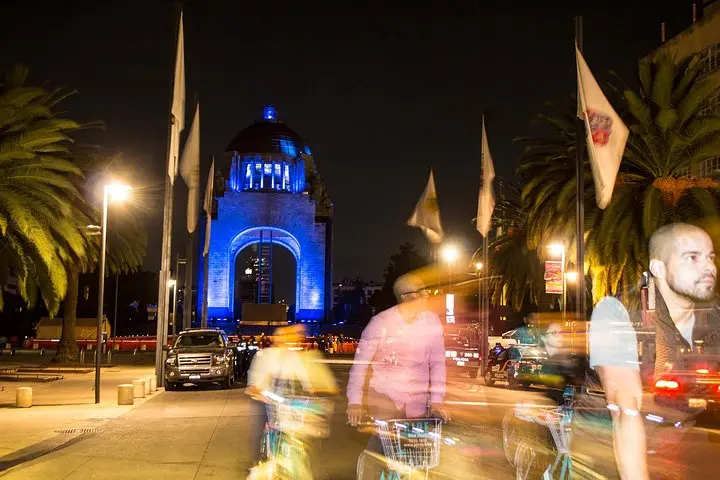
The city exhales as sunset deepens — fountains flash, façades glow, and the wide Paseo de la Reforma becomes a ribbon of bike lights. Riders gather at Alameda Central beneath plane trees, helmets glinting, ready to roll through a historic center that reveals itself most vividly after dark.
Verified experiences and guided adventures in the surrounding area.
Operated by Poray · Mexico City, Ciudad de México
The city exhales as sunset deepens — fountains flash, façades glow, and the wide Paseo de la Reforma becomes a ribbon of bike lights. Riders gather at Alameda Central beneath plane trees, helmets glinting, ready to roll through a historic center that reveals itself most vividly after dark.
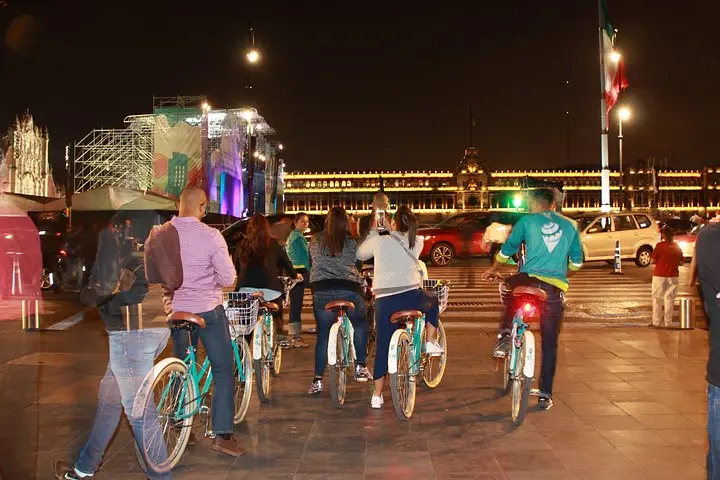
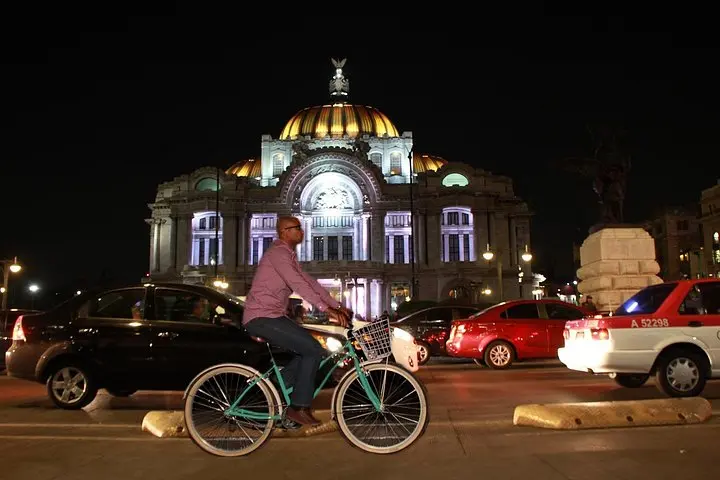
This three-hour guided loop moves from Alameda Central to the Palacio de Bellas Artes, past the ornate Palacio Postal and into the heart of the Zócalo. Alameda Central is the oldest public park in the Americas; Bellas Artes and the Postal Palace carry early-20th-century ironwork and murals that show Mexico City’s layered history. Geology is visible in the city’s volcanic stone pavements and cathedral foundations — reminders that the metropolis sits atop the drained basin of Lake Texcoco.
Culture at night is kinetic: multicolored facades, fountain jets timed to music, and informal street-food stalls serving tacos and tlacoyos. Guides provide local context and safe lane choices while lights and helmets are supplied.
Practical guidance: expect 6–10 km of mostly flat pavement with short stretches of cobblestone; elevation change is minimal. The pace is social with photo stops and a food break; maximum group size is small, typically up to 10. Bring a charged phone, a small lock if you want to wander on foot during stops, and some pesos for late-night snacks. Rain can change plans — the operator may cancel in bad weather — and the best time to go is shortly after dusk when monuments are illuminated but streets aren’t too crowded.
The tour lasts about three hours and covers roughly 6–10 km of mostly flat city streets with multiple photo and food stops.
Yes — the tour includes use of a bicycle, helmet and lights; sizes are available but you’ll be asked your height when booking.
The listing indicates wheelchair and stroller accessibility for transit, but the active bike portion requires standard mobility and basic balance to ride safely.
Full refund available if you cancel at least 24 hours before departure; tours may be canceled for bad weather or insufficient participants.
Poray operates guided outdoor trips and adventures with an emphasis on safety, stewardship, and memorable experiences.
The city exhales as sunset deepens — fountains flash, façades glow, and the wide Paseo de la Reforma becomes a ribbon of bike lights. Riders gather at Alameda Central beneath plane trees, helmets glinting, ready to roll through a historic center that reveals itself most vividly after dark.
The city exhales as sunset deepens — fountains flash, façades glow, and the wide Paseo de la Reforma becomes a ribbon of bike lights. Riders gather at Alameda Central beneath plane trees, helmets glinting, ready to roll through a historic center that reveals itself most vividly after dark.
This three-hour guided loop moves from Alameda Central to the Palacio de Bellas Artes, past the ornate Palacio Postal and into the heart of the Zócalo. Alameda Central is the oldest public park in the Americas; Bellas Artes and the Postal Palace carry early-20th-century ironwork and murals that show Mexico City’s layered history. Geology is visible in the city’s volcanic stone pavements and cathedral foundations — reminders that the metropolis sits atop the drained basin of Lake Texcoco.
Culture at night is kinetic: multicolored facades, fountain jets timed to music, and informal street-food stalls serving tacos and tlacoyos. Guides provide local context and safe lane choices while lights and helmets are supplied.
Practical guidance: expect 6–10 km of mostly flat pavement with short stretches of cobblestone; elevation change is minimal. The pace is social with photo stops and a food break; maximum group size is small, typically up to 10. Bring a charged phone, a small lock if you want to wander on foot during stops, and some pesos for late-night snacks. Rain can change plans — the operator may cancel in bad weather — and the best time to go is shortly after dusk when monuments are illuminated but streets aren’t too crowded.