THE ADVENTURE COLLECTIVE® · Independent discovery and booking for outdoor travel

A demanding six-day trek across the M’Goun massif that climbs to 4,068 m, weaving through high Berber valleys, bivouacs and the deep Tassaout canyon. Expect long days, high-altitude camps, and direct access to traditional Aït Bougmez villages.
A demanding six-day trek across the M’Goun massif that climbs to 4,068 m, weaving through high Berber valleys, bivouacs and the deep Tassaout canyon. Expect long days, high-altitude camps, and direct access to traditional Aït Bougmez villages.
Morning light slices across scree and dry grasses as a convoy peels away from Marrakech and climbs toward the Aït Bougmez valley. The massif of M’Goun looms ahead — a stacked range of granite and schist that tests legs and lungs alike. Over six days the route alternates mule tracks, steep talus, and high alpine plateaus, carrying hikers from village courtyards into wind-buffed bivouacs at 2,300–3,000 m and the final summit at 4,068 m.
Verified experiences and guided adventures in the surrounding area.
Operated by Adrar Aventure SARL · Aït Bougmez, Béni Mellal-Khénifra
Morning light slices across scree and dry grasses as a convoy peels away from Marrakech and climbs toward the Aït Bougmez valley. The massif of M’Goun looms ahead — a stacked range of granite and schist that tests legs and lungs alike. Over six days the route alternates mule tracks, steep talus, and high alpine plateaus, carrying hikers from village courtyards into wind-buffed bivouacs at 2,300–3,000 m and the final summit at 4,068 m.
This region is shaped by recent uplift and persistent frost: glacial scouring and river incision carved the deep Tassaout canyon and the stepped terraces of the Aït Bougmez. Berber villages here preserve a courtyard-building tradition and seasonal herding patterns that predate modern roads; shepherd tracks double as the trekking paths. Expect compacted dirt trails, loose stone on higher slopes and short sections of steep ascent where poles steady your rhythm.
Practical guidance follows the landscape: itineraries feature 5–7 hours of walking per day with accumulated vertical moves up to c.1,000 m on summit day. Acclimatize in villages or 2,300–3,000 m bivouacs, carry at least 2–3 liters of water, and plan for fast temperature swings — sun and wind will trade places on the ridge. Meals and tents are provided on this economy full-board route; transport is by air-conditioned vehicle to and from Marrakech via Azilal.
Footing can be loose near passes (Tizi N’Tazite, Tizi N’Targadit); use trekking poles, layer for cold nights, and budget a day afterward for recovery in town. The reward is direct: wide valley panoramas, canyon mouths daring you down to the Tassaout river, and the quiet of mountain villages that still run on their own seasonal clock.
No technical climbing gear is required for the normal trekking route; the ascent is high-altitude hiking with some steep, loose sections where poles and careful footing are sufficient.
Late spring through early autumn are common windows; spring and fall offer cooler temperatures and more stable conditions, while summer can be hot in valleys and winter brings deep snow and limited access.
Yes — the itinerary includes local guides, tents, sleeping equipment and meals (breakfast, lunch and dinner) as listed in the trip inclusions.
Summit day typically involves 6–7 hours of walking with up to 1,000 m vertical change; expect thin air, sustained effort, and variable terrain that requires steady pacing.
Adrar Aventure SARL operates guided outdoor trips and adventures with an emphasis on safety, stewardship, and memorable experiences.
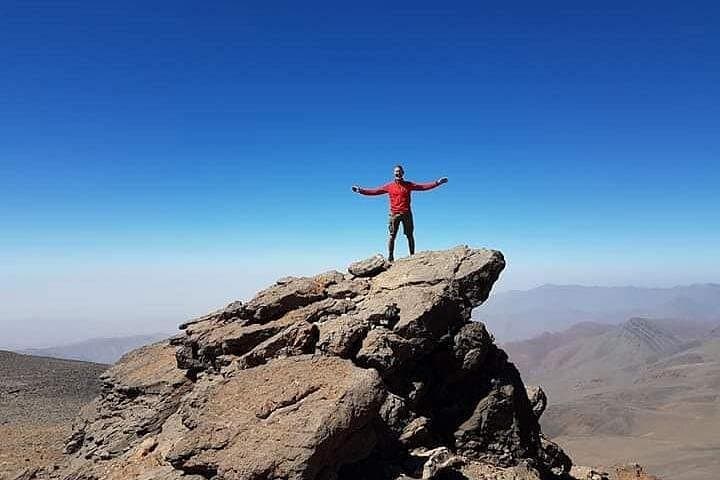
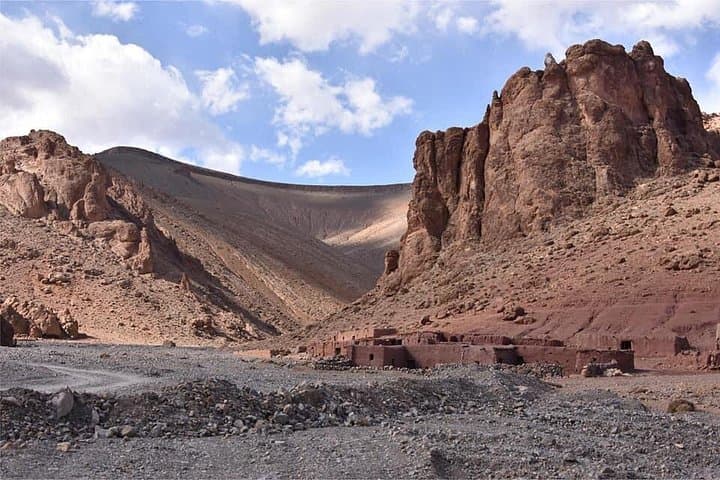
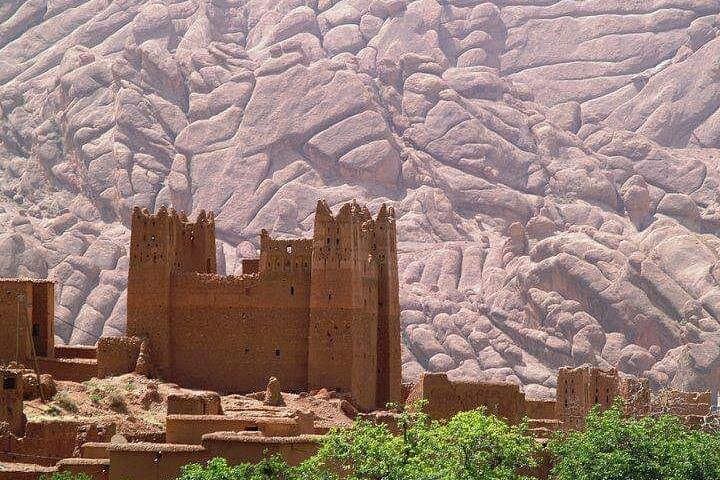
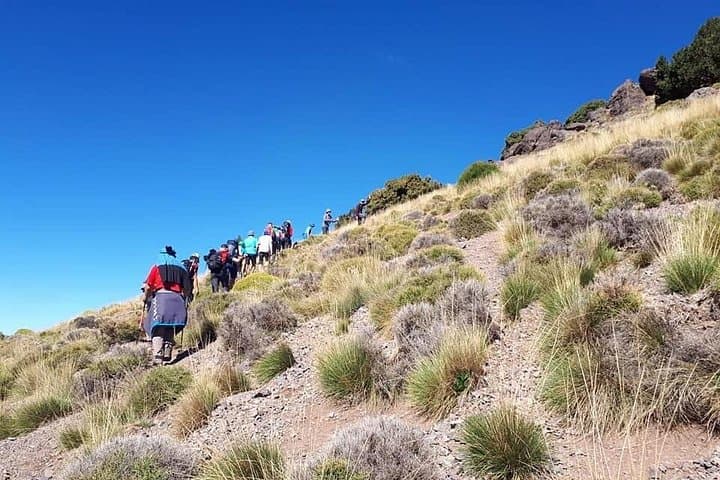
Morning light slices across scree and dry grasses as a convoy peels away from Marrakech and climbs toward the Aït Bougmez valley. The massif of M’Goun looms ahead — a stacked range of granite and schist that tests legs and lungs alike. Over six days the route alternates mule tracks, steep talus, and high alpine plateaus, carrying hikers from village courtyards into wind-buffed bivouacs at 2,300–3,000 m and the final summit at 4,068 m.
Morning light slices across scree and dry grasses as a convoy peels away from Marrakech and climbs toward the Aït Bougmez valley. The massif of M’Goun looms ahead — a stacked range of granite and schist that tests legs and lungs alike. Over six days the route alternates mule tracks, steep talus, and high alpine plateaus, carrying hikers from village courtyards into wind-buffed bivouacs at 2,300–3,000 m and the final summit at 4,068 m.
This region is shaped by recent uplift and persistent frost: glacial scouring and river incision carved the deep Tassaout canyon and the stepped terraces of the Aït Bougmez. Berber villages here preserve a courtyard-building tradition and seasonal herding patterns that predate modern roads; shepherd tracks double as the trekking paths. Expect compacted dirt trails, loose stone on higher slopes and short sections of steep ascent where poles steady your rhythm.
Practical guidance follows the landscape: itineraries feature 5–7 hours of walking per day with accumulated vertical moves up to c.1,000 m on summit day. Acclimatize in villages or 2,300–3,000 m bivouacs, carry at least 2–3 liters of water, and plan for fast temperature swings — sun and wind will trade places on the ridge. Meals and tents are provided on this economy full-board route; transport is by air-conditioned vehicle to and from Marrakech via Azilal.
Footing can be loose near passes (Tizi N’Tazite, Tizi N’Targadit); use trekking poles, layer for cold nights, and budget a day afterward for recovery in town. The reward is direct: wide valley panoramas, canyon mouths daring you down to the Tassaout river, and the quiet of mountain villages that still run on their own seasonal clock.